

Dear Friends,
As a health-focused organization, we have been vigilant in following ongoing recommendations from government authorities on COVID-19 in Canada and internationally. As an extension of our mandate to address eye health issues, general good health and well-being is a top priority for us. Starting this week, all of our staff members are working remotely from home. If you would like to contact us, please do so here. Our commitment is to keep our Operation Eyesight family safe, and to do our part to protect the community.
I’m sure you are also wondering about the effect on our overseas programs. Our leaders from our offices around the world are connecting to assess the situation on the ground to develop a list of urgent needs. As soon as we have this list, we will publish it to keep you up to date. Right now, we know that this crisis is preventing us from offering our outreach in communities who need us the most and that’s why we are pivoting as we learn how we can continue to make the most impact in the communities we operate.
Your support until now has prepared us for today.
Our communities are counting on us now more than ever and you are helping us keep our word to them. You are helping us continue to create impact amidst a global crisis. Thank you.
You have my word that we will be sharing updates with you as soon as we have them. Next week, you can expect a status update with more details about what efforts are needed to provide urgent support to communities around the world. I'm grateful knowing that we can count on your continued support. In the meantime, please ensure you are following us on social media where we will continue to communicate any significant changes that arise.
From our staff and our families, to you and your family, to our partners and beneficiaries in Africa and South Asia – we are all in this together. I’m sending wishes of safety and good health for you and your family.
Sincerely,
Aly Bandali
Former President and CEO
[drawattention ID=22481]
[drawattention ID=22463]
[drawattention ID=22438]
[drawattention ID=22413]
[drawattention ID=22391]
[drawattention ID=22452]
[drawattention ID=21961]
[drawattention ID="21977"]
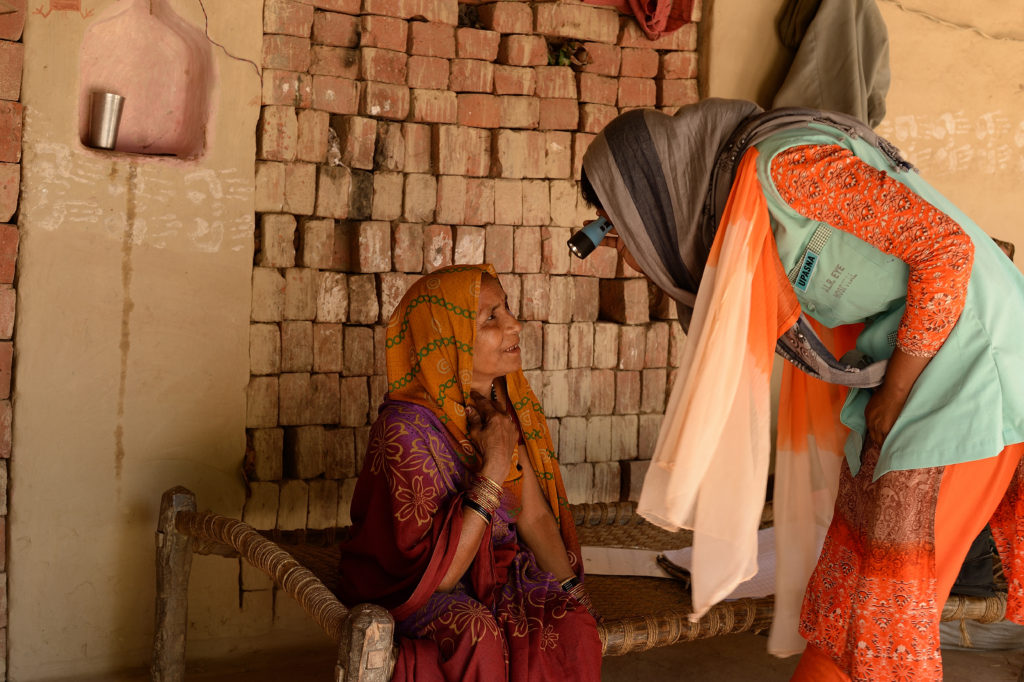
Those who live long enough will experience at least one eye condition during their lifetime. Today, on World Sight Day, I encourage us all to make eye health a global priority.
The burden of vision impairment weighs more heavily on low- and middle-income countries, and the global demand for eye care is set to surge in the coming years. We all have a role to play in making eye health a priority, both for ourselves here in Canada and for those around the world who are struggling needlessly with vision impairment.
Earlier this week, the World Health Organization (WHO) released its first-ever World Report on Vision, which highlights the critical need for global action in the fight against avoidable blindness. Globally, at least 2.2 billion people have a vision impairment, and of these, at least 1 billion people have a vision impairment that could have been prevented or has yet to be treated.
The World Report offers concrete proposals to address significant challenges in eye care. The key proposal is to make integrated people-centred eye care, embedded in health systems and based on strong primary health care, the care model of choice and scale it up widely. We’ve already developed a successful eye care model that aligns with this recommended approach. Through our Hospital-Based Community Eye Health Model, we’re able to empower people to take control of their health and increase their adoption of health-seeking behaviour.
We work with local partner hospitals and governments to integrate eye care services into the primary health care systems, providing the same level of care to both paying patients and those who cannot afford to pay. Operation Eyesight-trained community health workers go door to door in vulnerable communities, screening people for vision problems, referring them for treatment, and educating them on eye health and general health. We first launched our Hospital-Based Community Eye Health Model in India in 2009, and have since expanded it to Nepal, Ethiopia, Ghana, Kenya and Zambia with great success.
The World Report also recognizes the success of the WHO-endorsed SAFE strategy for trachoma elimination, which we’ve successfully implemented in Kenya and Zambia. In Zambia’s Sinazongwe district, where we’ve implemented all four components of the SAFE strategy (surgery, antibiotics, facial cleanliness and environmental improvement), the prevalence of blinding trachoma has been reduced from 14.5 per cent to 3.46 per cent.
With support from our donors, we’ve restored sight and prevented blindness for millions of people, but as the World Report reminds us, we still have a lot of work to do. Today, on World Sight, please consider making a donation and joining us in the global fight against avoidable blindness – For All The World To See.
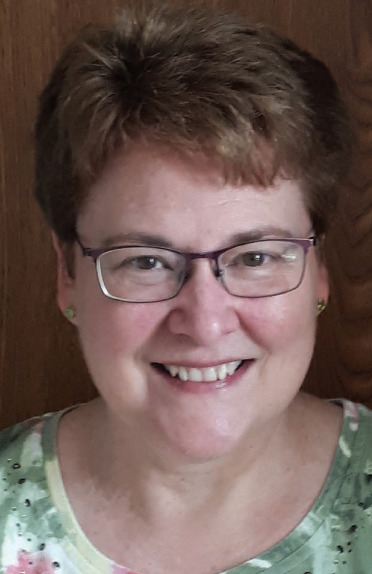
Operation Eyesight has become tradition for the Hatfield family.
Sylvia Hatfield and her husband, Reverend Donald, first heard about Operation Eyesight from Donald’s mother, Mabel. “Mabel heard Art Jenkyns (founder of Operation Eyesight) speak just as he was getting started,” says Sylvia. “She told us she was supporting Art’s work to bring sight to the poor in India. We thought it was a fantastic idea.”
Don convinced the Canadian Forces Protestant Chapels to support what was then “Art Jenkyns’ little charity.” Sylvia told everyone in her Sunday School classes about Operation Eyesight.
“We love that Operation Eyesight is Canadian,” Sylvia says. “We truly believe in the cause. Giving someone back their sight may seem like such a small thing at first, but it’s far reaching. Being able to see again not only helps the individual and their family, but the entire community.”
Sylvia’s daughter Sara has been a donor for 30 years. Her passion for the charity grew “through osmosis.” Her first cataract surgery was at age 39. “If I’d been born in another country, I could very well be blind right now,” Sara says. She enjoys following in her grandmother’s footsteps and is happy we work sustainably, helping people to help themselves.
Thank you Mabel, Don, Sylvia and Sara. Your support means everything to us!
We’re so grateful to all our incredible supporters for making it possible to transform entire communities through the gift of sight. Together we’ve helped thousands, but there are thousands more who need access to eye care. Make a donation to give the gift of sight today.

Bernard is a great example of the transformation our donors have made at Kitale District Hospital.
Bernard, from Kenya’s Trans Nzoia County, spent three years unable to see, dependent on others for everything. Now, after receiving sight-restoring surgery, he’s one of the hospital’s most dedicated community health volunteers! He’s committed to helping others receive the same gift of sight that changed his life.
Before Operation Eyesight started working in Trans Nzoia County, the hospital’s eye unit was just one small room with a staff of two. Twice a year, a surgeon would travel 74 kilometres from another hospital for patients in need of more specialized treatment. Since services were limited, many people were left to struggle with visual impairment.
In September 2010, an upgraded eye unit was opened at the hospital, thanks to generous donors like YOU. See the dramatic changes below!
Kitale District Hospital eye services in 2010:
- One room
- One ophthalmic clinical officer and one ophthalmic nurse
- 20 patients a day
- 40 cataract surgeries per year
- No outreach services
Kitale District Hospital eye services in 2018:
- Consultation rooms, refraction room, operating theatre, 18-bed recovery ward, and administration and research facilities
- One ophthalmologist, four cataract surgeons and eight ophthalmic nurses
- 100 patients a day
- 600 cataract surgeries a year
- Three satellite clinics in Cherangany, Endebess and Matunda sub-counties, staffed by ophthalmic nurses trained by Operation Eyesight
Additionally, hospital staff and other Operation Eyesight partners have screened all 168,730 primary school children in Trans Nzoia County for eye problems.
The people of the county now have quality eye health care that’s available to everyone. Thank you for making this possible!

There are thousands more people who need your help. Donate now to transform entire communities through the gift of sight!
(Header photo by Helena Lopes from Pexels)
Many of our donors around the world celebrated Easter last weekend. Easter is often seen as a time of rebirth. This holiday welcomes the change of the season – the cold days of winter are done, and new life is born. Trees and flowers bloom and animals have their young.
Many of the people we help say that having their sight restored is like being reborn. Their sight gives them a new lease on life because they're able to regain their independence, go back to work and care for their families. And children can go back to having fun and going to school when they don’t need to stay home to take care of their blind family member.
Your support has helped people like Akua...

“I worried a lot and I was scared I would die early in life,” says 56-year-old Akua from Ghana (above). Losing her sight meant she had to rely on her children for financial support. Eventually she was examined and diagnosed with cataracts at Saltpond Government Hospital. She was initially scared of the surgery that could restore her sight, but a nurse named Gladys reassured her. Now Akua can see again! Thanks to you, she’s returned to work, selling fish and charcoal!
And little Irene…

Little Irene (above) was born in 2012, three years after Operation Eyesight drilled a borehole in Siabaswi village, Zambia. She doesn’t remember what it was like to be without clean water, but her mother Katherine does. Women and girls could spend all day collecting water, and the unclean river water used to give the family monthly bouts of diarrhea. Now, thanks to you, children like Irene can get fresh water from a safe source close to home!
Your generous gifts have given so many people new hope for the future, but there are still thousands who need your help. Donate today and give the gift of sight – and renewed hope.
Thank you for your incredible support!
Today marks day three of World Glaucoma Week, a week to raise awareness about one of the world’s leading causes of irreversible blindness.
According to the Canadian National Institute for the Blind, 250,000 Canadians suffer from glaucoma.
Although glaucoma can be treated and sight often maintained (if diagnosed in time), an estimated seven million people are blind because of it, accounting for 2.8 percent of global visual impairment.
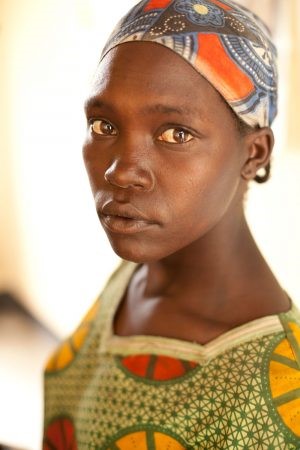
Although anyone may develop glaucoma, some people – such as those with high blood pressure – have a higher risk. You can learn about the risk factors for developing glaucoma on the International Agency for the Prevention of Blindness’ website.
This week, help spread awareness about this blinding disease by sharing this blog post with your friends and family. And remember to book your next eye examination.
You can also make a donation to support our work. Early detection is the best way to prevent blindness due to glaucoma. By facilitating eye screenings, providing eye exam equipment and supporting medical personnel at our partner facilities, Operation Eyesight helps prevent, diagnose and treat glaucoma.
Together we can help ensure that people living in Africa and Asia have access to the eye care services they need to preserve their vision – For All The World To See!

82-year-old Simiyu and his wife, Philomena, live in the agricultural town of Kitale, Kenya. They have five children, four daughters and a son, who live away from home.
Both Simiyu and Philomena struggled with deteriorating vision for years. Eventually, Simiyu went completely blind.
“I used to have a persistent headache,” says Simiyu. “ I couldn’t see at all and had to depend on my wife to guide me around. I’d be taken outside to bask in the sun and then taken back inside the house. I felt like a sheet being hanged outside to dry.”
The already struggling couple was suddenly facing a future bleaker than they had ever imagined. Philomena had very little vision left in her left eye, and she knew it was only a matter of time before she joined her husband in the dark world of blindness.

“I’m the one who was afflicted first. I suffered from visual impairment for three years before my husband became blind,” says Philomena. “I used to cry a lot. What would become of us when I lost my sight? I was the only breadwinner and I am my husband’s caretaker.”
Simiyu and Philomena were devastated. Their hope turned into despair. But they had no choice but to continue eking a living with the fast-dimming vision of their left eyes.
Finally, Simiyu went completely blind. He was forced to leave his casual work at a local dairy farm, cutting the couple off from half of their income.
In spite of this, every Sunday Philomena would take her husband's hand and, with her precious remaining vision, guide them both to church.
Little did this couple know that their lives were about to get a whole light brighter.
One Sunday, medics from Kitale Eye Unit conducted a free eye screening at the local church. Simuyu and Philomena were present, and both were identified with cataract in their left eyes. In no time, they were booked for sight-restoring surgery at Kitale Eye Unit.

When the fateful day came, the Eye Unit car was sent to pick them up. Philomena took her husband’s hand as she had done so many times before. They were both optimistic but apprehensive of the outcome.
Thankfully, Bernard, a community health volunteer, did his best to reassure them that all would be well. They couldn’t have found someone better to calm their fears. After all, Bernard had been blind himself before having his sight restored with cataract surgery.
And so the couple underwent cataract surgery on the same day. After their surgery, a community health worker followed up with the couple to ensure they received quality post-op care.
Simiyu and Philomena’s eyes have healed, and now they can see clearly!
“We were so afraid,” says Philomena. “But you [Operation Eyesight] came to our rescue. I jumped with joy when both of us could see again!”
“Now I can see everywhere,” announces Simiyu with a smile. “I can now walk around on my own without any assistance.”
On her part, Philomena is already thinking about their next phase of life. She would like to save up to start a small business.
Simiyu agrees. “I would like to join my wife in starting a small business so we can become completely self-reliant,” he says.
All of this was made possible by compassionate people like you, who gave from their hearts so couples like Philomena and Simiyu could live with hope and dignity. Thank you so much!
There are thousands of other couples like Philomena and Simiyu who need your help. With Valentine’s Day approaching, why not show your love by giving the gift of sight to others? Your gift will change lives and give people hope for a happier brighter future. You can even send your sweetheart a Valentine's Day eCard and give the gift of sight at the same time!

Hira is 74 years old and lives in an ancient village in central Nepal with her husband and her son and his family.
The whole family depends on Hira’s son, who works as a labourer to make enough for them to get by. To help out, Hira gardens and sews clothing for the family, while taking care of her two granddaughters.
She was happy she could contribute at home, but she was able to help less and less over time, as her vision dimmed. She felt like there was some invisible film over her eyes that she couldn’t blink away, and it only got worse. Two years later, she was completely blind.
“I was too afraid to seek treatment,” says Hira. “My sister had cataract surgery done that left her blind, and she died blind. I was so afraid the same thing would happen to me.”
But our donors made it possible to help Hira through her fear.
Two community health workers arrived at Hira’s home and screened her eyes. They explained that her condition could be treated, and they counselled her on the procedures that would restore her sight. Then they referred her to an Operation Eyesight-established vision centre for examination.
Though she was afraid, Hira did go to the vision centre, where she was diagnosed with bilateral cataracts. She was then referred to Nepal Eye Hospital for surgery.
Hira still wasn’t convinced. “I was so afraid, but the community health workers introduced me to an older man who had received sight-restoring cataract surgery himself. His story calmed me, and finally I felt brave enough to get treated.”

Now, thanks to the support of eye health heroes like YOU, Hira’s sight has been restored!
“I am very happy about the treatment I received! Now I can do my daily activities on my own. My family can concentrate on their work, and I can help them when they need me.”
Hira is now an eye health advocate in her own community! She is so grateful to the community health workers and the doctor who helped her regain her sight.
And most of all, she’s grateful to kind people like you who made it all possible!
Thank you so much for helping people like Hira get their lives back through the precious gift of sight! There are still thousands more women like Hira who need your help. Donate today and become an eye health hero.

Happy 2019!
It’s hard to believe that 2018 has come and gone, isn’t it? Time flies.
Last year people like you helped us reach thousands of people in need of eye care. Thank you for your support! So many people, like Elagonda from India, were helped through your generosity.
Here’s a letter Elagonda wanted us to share with you:
“My name is Elagonda. I’m 65 years old and live in India.
I’m not a wealthy person, and although I have two daughters who could help support me, they’re both married and have their own lives to attend to. What my family did have in savings was used to arrange their marriages into good families.
So I live alone... I lost my husband a few years ago, and I get by on a small pension from the government. When I can, I do some farming work to make a little more money. I depend on my eyes to earn my living, and I only realized to what extent when I started to lose my vision.
One day, my world was so dark that I couldn’t keep working. I had no other income, and I could barely survive on my pension.
Unexpectedly, one day a community health worker trained by Operation Eyesight was at my door. She screened my eyes and told me I had cataracts.
I was poor though. How could I afford the surgeries for my eyes? But the health worker told me that my treatment would be free of charge, thanks to Operation Eyesight’s kind-hearted donors.
After my surgery, I can see again! I can work and spend time with my friends and neighbours. I have hope again.
I sincerely thank the people who give their money to help people like me, even though they don’t know me. My sight has been restored – and with it, my happiness!”
This year, we hope you’ll help us reach more people like Elagonda with the gift of sight.
Here’s to everything we’ll do together in 2019!
Cheers to a new year!
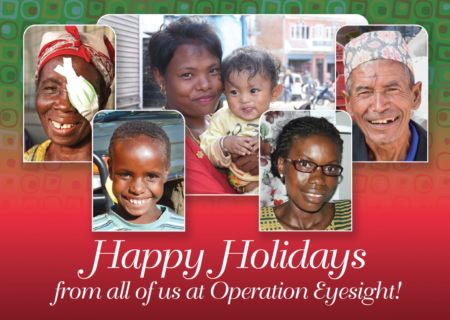
Wishing you and yours a Merry Christmas and a wonderful holiday season. We look forward to seeing what we can achieve together in 2019 – For All The World To See.