

Bulal is a 97-year-old man from Thankot, Nepal. He, along with several members of his family, run a local butcher shop that they depend on for their livelihood. Several years ago, Bulal was diagnosed with diabetes. Recently, Bulal’s vision has been steadily declining. His family took him to the doctor, who identified that he suffered from cataracts, but were told that his blood sugar wasn’t stable enough and his blood pressure was too high for anything to be done. After visiting the doctor and hearing that nothing could be done, Bulal was crushed and lost hope that he would ever be able to see again.

A few months later, Meena, an Operation Eyesight-trained community health worker, approached his family during her door-to-door eye screening activities. His family described their situation to her and explained that although they knew what was causing his vision impairment, the surgery was too risky. Meena told the family that she had encountered cases similar to Bulal’s and that all hope was not lost. She was confident that she could help Bulal.

Over the next several months, with Meena’s guidance, Bulal was able to stabilize his blood sugar levels and lower his blood pressure significantly, making it safe for him to receive surgery. With Meena’s support, Bulal underwent cataract surgery at the Nepal Eye Hospital in Tripureshwor. His family is overjoyed that Bulal is back to his old self, and Bulal is thrilled to once again be able to actively participate in his family and community.

Although Operation Eyesight-trained community health workers are specifically trained in eye health care, they are passionate about helping their communities and go above and beyond to make sure that good vision and healthy eyes are in reach for as many people as possible. Donate today to help us train more community health workers and bring hope to more families.
Nearly everyone in the world will experience an eye health issue in their lifetime. Currently, 1.1 billion people around the world live with vision loss, but in 90 percent of cases, that vision loss is avoidable.1 This means that through prevention activities – such as eye health education or the provision of clean water to prevent disease – or treatment – such as prescription eyeglasses or cataract surgery – nearly a billion people could have their vision restored. Unfortunately, over 90 percent of those experiencing vision loss live in low- and middle-income countries where large contingents of the population do not have access to eye care.2
Every year, on the second Thursday of October, we acknowledge and celebrate World Sight Day. It’s a day to celebrate the accomplishments made in the global eye health sector, and also to acknowledge the inequalities that continue to persist and reflect on what we can all do to close that divide.
One of the biggest things to celebrate this year is that the United Nations General Assembly passed a new eye health resolution. Titled Vision for Everyone – Accelerating Action to Achieve the Sustainable Development Goals, the resolution is the first agreement designed to tackle preventable sight loss to be adopted by the United Nations. It sets a target for all 193 member countries, including Canada, to ensure full access to eye care services for their populations, and to make eye health part of their nation’s journey to achieving the Sustainable Development Goals.
While this recognition and these goals are important, the ongoing impacts of the COVID-19 pandemic continue to set global eye health care back, affecting women and girls the most. Eye health is not just a peripheral health issue, it’s a human right. Without access to care, vision loss can significantly reduce quality of life. In most cases though, it doesn’t have to. When it comes to accessible eye care, everyone counts. Everyone deserves the opportunity to participate in school, succeed at their job, and see the faces of their friends and family.
At Operation Eyesight, our mission is to prevent blindness and restore sight. To do this, we collaborate with local ministries and health authorities in the countries where we work to address the growing need for accessible eye health care. For eye health care to be accessible, it needs to be affordable and available at the local level. Find us on social media to follow along with our World Sight Day activities, including eye screenings, vision centre inaugurations, ophthalmic training and more across Canada, India, Ghana, Kenya and Zambia.
Like with COVID-19, avoidable blindness can only be eliminated when we all work together to ensure that no one gets left behind when it comes to addressing local and global health inequities. If you would like to get involved, I encourage you to learn more about our programs and check out our newest video showcasing the work our teams do in sub-Saharan Africa and South Asia. This World Sight Day, I also encourage you to #LoveYourEyes and pledge to get your own eyes checked.
[1] https://www.iapb.org/learn/vision-atlas/magnitude-and-projections/
[2] https://www.iapb.org/learn/vision-atlas/inequality-in-vision-loss/
Last month, students in Kenya went back to school, and our school eye health program in Uasin Gishu County is in full swing. This program is made possible by the generous support of the American people through the United States Agency for International Development (USAID). We’re training teachers to use the Peek Acuity app to identify students with eyesight problems. As of July 31, nearly 24,000 children have been screened and almost 1,800 students have been referred for treatment.
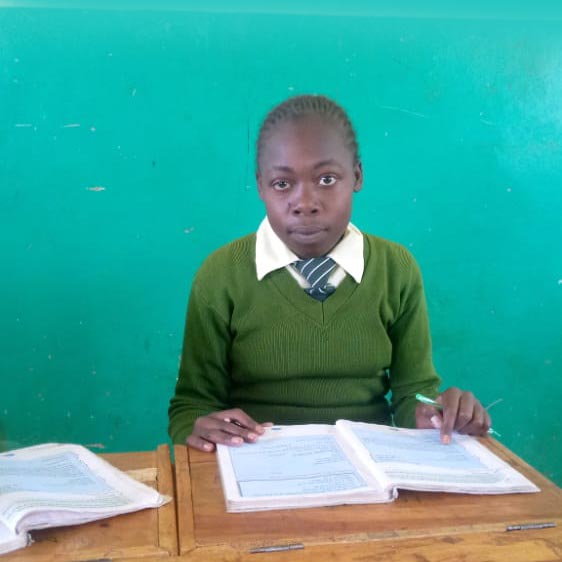
One student to benefit from the program is 14-year-old Rehema. Now in grade seven, she has struggled with low vision since she was a young child.
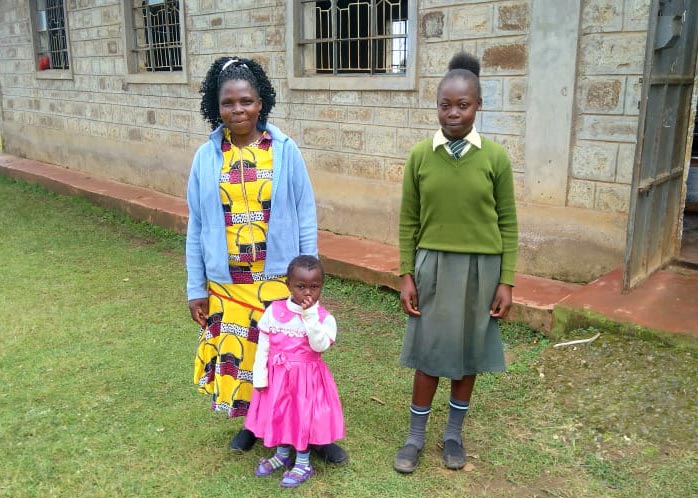
Rehema lives in the village of Kambi Kisii with her parents, both casual labours, and five siblings. Rehema’s mother told our team that she delivered Rehema at home. She noticed blood in her newborn’s eyes, but her mother-in-law assured her that it would go away by itself. It didn’t, and by the time Rehema went to school, she couldn’t read the blackboard.
Her vision worsened with time. Unable to see the notes at the front of the classroom, Rehema had to copy from her classmates’ books, holding the books right up to her face to make out the words. Sometimes her classmates laughed at her; she was so upset that she considered dropping out of school. To make matters worse, her eyes got very itchy, painful and teary, but she was afraid to tell her teachers.
Her teachers did notice her struggling in class, and they advised her parents to take her to the hospital, but they couldn’t afford to pay for surgery.
Fortunately, a team of teachers trained by Operation Eyesight visited Rehema’s school to conduct eye screenings. Rehema was one of 224 children screened that day. She was referred to the program’s mobile triage team for further assessment, who then referred her to our partner Moi Teaching and Referral Hospital. She was diagnosed with bilateral cataracts and underwent surgery free of charge, thanks to support from our donors. Today she can read the blackboard and her books comfortably.

“I want to read and become a teacher, like my father has been encouraging me,” says Rehema. “Now I can follow the teacher when he is calculating sums on the blackboard like the other pupils. I know that my performance will improve, and I’ll have the opportunity to pursue my dreams.”
Rehema’s mother was ecstatic. “Now my child can do her homework on her own; she doesn’t have to rely on the others,” she explained. “I didn’t have money to take my child to hospital, now I am happy because she has received treatment. This program is doing great things to support children who cannot afford health care services.”
On September 10, the Governor of Uasin Gishu County officially launched our School Health Program. Read more and watch the launch video here.
For Emmanuel Kumah, our country manager in Ghana, joining Operation Eyesight’s mission to prevent blindness and restore sight has an important personal meaning. When he was a teenager, his father began losing his vision due to cataracts. At the time, few hospitals in Ghana offered eye health services, so he had to wait several months for treatment. Although Emmanuel was too young to fully grasp the gravity of the situation, the concern he felt for his father stayed with him until adulthood.
Upon his graduation with a master’s degree in development management, he received several employment offers, including one from Operation Eyesight. For Emmanuel, the choice was obvious.
“I viewed taking the role with Operation Eyesight as a personal challenge to do what I could, so that other families didn’t have to face the challenges and uncertainty that mine did,” says Emmanuel. “Now, not only am I able to support Ghana Health Services to incorporate eye health into their overall health delivery model, but I am also working to ensure that, every day, people at the community level have access to eye care services whenever they need them.”

We’re working in partnership with the Government of Ghana to strengthen the eye care systems across the country. Together, we’re successfully integrating eye health care into the primary health care system, bringing much-needed services to previously underserved communities. With passionate employees like Emmanuel and generous donors like you, we’re eliminating avoidable blindness in Ghana – For All The World To See.
Learn more about our work in Ghana here.
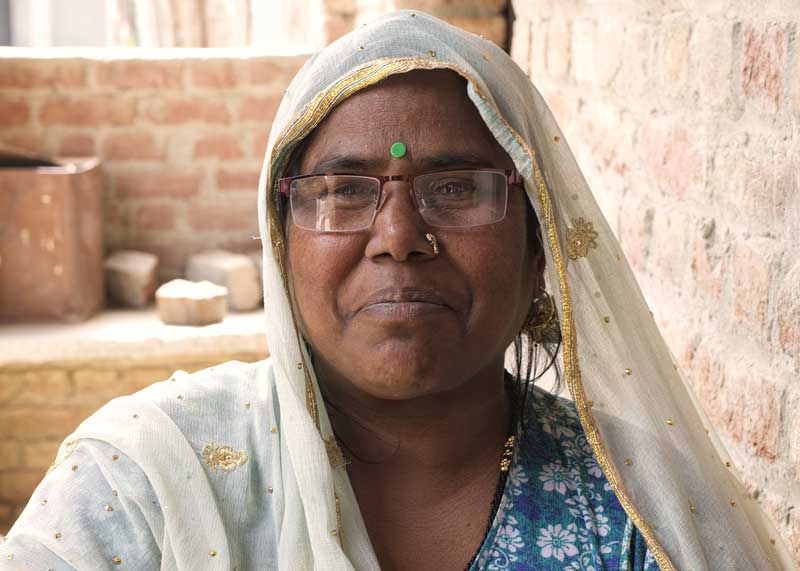
At the beginning of the COVID-19 pandemic, Roopwati noticed her vision was starting to diminish, but, like the rest of us, she was consumed by the impact of the pandemic. By the time her vision started to affect her daily life, strict lockdowns were in place across India. Although she worried about her failing vision, she was reassured because she knew that, when the lockdowns lifted, there was somewhere she could go for help.
Three years ago, community health workers from the nearby Moradabad Vision Centre conducted door-to-door eye screenings and delivered eye health education to Roopwati’s community. Her village of Daulari was even declared avoidable blindness-free in 2019. This means that every man, woman and child in the village had been screened for eye conditions and received treatment to correct avoidable blindness, such as a cataract surgery or a pair of prescription eyeglasses. In addition to counselling and referring community members for treatment, community health workers also created and built awareness about nearby vision centres and encouraged people to seek care when needed. Although Roopwati didn’t need eye health care at the time, she was empowered with the knowledge about the services available nearby.
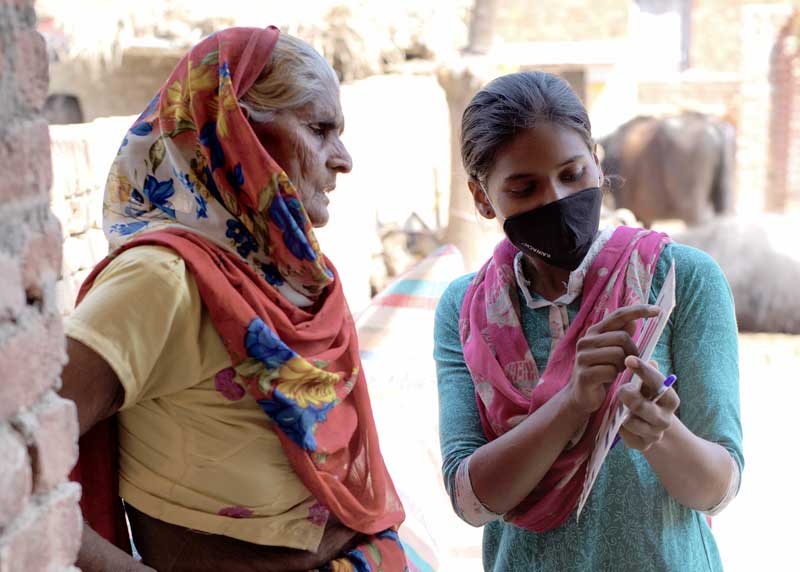
When restrictions were eased and it was safe to do so, she travelled to the vision centre. Doctors diagnosed her with cataracts and referred her to the hospital for care. She had cataract surgery in January 2021 and is now back to her daily life, enjoying the blessings her grandchildren bring and actively participating in her community.
With your ongoing support, we can ensure that eye health care services will be available to those who need it, when they need it. Donate today to help us ensure that communities will remain avoidable blindness-free for years to come.
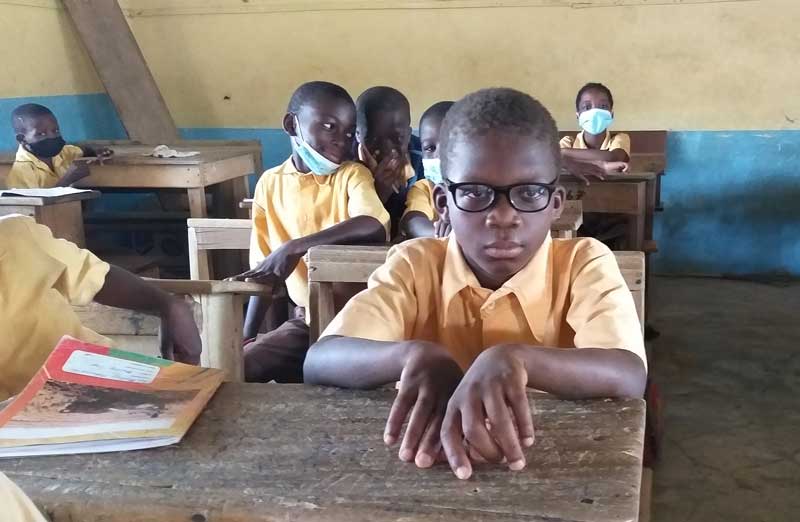
Sulemana (8) lives in Rama, Ghana. The youngest of seven children, he’s an active child, busy playing with his siblings and attending school. Although Sulemana has always been a good student, his teacher noticed that he was making increasingly frequent mistakes when trying to copy lessons or respond to questions written on the blackboard. His teacher reported it to Sulemana’s father, who was not surprised because one of Sulemana’s sisters also struggled with her vision. However, although he worried about their education and their future, he didn’t know where to go to seek medical attention for either of his children.
Several weeks later, their local community centre announced that an Operation Eyesight outreach team would soon be visiting their town to conduct free eye screenings. Sulemana’s father took him and his sister to the screening, where they were both diagnosed with refractive error and given a pair of custom prescription eyeglasses. Now, Sulemana and his sister can see the blackboard and participate with their peers, and he knows that his vision impairment won’t stand in the way of his future.
Fortunately for Sulemana, an outreach team visited his village before his vision got worse and he fell too far behind in school. However, many children across the countries where we work also struggle with their vision and do not have access to nearby eye health services. With your support, we can expand our outreach services to ensure that no children are left behind due to an avoidable vision impairment.
Every morning, Sarafina walked over two hours to fetch water from a small marshland three kilometres from her village. After being used by many people in the surrounding villages, the water would get muddy and the banks slippery and dangerous. To avoid this, Sarafina tried to always be one of the first people to get to the marshland, so she could draw the clearest water for her family. This meant she had to leave her house by 4 a.m. each morning.

Sarafina’s village, Penti, has a borehole that was drilled by the government in 2004, but unfortunately, the borehole broke down in December 2020. This forced the nearly 200 people of the village to return to drawing water from holes dug in the marshland. Not only was this difficult for Sarafina and other women in her village, but it was also dangerous. Several months ago, a woman was assaulted in the dark on her way to collect water early in the morning.

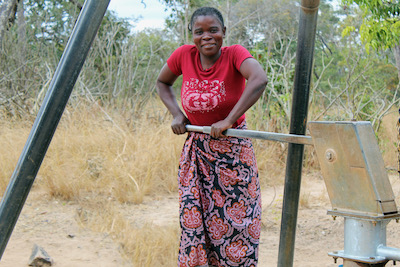
Thanks to support from our donors, we recently rehabilitated the borehole, and the people of Penti have clean water once more. For Sarafina and the other women, the rehabilitated borehole has brought a lot of relief. No more early morning long walks to the water hole; no more fear of being ambushed in the dark; no more danger of slipping in the mud and getting hurt; and no more carrying heavy buckets of water for more than three kilometres at a time.

“I am very happy that, once again, I can draw water from the village borehole,” Sarafina shared. “This makes life much easier for us. Now I can get water even at night because it’s near and safe. No one was ever walking to the water hole in the night because, here, a lot of danger lurks in the dark. Having a water source nearby is protecting women and girls from many forms of danger.”

Access to clean water is critical to preventing bacterial diseases, such as blinding trachoma, and it also significantly reduces the burden on women and girls and leads to safer, healthier communities. Donate today to help provide clean water for more villages like Sarafina’s.
In June 2021, Karen and her husband welcomed a healthy baby boy, Peter, into their family. Like all new mothers, Karen was overjoyed but also exhausted. This exhaustion was compounded by the fact that the borehole in Nkumbaisha, her village, had stopped working in May 2020. With a newborn in the household, Karen needed a lot of water every day for cleaning and washing.
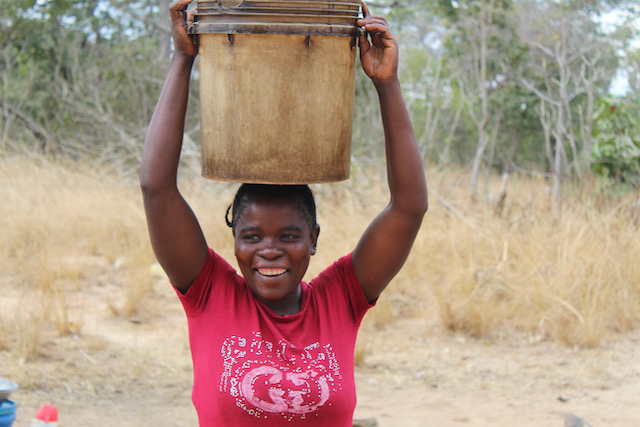
Without a functional borehole nearby, she had to fetch water from a ditch dug in the nearby marsh. Not only was the water dirty, but it was also dangerous for women and children to fetch water from the ditch as it was quite steep and slippery. Collecting the water required considerable physical strength to lift the heavy buckets of water out of the ditch, which was especially challenging for Karen while she was pregnant and for the first few weeks after giving birth.
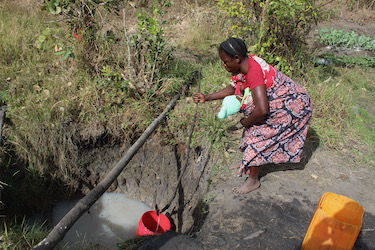
With support from Operation Eyesight’s donors, the borehole in Nkumbaisha was rehabilitated in July 2021. For Karen and many other mothers like her, this was a turning point in their lives and a huge source of joy. “Since May of last year, it took me more than two hours to fetch a single bucket of water,” Karen explained. “Now, I can access clean water within five minutes. I am extremely relieved! This will help us improve our hygiene and give me more time to focus on my son.”
Karen is relieved to know that she now has the ability to keep her family clean and healthy. Every day, she washes her baby’s clothes and prepares nutritious food for her family. The food is grown, washed and cooked with clean water and served on clean plates.
Access to clean water leads to safer, healthier communities. Donate today to help more families like Karen’s get accessible, clean water sources near their homes.
Abigail and her two busy children live in the village of Kangwa. Unfortunately, in November 2020, right when hygiene was at the forefront of everyone’s minds due to COVID-19, the borehole in Kangwa broke down. The only other source of water was a stream several kilometres away from the village, but the water was often muddy and unclean. Abigail went from having her children wash their faces every day with fresh water to only being able to wash their faces every few days with water that had to be boiled and carefully conserved. Regularly washing your face with clean water is one of the easiest ways to prevent contracting trachoma, a bacterial eye infection that, if left untreated, can lead to irreversible blindness.
To help support her family, Abigail’s daughter, Natasha, would often stop at Kangwa’s borehole and bring water home to her family after school. When the borehole broke down, Natasha continued to help her family by walking several kilometres each day to fetch water. Unfortunately, because this took so much extra time and energy, Natasha stopped attending school full time. In Zambia’s Luano District, where Abigail and Natasha live, there is a significant gender disparity in schools. Many more boys attend school than girls. When the borehole broke down, this gap grew even more.
Our team in Kenya found out about the Kangwa borehole and made the arrangements to have it rehabilitated, through the generosity of our donors. In addition to fixing the borehole, our team also provided maintenance training to a committee of local community members. Now, if the borehole ever breaks down again, the committee will be able to fix it quickly and independently.
Now that the borehole is functioning again, Natasha and several other girls in her class are back attending school full time. Abigail and Natasha no longer have to walk long distances or carefully conserve water. They can wash their hands, faces and clothing regularly, which puts them at a much lower risk of contracting bacterial infections such as trachoma.
Access to clean water doesn’t just help reduce the spread of infection, it transforms entire communities. Click here to learn more about our work to provide access to clean water. If you would like to help us rehabilitate more boreholes – giving girls an opportunity to pursue their education and keeping communities healthy – please consider donating today.
[smartslider3 slider="14"]
This June, Operation Eyesight celebrates 58 years of our sight-saving work. In recognition of this milestone, and with Father’s Day coming up soon, I connected with Linda Jenkyns Matuska and Jim Jenkyns, children of our founder Art Jenkyns, to reflect on Operation Eyesight’s humble beginnings and the incredible man who started it all.
In 1963, Art heard Dr. Ben Gullison speak in Calgary. Dr. Gullison was a Canadian doctor working in Sompeta, India to help those who were blind or visually impaired. Inspired to help Dr. Gullison’s cause, Art held a fundraising dinner in Calgary in June of 1963, with the help of members from his local church. That dinner raised $840 and served as the beginning of Operation Eyesight. Over the years, Art became a tireless champion for blindness prevention and treatment, speaking at countless events across Canada to raise financial support for the organization.
His children remember their father’s passion and dedication to providing eye health care for all. In the formative years of Operation Eyesight, Art had two desks in his home office – one for his day job at a local insurance broker and one for Operation Eyesight. At the end of his regular work day, Art would move to the second desk and work on Operation Eyesight projects well into the evening. Una Jenkyns, Art’s wife, was also very involved with Operation Eyesight and she did most of the typing and tax receipting in the early years as a volunteer.

Parents to five children, Art and Una were very busy, but family was always their top priority. Every year, the family of seven would embark on a three-week camping holiday, never staying overnight in the same place. These family trips were always educational experiences for the children and serve as some of their most cherished memories. In later years, Art would incorporate opportunities along their route to share Operation Eyesight’s work with various groups and organizations across the country.
“He would just speak to anybody and everybody about Operation Eyesight’s vision,” says Jim. “Our dad was a wonderful speaker. His enthusiasm was infectious and the excitement he created in other people was just amazing.”
Growing up, the Jenkyns Family was shaped by their commitment to service towards others. Art was avidly involved with the Scouts for 60 years, and Una volunteered frequently at the Foothills Hospital in Calgary. In turn, this instilled a strong sense of service towards others in their children.

In honour of their parents, the Jenkyns Family has started The Art and Una Jenkyns Legacy Fund to carry on their parent’s legacy and continue their vision of a world where everyone has access to quality eye health care.
“Our dad never, ever expected that the organization would grow like it grew,” says Linda. “Of course, we are all so proud of Operation Eyesight today. Dad used to say, that you can’t change the world, but you can change some people’s world. That principle was at the root of his service to others and is what continues to inspire us all today.”
If you would like to support The Art and Una Jenkyns Legacy Fund and help change someone’s world, click here to learn more.