

Rupoda is a community health worker based out of the Borhola Vision Centre in the Indian state of Assam. Over the last four years she has been educating her community about eye health and referring those who need follow-up care to the vision centre. Although the COVID-19 pandemic has hindered eye health activities in Assam, Rupoda continues to actively and safely support her community.
In partnership with the Chandraprabha Eye Hospital, Operation Eyesight has been assembling and distributing hygiene kits to vulnerable and marginalized families. Rupoda used her knowledge of her community to identify the families that would benefit the most from these hygiene kits. To date, Rupoda has personally distributed 300 hygiene kits in thirteen villages, which provides increased sanitation opportunities to over 1,500 people.

Due to a lack of transportation services during the lockdown in India, Rupoda travels approximately 10 kilometres a day on foot to distribute these hygiene kits. She also conducts socially-distanced health awareness sessions on COVID-19. The topics she covers include hand hygiene, social distancing and mask handling to prevent the spread of COVID-19.

Rupoda says that she feels grateful that she is able to support her community during these challenging times. “I’m happy that I’m able to help the poor families of my project area by giving them the hygiene kits and education on coronavirus. I’m grateful to my hospital and Operation Eyesight for giving me this opportunity to serve my people of Assam.”
Our total impact to date as of May 25th, 2020

Updates from the week ending May 15th, 2020
Updates from the week ending May 8th, 2020
Updates from the week ending May 1st, 2020

Updates from the week ending April 24th, 2020
"During this unprecedented time, Operation Eyesight has successfully managed to come forward to help the people of Ethiopia. The government of Ethiopia is appreciative of this effort knowing it will go a long way in paving paths for other agencies to also come forward and help in saving the lives of people. Kudos to our implementation partner in Ethiopia who are working day and night in reaching out to the unreached with the required support."
- Yashwant Sinha
Updates from the week ending April 17th, 2020
Our team in Ethiopia has procured water tanks/vessels. We are working in partnership with the government to deliver water to the communities. We have also procured the COVID-19 information, education and communication materials in local languages from the Ministry of Health to distribute.
Public sector employees whose roles are not essential have been placed on compulsory leave, and civil servants have been asked to work from home. Non-essential travel is banned, and all airlines have suspended their operations until the end of April.
In Ethiopia we are working to train 50 community health workers to respond to COVID-19. This training will cover topics such as the detection of symptoms, the importance and proper techniques for hand washing, and what to do if you or a family member starts displaying signs of COVID-19.
To ensure the safety of our staff and our community health workers, we are working to procure safety materials such as disposable nose masks, gloves and hand sanitizers.
We plan to install five handwashing stations at prominent locations such as schools and in high density, low income neighbourhoods. Additionally, we will distribute 1,000 sanitation kits to low-income female headed households and to those living with disabilities.
Our goal is to adapt, print and disseminate health education and information materials, with the goal of reaching 30 000 individuals by mid-May.
Learn more about our response to COVID-19 and how you can help here.
Our total impact to date as of May 25th, 2020
Updates from the week ending May 15th, 2020
The swiftness with which Operation Eyesight responded to help contain COVID – 19 in the central region of Ghana is unbelievable. As an eye health organization and not an emergency relief one, I initially thought it would take a while to change direction, but that was not the case. Right away, the Operation Eyesight team began supporting the Ghanaian Government efforts in achieving health for all. I am indeed proud to be a staff member of Operation Eyesight.
-Emmanuel Kumah
Updates from the week ending May 8th, 2020
Updates from the week ending May 1st, 2020

Updates from the week ending April 24th, 2020

Updates from the week ending April 17th, 2020
Major cities in Ghana are under a lockdown until the end of April. Enhanced social distancing measures are being put in place in other areas. All borders (land, sea and air) will remain closed during the lockdown period.
In Ghana, we are partnering with 20 health districts in the Central Region to create awareness about COVID-19. This training will cover topics such as detection of symptoms, the importance and proper techniques for hand washing, and what to do if you or a family member starts displaying signs of COVID-19.
We aim to provide 200 health facilities in the Central Region with hand sanitizer, facial masks, veronica buckets, soap and tissue paper. A veronica bucket is hand washing station made up of a barrel with a tap fixed at the bottom and a bowl at the bottom to collect wastewater. This serves as a simple way to encourage proper hand washing using flowing water.
We are partnering with the Ghana Health Service to train up to 420 frontline workers to conduct COVID-19 related health awareness events for their communities.
We intend to share 20,000 health education and information packages, which would result in 50,000 individuals being educated about COVID-19 by mid-May.
Activities related to avoidable blindness:
Community health nurses are continuing to offer static eye health services, including consultations, minor treatments and health education services. Ophthalmic nurses, optometrists and ophthalmologists at the district hospitals continue to offer static eye health services such as consultations, treatment (including emergency surgery), and provision of prescription eyeglasses.
Learn more about our response to COVID-19 and how you can help here.
As part of our emergency response in India:
Our total impact to date as of May 25th, 2020

Updates from the week ending May 15th, 2020

Updates from the week ending May 8th, 2020
With support from Operation Eyesight, Siliguri Greater Lions Hospital started our COVID-19 pandemic emergency response. This program empowers communities by creating awareness and equipping them with hygiene kits to stop the spread of coronavirus. Community health workers were trained on preventative measures to educate community members on how to protect themselves against COVID-19. The community health workers will reach over 9000 families from vulnerable communities, educating them about personal health and hygiene and providing them with a hygiene kit. Each kit can cater to a family of four and contains hand sanitizer, soap, bleaching powder, face masks, gloves and an information pamphlet on COVID-19.
-Dr. Rajesh Saini, Chief Executive Officer, Siliguri Greater Lions Eye Hospital

Updates from the week ending May 1st, 2020

Updates from the week ending April 24th, 2020

Updates from the week ending April 17th, 2020

Currently, India is under a complete lock down. Only essential services such a hospitals, pharmacies and grocery stores remain open. The government has sealed several areas in the country identified as ‘Hot Spots.’ All public transport and airlines have been suspended.
Despite the current lockdown in India, hospitals are still delivering emergency services, allowing them to use some staff and hospital-owned vehicles. These vehicles can transport staff (including community health workers) who have been issued with valid healthcare passes issued by the district authorities.
We plan to provide training for community health workers (CHWs) so that they can educate their communities about COVID-19. This training will include topics such as the detection of symptoms, the importance and proper techniques for hand washing, and what to do if you or a family member starts displaying signs of COVID-19. By mid-May, we will have 110 CHWs and project staff trained to address COVID-19.
Using hospital vehicles, staff in the partner hospitals will pick up CHWs and they will distribute COVID-19 education materials and hygiene kits (containing hand sanitizer, soap, cloth face masks and bleaching powder) to households to help stop the spread of COVID-19. In the first month, we hope to have 6,000 of these kits distributed. The lockdown may affect the timely supply of items included in the hygiene kits, but the long-standing relationship of our partner hospitals with the vendors and advance bulk orders for all the items will minimize the delays in supply.
Health education and information materials will be available at our vision centers. We will also be installing hand washing stations at all our vision centers to promote proper hygiene practices.
To ensure the safety of our staff and our community health workers, we are working to procure safety materials such as disposable masks, gloves and hand sanitizers. All of our vision centers are complying with Operation Eyesight’s increased sanitation measures.
Activities related to avoidable blindness:
The India project team is using this time to revamp the door-to-door surveys usually administered by community health workers to determine a household’s awareness of eye health issues and health care options. In accordance with India’s lockdown, all door-to-door surveys and screenings have been put on hold.
Learn more about our response to COVID-19 and how you can help here.
[drawattention ID="22481"]
[drawattention ID="22463"]
[drawattention ID="22413"]
[drawattention ID=22391]
[drawattention ID=22452]
[drawattention ID=21961]
Our total impact to date as of May 25th, 2020

Updates from the week ending May 15th, 2020

Updates from the week ending May 8th, 2020
“We are not certain how long the pandemic will last and therefore, we cannot sit back and wait for the worst to happen. We are doing all we can to empower our communities in Kenya stay safe through health education. We must make them understand that the family must function as a single unit because if one person puts themselves at risk, everyone in that unit is at risk.”
-Alice Mwangi, Kenya Country Manager
Updates from the week ending May 1st, 2020

Updates from the week ending April 24th, 2020

Updates from the week ending April 17th, 2020

From March 27 onwards, a daily curfew has been imposed from 7p.m. to 5a.m. All movement by those who are not medical professionals, health workers, or essential service providers is prohibited between these hours. Movement in and out of the major cities of Nairobi, Mombasa, Kilifi and Kwale is restricted.
Currently, our focus in Kenya is to provide training for community health volunteers to educate them about COVID-19. This training will cover topics such as the detection of symptoms, the importance and proper techniques for hand washing, and what to do if you or a family member starts displaying signs of COVID-19. By mid-May, we hope to have 700 community health volunteers trained to address COVID-19.
The government of Kenya has produced information, education and communication materials related to COVID-19, but not all of these are accessible. Our team is working on taking government-produced materials and translating them into local languages to be distributed by our community health volunteers at the community level.
In addition to these materials, we will be delivering hand washing kits to female-headed households and people living with disabilities to help stop the spread of COVID-19. By giving these kits directly to women, we are empowering them to take leadership over their health and the well-being of their families and broader community. Empowering women is crucial in building our economies, reducing poverty and attaining peace. By mid-May, we hope to have 1 000 of these kits distributed. We will also be installing hand washing stations at boreholes and near schools to promote proper hygiene practices.
To ensure the safety of our project team and community health volunteers, we are will be equipping them with personal safety materials such as disposable masks, gloves and hand sanitizers. We will ensure they are properly trained to follow physical distancing guidelines as mandated by the government.
Activities related to avoidable blindness:
Eye care services are still available in all partner hospitals, but there has been a significant reduction of the number of patients visiting the eye units. The eye units are providing emergency surgeries only, and community health workers are currently not conducting door-to-door eye screenings.
Learn more about our response to COVID-19 and how you can help here.
Our total impact to date as of May 25th, 2020
Updates from the week ending May 15th, 2020

Updates from the week ending May 8th, 2020
Updates from the week ending May 1st, 2020


Updates from the week ending April 24th, 2020
Updates from the week ending April 17th, 2020
Gatherings of more than 25 people have been prohibited. All public transport including train/ air and bus services have been suspended during the lockdown period. Schools, colleges, cinema halls, gyms, clubs, swimming pools and museums are closed until April 30. The capital city of Kathmandu is on lockdown until the 27 of April, meaning people are only able to leave their places of residence for essential work/supplies.
Our focus for Nepal is to provide training for community health workers so that they can educate their communities about COVID-19. This training will include topics such as detection of symptoms, the importance and proper techniques for hand washing, and what to do if you or a family member starts displaying signs of COVID-19. By mid-May, we intend to have 29 community health workers (CHWs) and project staff trained to address COVID-19.
Our CHWs will distribute COVID-19 education materials to help stop the spread of COVID-19. By mid-May, we hope to have 9,000 people educated on COVID-19 prevention and preparedness. Additionally, we plan to hand out sanitation kits containing hand sanitizers and disposable masks and gloves to marginalized families. Our goal is to distribute 1,500 of these kits by mid-May.
Health education and information materials will be available at all six of our vision centers. We are also installing proper hand washing stations outside of all our vision centers to promote proper hygiene practices.
To ensure the safety of our staff and our community health workers, we are working to procure safety materials such as disposable masks, gloves and hand sanitizers. All our vision centers are complying with Operation Eyesight’s increased sanitation measures.
Learn more about our response to COVID-19 and how you can help here.
Our total impact to date as of May 25th, 2020

Updates from the week ending May 15th, 2020
Updates from the week ending May 8th, 2020
Updates from the week ending May 1st, 2020


Updates from the week ending April 24th, 2020
In addressing COVID-19, we focused on addressing the less privileged; those who don't have access to information from radio or television programming. We are talking about real and important issues - such as how people can improve their hygiene and protect themselves from the virus by practicing regular handwashing with clean water and soap. We are committed to ensuring no one is left behind."
- Patson Tembo
Updates from the week ending April 17th, 2020
All schools have been closed, and public gatherings such as religious services have been restricted.
Our goal in Zambia is to empower communities to respond to COVID-19 by facilitating the rehabilitation of dysfunctional boreholes and providing health education to communities.
Working with district councils, and with donor funding support, our goal is to rehabilitate 60 dysfunctional boreholes to provide access to clean water and sanitation opportunities for 18,000 people. As part of these rehabilitation projects, we will create WASH (Water, Sanitation and Hygiene) Committees and train the members to adopt appropriate hand washing and social distancing practices critical for the prevention of COVID-19. Training WASH Committee members empowers individuals and communities to take ownership of their health and become ambassadors of WASH for their families and communities.
We will provide training for community health workers so that they can educate their communities about COVID-19. This training will cover topics such as early detection of symptoms, proper techniques for hand washing, and what to do if you or a family member starts displaying signs of COVID-19. By mid-May, we plan to have 180 community health workers and project staff trained to address COVID-19. Project staff will distribute 1,000 hygiene kits to marginalized families.
To ensure the safety of our staff and our community health workers, we are working to procure safety materials such as disposable masks, gloves and hand sanitizers.
Activities related to avoidable blindness:
To reduce the volume to traffic to local hospitals, all non-emergency eye surgeries have been put on hold. Door to door screening programs have also been put on hold.
Learn more about our response to COVID-19 and how you can help here.

What is Corporate Social Responsibility?
Corporate social responsibility (CSR) has been a buzz term in the business world for nearly a decade, but what exactly does it mean? Essentially, CSR is a self-regulating business model that helps a company be socially accountable. It’s a set of ethical standards that guides the company’s commitment to manage the social, environmental and economic effects of their operations responsibly and sustainably.
The climate of the business world is rapidly evolving, and stakeholders are no longer concerned only with companies’ profits. Educated, engaged consumers want to support companies that make a positive impact on society. When companies contribute to meaningful social projects, they are able to cultivate positive associations with their brand and demonstrate how they’re promoting their values.
Why CSR?
In today’s digital reality, CSR is an important tool to help companies establish a good reputation and attract top talent. CSR has become the key component in the “S” aspect of Environmental, Social and Governance (ESG) initiatives undertaken by corporations. CSR initiatives can also serve as a means to boost the digital visibility of a company. Engaging in positive corporate citizenship can help improve your public image, increase brand awareness and recognition, increase your client engagement, and give you a competitive edge. Ethical, socially responsible companies tend to attract employees who are eager to make a positive difference in the world and are there for more than just the paycheque. This increases productivity and boosts employee morale, which will contribute to the bottom line.
Leveraging Existing Expertise
Not all companies have the existing resources to develop and implement a robust CSR strategy, but here’s the good news: you don’t have to. Decide what your values are as a company. Maybe your company really values family, or diversity. Maybe your company is seeking to align itself with one of the Sustainable Development Goals, such as good health and well-being, gender equality or clean water and sanitation. Decide what it is your company wants to promote through your CSR program, and then find a charity or non-profit group that aligns with your values.
Chances are, non-profits already have the talent and ability to help achieve your CSR goals, but they may lack the necessary resources. By partnering with the non-profit of your choice, you’re able to achieve your CSR goals and help them continue to make a positive impact reflective of your shared values. Instead of having to build your own CSR strategy from the ground up, you can work with them to reach a mutually beneficial solution. Aligning yourself with reputable non-profit organizations can help you leverage your company’s profile and reputation.
Operation Eyesight: Local, Global, Accountable
As part of my CSR initiatives, I choose to support Operation Eyesight, an international development organization working to eliminate avoidable blindness in countries in South Asia and Africa. They are an international development organization working to eliminate avoidable blindness in countries in South Asia and Africa. They work with local governments, medical professionals and non-governmental organization partners to build essential resources that give all people, regardless of age, gender, or ability to pay, access to the help they need to achieve quality eye health care and vision for all.
Operation Eyesight is headquartered in Calgary, Alberta, where they’re backed by a loyal Canadian audience and offer a unique viewpoint to the dozens of organizations vying for support from Ottawa. They’ve been around for over 57 years, demonstrating a strong reputation and proven track record of success. Operation Eyesight has also been recognized by Charity Intelligence Canada in both 2018 and 2019 as one of the nation’s Top 10 Impact Charities.
If you’re interested in finding out more about Operation Eyesight, I encourage you to attend their Sight Is Life events on May 11 in Calgary or May 14 in Vancouver. The event website will provide the details.
I hope to see you there!
-Andrew Judson, Sight is Life Committee Member
Blessings is a twelve-year-old girl from Zambia. She attends Mweela School in the Sinazongwe district. This school is currently considered one of the best in the area, but that hasn’t always been the case. Eleven years ago, this same school had an enrollment of 112 boys and only 86 girls. Over the last decade, the school’s population has grown to 190 boys and 282 girls, a ratio unprecedented in Sinazongwe.
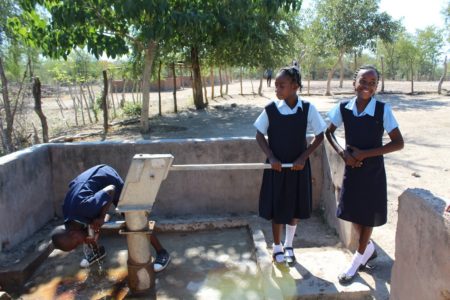
The reason? Simple. Water.
In 2008, Operation Eyesight drilled a borehole near the Mweela School. This meant that women and girls didn’t have to walk as far for water. Mothers could now walk their daughters to school on their way to get water, instead of needing their daughters to miss school to get water with them.
Marriam Matimba, the school’s headteacher, says that the school is well-known in the area for its sanitation opportunities. “A school with adequate access to clean water and sanitary facilities is a girl-friendly school,” Marriam explains.
When communities don’t have access to clean water and sanitary facilities, women and girls bear the brunt of the opportunity cost. When girls have to fetch water or are unable to attend school because of a lack of sanitary products and facilities, they miss out on valuable educational and social opportunities.
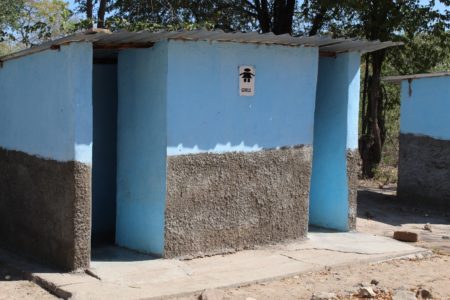
What do boreholes have to do with preventing avoidable blindness? More than you might think. We drill boreholes in communities where trachoma is endemic. Trachoma is a bacterial disease that leads to irreversible blindness when it’s not treated, and a lack of fresh water and adequate hygiene is one factor that contributes to the spread of trachoma. Due to factors such as gendered household duties such as cleaning and caregiving, women are much more susceptible to contracting trachoma than their male counterparts.
A new borehole in a community doesn’t just provide access to fresh water. It helps build resilient communities, prevents illness and can even increase the enrollment of girls in schools. Boreholes help give girls like Blessings a strong start so that she has opportunities for her future.
You can help bring clean water to a community and educational opportunities to girls who are often left behind. Please donate today.
Kuluki is a widowed mother and grandmother who lives in Laholiya, a small village in India. Throughout her life, Kuluki supported her family by harvesting in the fields, cooking, cleaning and sewing. When her son married and had children, she looked after the children while he and his wife were working.
About two years ago, Kuluki’s vision began to deteriorate. “I felt very scared. My world was turning dark. I thought I would never get to see my grandchildren grow.” As her vision worsened, Kuluki became increasingly dependent on her family members to get around. She felt like a burden to her family.
Fortunately, neighbours informed a local community health worker (CHW) about Kuluki’s condition. This CHW, Rupoda, screened Kuluki and discovered that she had developed cataracts. Rupoda informed Kuluki about the cost-free, sight-restoring surgery available at a nearby Operation Eyesight partner hospital. Initially, Kuluki was unsure about the surgery. She had heard rumours around the village that people who had eye surgery had lost their sight completely, and that the surgery was painful. Through Rupoda’s patient counselling, Kuluki decided it was worth the risk and agreed to undergo the surgery.

Now, Kuluki’s vision is completely restored. She can care for her grandchildren and read them bedtime stories. She says, “I feel more alive than before. I’m able to go about my daily work without difficulty.” Not only does Kuluki have her own life back, she’s now an eye health advocate in her community. She has visited five additional cataract patients in her community and shared her experiences with them. She works with local CHWs to dispel negative rumours about cataract and other eye health-related surgeries.
When asked about her opinion of Operation Eyesight and our donors, Kuluki says, “There are no words to thank them as they supported my surgery without even knowing me.”
You can help other women like Kuluki get their lives back by giving them the Gift of Sight this holiday season. Helping to restore the vision of even one person can impact their whole community. When you give the Gift of Sight, you’re giving the gift of life.