

When Florence began losing her sight to cataracts, her daughter, Rose, watched helplessly as her mother lost not only her independence but also her joy.
“She was complaining that she could see smoke,” says Rose, who lives with her mother in Kakamega, located in western Kenya. “She would always say that she could see people far away but could not see people who were near.”
Rose brought Florence to Saboti Sub-County Hospital in Kitale and saw a surgical team from our partner, Kitale County Referral Hospital. Florence received sight-restoring cataract surgery, at no cost.
Reflecting on the difference the surgery made in her mother’s life, Rose sums up her gratitude with four simple words: "Thank you so much."

When Rose brought her mother back to the hospital for her checkup, the doctors said she was doing well. Florence’s smile tells a story that words can’t express.
“Even I can see that she is smiling,” Rose says. “I thank God the operation was successful. I would like to thank the people of Operation Eyesight Universal for bringing free treatment that has helped me and my mother.”
Rose says she hopes we can continue to help others in her mom’s situation.
“When someone experiences vision loss, they often become closed off from the world. This is particularly true for seniors,” says Alice Mwangi, our Country Director for Kenya.
“Through the Gift of Sight, individuals are able to start new, happy chapters in their lives.”
Visit operationeyesight.com/GiftOfSight to help provide critical eye care services for more people like Florence. Thank you for your support!
Every child deserves to be healthy, loved and accepted.
After Mahek was born with strabismus – commonly known as a squint – she faced not only the prospect of worsening eyesight throughout her life, but also stigma from others in her community.
“I felt different from other kids my age and wished I had normal eyes,” says the 15-year-old teen and eldest of five sisters.
Strabismus causes the eyes to point in different directions, often causing blurred or double vision. Mahek and her family, who live in the Raisen District of Madhya Pradesh, India, often felt rejected by their community. Their relatives and neighbours said Mahek would not have a bright future and that nobody would marry her.
Mahek’s parents took her to see an ophthalmologist but lost hope when they were told her eyes could not be treated and that she would have to live with the condition for the rest of her life. Heartbroken, Mahek’s parents stopped exploring further treatment options.
The family’s hope was restored when Raisen Vision Centre held an eye health screening camp at Mahek’s school. Staff told Mahek’s father that his daughter’s condition was treatable, but that she should receive treatment without further delay. She was referred to our partner Sewa Sedan Eye Hospital, where she received surgery.
“I was a bit worried, thinking if the surgery didn’t go as planned it would worsen my eyes. But the surgeons there were very caring and made me feel at ease,” Mahek recalls.
Following the surgery, Mahek returned to school, where her friends joyfully welcomed her.
“My squint is gone, and now I look like other children with good eyes. This treatment has boosted my confidence, and I would like to join the defense services when I grow up.”
Visit operationeyesight.com/GiftOfSight to donate today and help give more children like Mahek a brighter future!
In spring 2023, Operation Eyesight welcomed Dr. Ritu Ghosh as the newest addition to our leadership team. As Global Director – International Programmes, Dr. Ghosh will play a key role in helping us expand our work to more countries and reach more communities in our countries of work, as well as set up examples of programme excellence with the public and private health sectors.
Dr. Ghosh brings with her 25 years of experience in directing international development programs, including research, policy development, business, advocacy and health system strengthening, as well as implementing multi-country large-scale health and nutrition programs. She has also led many digital technology initiatives and has experience developing and fostering partnerships between public, private and non-profit sectors.
She has an impressive string of credentials: high impact leadership training at Cambridge University, a PhD in healthcare and nutrition, a double Master's in social work and English, and a Gold Medalist in Bachelor of Mass Communication, just to name a few.
Dr. Ghosh describes herself as a believer in innovation and transformation. Using the power of data and analytics, she has led many research and behaviour change projects that have helped bring new perspectives to program implementation and evidence-based planning.
If her experience and credentials aren’t enough, Dr. Ghosh is also a poet and has plans to publish an anthology of her Hindi language poems.
I sat down with her recently to talk about her hopes and plans for Operation Eyesight.
Q: Why did you choose to work in eye health, and why did you choose to work with Operation Eyesight?
Dr. Ghosh: I have a passion to contribute to community development; that’s why I originally pursued social work.
Vision loss can impact a person’s independence, mobility and has been linked to injury. It impacts the quality of life as significantly affects mental health, social standing, cognition, employment, even educational attainment, which can in turn impact livelihood, not only among seniors but also in younger generations.
I appreciate the approach that Operation Eyesight is taking when it comes to gender equality and ensuring eye care is available and accessible in the local community, especially through the strategic use of door-to-door surveys and community vision centres.
Operation Eyesight also has a robust gender policy, which ensures that gender perspectives and attention to the goal of gender equality are central across all program models, interventions and partnerships. Numerous studies have shown gender disparity has various negative health outcomes. Many times, women don’t go for checkups because a health facility is not available in the nearby area. When it comes to eye health, affordability, availability and accessibility are significant barriers for women. They can only have equal opportunities to earn, learn and grow when we put them at the centre of the development of all programming, be it in the public or private sectors.
Q: What role does research play in global eye health, and what role do you want to see it play in Operation Eyesight’s work?
Dr. Ghosh: Research informs the direction, focus areas and interventions of our work. We conduct Knowledge, Attitude and Practice (KAP) surveys to understand the local culture, beliefs and community needs, and design the projects accordingly. As a result, the sustainability of our programs is very high.
If we don’t know the impact of our work, we can’t say that our model is successful. Further baseline and endline studies are vital to know the impact of our programs, without which we would be unable to declare entire villages avoidable blindness-free. We should measure impact quantitatively as well as in qualitative terms, like improved health-seeking behaviours, adherence to spectacles, improved WASH practices, etc.
Operation Eyesight also engages in advocacy in order to influence government policies and strengthen national guidelines. In many countries, eye health data is not available, and we have a chance to build eye health indicators in a country’s government database and track progress in different districts and provinces. One major gap here is the need for more gender disaggregated data to show whether women are accessing services or not. For example, if we say 40 people received cataract surgery but don’t know the gender breakdown, maybe it’s 35 males and only five females.
Q: We know that eye health is linked with many other development issues. How do these areas factor into our work?
Dr. Ghosh: Eye health cuts across the United Nations Sustainable Development Goals. Poverty and hunger are a good example. If a person becomes blind, there is impact on their livelihood, for both them and their entire family; if one person loses their sight, their entire family suffers.
Similarly, when it comes to empowerment of women and women’s health, without empowering women to access eye health and other health services, we can’t move towards that goal. Similarly, when it comes to primary education, we know that if a child can’t see the blackboard, they cannot learn and study. So, the distribution of prescription eyeglasses is a key contributor to this goal.
I would like us to further enhance our research to see how we can understand eye health as well as its determinants, such as maternal health, water, sanitation and hygiene (WASH) programs, immunization and nutrition. Therefore, if we – civil society and governments – all focus on enhancing access to eye health, it will help achieve the global SDGs.
Q: The world is changing quickly. What’s the biggest challenge we now face as an organization when it comes to achieving our mission and vision?
Dr. Ghosh: A number of things have changed since the COVID-19 pandemic. During the pandemic, I observed that entire health systems were jeopardized. The primary focus of many governments shifted to how to control the spread of COVID-19. As a result, other health programs were frequently put on the backburner. The need of the hour is for governments and other sectors to refocus on other health areas, including eye health.
The question we need to ask is: how do we strengthen health systems, so that eye health is mainstreamed?
Across the board, people are spending more time on screens. This is impacting people’s health, especially their eyes. Increasingly, people are using digital technology as the primary way to interface and get information, so we as an organization have to move at the pace the world is moving. That’s why we’re planning to use digital survey tools, digital behaviour change communications, digital job aids, digital training module with digital messaging, because this is the way forward. Moreover, technological excellence such as teleophthalmology is necessary to adopt to reach more communities in far-flung areas, because this is the way forward. We are now mixing both approaches of digital and interpersonal communication to access patients and families, and we are considering how we can enhance services and further strengthen health systems.
We customize our programs based on the needs of individual countries. Therefore, our digital strategy also needs to be tailored to the communities where we work. For example, many rural areas have limited Internet access, and in many areas women face barriers to accessing digital technology. So, if we want to convey messages to women in these areas, we need to see which tool and medium is really useful for them. Literacy rates are also important to consider; some areas where illiteracy is prevalent may require visual or audio messages in the local language to understand our messages.
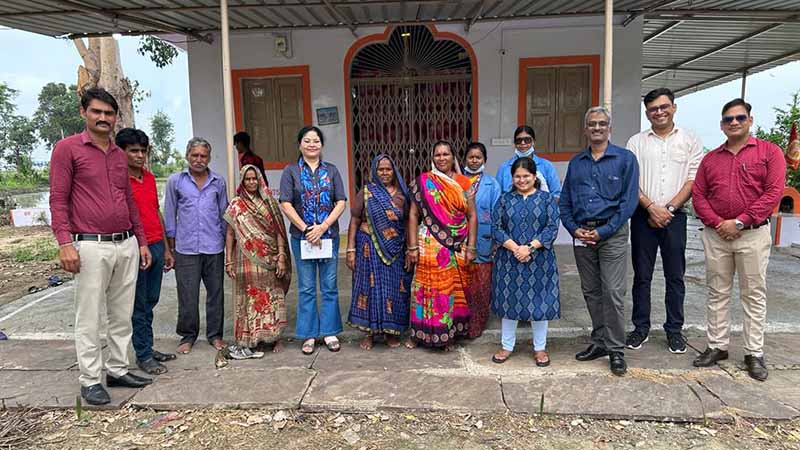
Q: When it comes to tailoring our approach in each country, how does that work?
Dr. Ghosh: Our country directors are our change champion. They work on the frontlines as the face of Operation Eyesight. There are lots of opportunities for them to develop strategic partnerships with like-minded agencies, develop coalitions, identify capacity building needs with partner hospitals and their staff, develop appropriate training modules and build partnerships with governments.
Our country teams are at the forefront of quality program delivery; without them we couldn’t do what we do. When our staff, partners and donors are working in sync, we are able to contribute meaningfully to global eye health in different countries.
Q: What do you most want to achieve at Operation Eyesight?
Dr. Ghosh: I have a number of goals, the first being to reach more communities.
Second, I want us to have multi-country research that includes different parameters, besides just eye health, with increased emphasis on evidence-based planning, to deliver care to more communities in hard-to-reach areas. We will also focus on behavior change interventions, so that communities are able to take charge of their own eye health.
All of this work will help build the capacity of partner hospitals and staff, while delivering cost-effective program models that can be scaled up quickly in different contexts in regions in Africa and Asia. Globally, we will focus on health system strengthening in the public and private sectors.
Third, I hope to develop the donor base in our countries of work and identify in-country partnership opportunities, with governments, hospitals, local leaders, corporations and like-minded partners. In the long run, I want to see Operation Eyesight version 2.0, where we cater to more countries and are having a ripple effect in a range of other development areas. We just celebrated our 60-year milestone as an organization, and as we continue to adapt and grow in an ever-changing world, I think our future is very bright.
Each year on World Sight Day, the global eye health community joins hands to encourage everyone, everywhere to love their eyes and make their eye health a priority.
This year, on Oct. 12, our global community brought quality eye health care to more than 108,000 people across South Asia, sub-Saharan Africa and Canada. Together with our partners we organized eye health screenings, distributed free prescription eyeglasses and provided no-cost cataract surgeries.
“There is no better way to celebrate World Sight Day than by bringing eye health care and education to those who need it most, especially women and girls, to ensure gender equality i.e. equal outcomes for women and men and gender diverse groups. Moreover, eye health significantly contributes to sustainable Development Goals in terms of better options of livelihood, enhanced school performance and socio-economic development that leads to quality of life,” says Dr. Ritu Ghosh, our Global Director, International Programmes.
“The collaboration of our staff and volunteers, donors, partners and communities has helped make this one of Operation Eyesight’s most impactful and successful World Sight Day celebrations to date.”

In Bangladesh, with our partner Netracona Vision Centre, we hosted three school eye health screening camps, which provided comprehensive eye health screenings for 513 children. Forty-three adults were screened at the vision centre.
In Nepal, through our school eye health screening camps, we screened nearly 1,300 students and 19 school staff, and distributed 38 pairs of free prescription eyeglasses. At the Simara Vision Centre, during the two weeks leading up to World Sight Day, 104 patients received life-changing cataract surgery free of charge. Prior to upgrades supported by Operation Eyesight, the facility performed approximately 20 cataract surgeries per month.

In nearby India, in collaboration with our partners we hosted nine eye health screening events at schools and in the community, reaching 1,445 students and 145 adults. We also distributed 98 free pairs of prescription eyeglasses, provided 137 sight-restoring cataract surgeries and organized eye health education events for nearly 2,500 people.

“In addition to eye health screening, distributing eyeglasses and providing surgeries, eye health education plays a key role in ensuring that people know where to seek eye care when they need it,” explains Dr. Troy Cunningham, our Country Director for India. “This combination of treatment and education made it possible for us to declare 39 villages Avoidable Blindness-Free on World Sight Day.”

In Ghana, we joined forces with nursing staff at Saltpond Hospital, our partner facility, to hold public screenings in Awutu Senya District and Mfantseman Municipality.
“Eye health at work was a focus for World Sight Day this year, and our screening activities were aimed at reaching drivers and traders while at work,” says Emmanuel Kumah, our Country Director for Ghana.
“Our partnership with Ghana Health Service is critical to our ability to reach people in the community and connect them with not only eye health care but with their local health system. We’re grateful to our government and hospital partners for helping make World Sight Day 2023 such a success.”
World Sight Day celebrations in Kenya focused on delivering eye health screening and treatment to office and factory workers, teachers and public transport drivers. Eye health screening events for the public were held at our partner hospitals and facilities, enabling us to reach nearly 6,600 people and distribute 291 pairs of eyeglasses – prescription or readers.
Additionally, we hosted eye health education events that reached 2,005 people including workers at PJ Dave Flower Farm in Kajiado. Our partner Moi Teaching and Referral Hospital conducted a procession to create awareness on the importance of eye health, drawing the community’s attention to the services available at the hospital.

“We were proud to join the Ministry of Health for annual World Sight Day celebration events,” says Alice Mwangi, our Country Director for Kenya. “In keeping with this year’s World Sight Day theme of the world of work, we were able to bring eye health screening and awareness to workplaces, through the generosity of our donors and the know-how and passion of our partner facilities.” ”

In Zambia, we joined forces with the nursing staff at our partner Maamba General Hospital to conduct eye health screenings at five schools in the Sinazongwe district in the Southern Province. In total, 565 students were screened and 43 received reading eyeglasses.
“This year’s World Sight Day celebrations focused on reaching pupils and teachers while at work,” says Kelly Kaira, our Programme Manager for Zambia. “The pupils and teachers were grateful for the intervention, and some of them would not have otherwise been able to access eye health services, because of the distance to the hospital, the cost of services and financial limitations. We are grateful to our donors who helped us provide the Gift of Sight, and to our government and hospital partners for helping make World Sight Day 2023 such a success.”
In Calgary, Canada where our global headquarters are located, in collaboration with EvolutionEyes, we provided comprehensive eye exams to eight mothers and four children. The screening event was hosted at Highbanks Society, which empowers young women to attend school and engage in personal planning and goal setting.

“Although many people in Canada take eye health care for granted, there are many people who still face barriers, including Indigenous Peoples and people experiencing homelessness,” explains Sidney Gill, our Community Engagement Specialist – Indigenous Programs. “However, this journey towards self-sufficiency for these communities is not without its hurdles, and vision health is a fundamental element of their overall well-being.”
From sharing eye health tips on social media and in the community, to providing life-changing eyeglasses, surgeries and eye exams, World Sight Day 2023 was a global effort that would not have been possible without our staff, volunteers and partners, as well as our communities of work. Together, we added our voice to the International Agency for the Prevention of Blindness’s annual #LoveYourEyes campaign and joined our eye health peers in encouraging everyone, everywhere to make eye health a priority – For All The World To See.
Every parent wants their child to be safe, happy and healthy at school – Abichikili Secondary School is no exception.
It’s one of five schools across Ethiopia’s state of Amhara where the attendance rate for girls decreases each year due to inaccessibility of clean water and bathroom facilities.
“Students had to walk for more than 15 minutes to get water from surrounding households. Many would not return to classes after that,” says the school’s principal, Yingesu Meshobiaw. “In the past, when girls felt that their period was setting in, they used to jump over fences and go home for lack of facilities.”
In 2022, in partnership with Partners in Education Ethiopia and the Peter Gilgan Foundation, we launched a Water, Sanitation and Hygiene (WASH) program at Abichikili and four other primary and secondary schools in the state, bringing locally-accessible water to more than 9,000 students.
The project has also helped improve school attendance, particularly among girls, who make up more than half of the student population. Before the project, upwards of 10 students were absent from class for a full week each month, often falling behind in class.
“Water access is vital for everyone. Water sources on school grounds allow for community gardens, which promote a different kind of learning and responsibility of nutrition – for students and adults alike,” Yingesu adds.
Local access to fresh water allows people to wash their hands, faces and clothing, prevention transmission of diseases, including blinding trachoma, which is a key cause of vision loss and blindness across sub-Saharan Africa.
Our teams took a variety of approaches to bring water to the schools, including drilling boreholes to access groundwater, digging trenches and installing water supply lines, and setting up storage tanks, faucets and appropriate drainage.
Faculty and community members received training to maintain their water infrastructure and test water quality. Twenty-one female teachers also received menstrual hygiene training including how to create reusable sanitary pads using local materials.
“Having a water supply line has changed our school for the better,” Yingesu says. “Girls started using the facility the day it opened, and attendance rates have increased tremendously.”
Audrey Wilson, 88, first learned about Operation Eyesight from an uncle who attended a talk given by Dr. Ben Gullison, whose work in Sompeta, India inspired Art Jenkyns to start our organization in 1963.
“Nearly six decades ago, that meeting planted seeds that have grown into a lifetime of giving,” Audrey recalls. “It was one of the first charities I gave to, and I still give today.”
Audrey’s passion for supporting our mission eventually led her to travel to India in 2000 with Dr. Gullison's daughter, Marilyn Gullison, who had spent much of her childhood in Sompeta.

“We travelled across the country in what looked like a school bus to many different hospitals and surgical camps where Operation Eyesight’s work was in action,” Audrey says. “We saw patients being picked up and transported to their procedures and even observed a cataract surgery.”
Audrey says the journey to India left a lasting impact on her.
“Great compassion and commitment was shown by all,” she says. “Operation Eyesight is still doing great work, and that’s why I continue to give.”
Learn more about Operation Eyesight's history here.
Thank you for your incredible support, Audrey!
Our global team of more than 2,000 community health workers are our first point of contact with many communities. That’s why they need to have the right mix of training and passion.
For 37-year-old Felicia from Obrachire, in southern Ghana, seeing how prescription eyeglasses made it possible for her own daughter to read helped fuel her passion for delivering eye care in her community.
“Due to my daughter’s story, I really love to screen schoolchildren, so I can help identify the eye conditions they may be having and assist them before it becomes too late,” she says.
“I find satisfaction in detecting eye problems in people and assisting them to get the treatment they need.”

Felicia works as a community health nurse, and since receiving additional training in primary eye care, she now provides eye health screenings, education and referrals for people in her own community.
We work with community health nurses like Felicia in communities across Ghana. Not only do they provide eye care, but also health assessments and health education to others in their own community.
When it comes to overall health and well-being, eye health is often the missing piece of a much larger puzzle. Felicia says the training she received from Operation Eyesight is helping her transform the care she provides to her neighbours.
“I can now give my community members an in-depth education on eye health when I go for home visits,” she explains.
“I love to see people in good health. I am passionate about helping the sick to recover.”
Thank you for your compassion and dedication, Felicia!
With files from Dora Ewusi.
The March 2023 opening of the new operation theatre at the eye unit at Iten County Referral Hospital in Elgeyo-Marakwet County, Kenya was a milestone for the entire community, bringing patients living in surrounding areas more access to advanced eye health care than ever before.
It was made possible through partnership between Operation Eyesight and Kenya’s National Ministry of Health and the County Government of Elgeyo Marakwet.
It shows what’s possible through partnership with governments and health systems in Kenya and our other countries of work.
Our President & CEO, Kashinath (Kash) Bhoosnurmath, was recently in Kenya to attend the facility’s grand opening. He had a chance to sit down with Elgeyo-Marakwet’s Governor, the Honourable Mr. Wisley Rotich to talk about what the facility means for patients and families.
Kash: What impact is the Iten Eye Unit having in the lives of residents?
Governor: Before Operation Eyesight constructed the Iten Eye Unit in 2021, community members had to travel more than 300 km to access eye care services. This presented a significant barrier to accessing care, particularly for children and families facing economic hardship. A child with an untreated eye condition cannot thrive, and it is worse when their eye problem is a genetic condition or when the entire family has eye problems.
Today, thanks to the generosity of donors, eye health care is available right here in the community. The new operation theatre at the eye unit means more patients than ever before have access to sight-restoring eye surgery, closer to home.

Kash: This year, Operation Eyesight is celebrating its 60th anniversary. We’re thriving because of the generosity of donors and the support of partners like Kenya’s Ministry of Health. What role do donors play in helping make advanced eye care accessible to communities?
Governor: We sincerely thank Operation Eyesight and its donors for their support financing the development of the operation theatre. It is the start of a new chapter for the community.
Thanks to donor support, we are also able to purchase other equipment, like an eyeglass edger, which will help staff provide eyeglasses to patients and families in the community at a low cost. For many patients with vision impairment due to refractive error, having the right pair of prescription eyeglasses can be life changing. Sadly, the cost of prescription eyeglasses has in the past been a barrier for many patients. This new equipment will change all that.
Together, we are bringing more than eye care to our people; we are bringing dignity. For many children, quality vision care means the ability to read, receive an education and end the cycle of poverty.
Because of Operation Eyesight’s work, life will not be the same in our community. We appreciate the donors worldwide who support us. For generations and generations, it will be known that Operation Eyesight supported us.
Kash: What role does partnership play in making eye health care accessible in Kenya?
Governor: Partnership between Operation Eyesight and Kenya’s government means that your team’s impact will be sustainable in the long-term.
The county government will sustain what Operation Eyesight has set in motion, because revenues generated by the eye unit will be re-invested to support screening and outreaches, and eventually we aim to declare all villages in Elgeyo-Marakwet County as Avoidable Blindness-Free.
My government has mobilized resources for medical camps in the community where people are diagnosed and treated early. Additionally, we are planning to fully equip Iten County Referral Hospital with diagnostic equipment, stock medical supplies and, most importantly, we are ensuring there is a timely supply of consumables and medicines. I would like to automate Kenya’s Health Management Information System to manage this; it’s an area we are seeking support from our partners.
With the help of partners like Operation Eyesight, we are improving the lives of people living in Elgeyo-Marakwet County.
Kash: What’s your vision for eye health in Kenya?
Governor: I grew up in a village and I have first-hand experience of poverty and its effect on people’s health. I have seen families depleting all their savings due to medical bills. My vision as the Governor is to address poverty and increase access to health. As an economist, I want to reduce unnecessary suffering, unnecessary costs due to medical bills and promote income from agriculture. I would like to increase the number of health centres and develop 20 modern health facilities in the county and improve the quality of health services. This will help reduce poverty levels and eventually eradicate poverty.
When I was previously Deputy Governor, and now in my current role as Governor, I have witnessed Operation Eyesight’s work in Kenya and its impact in communities across the country.
Our vision is to screen all people in the county for eye health conditions and eventually declare every village in Elgeyo-Marakwet as Avoidable Blindness-Free, that is free of undiagnosed and untreated vision loss.
Kash: What’s next for eye health in the community?
Governor: Eye health starts in the community, before a patient shows up in a clinic or hospital. We know that eye health doesn’t happen in isolation but is connected to a range of other determinants of health. That’s why I want to equip Community Health Volunteers (CHVs) to conduct even more eye health screenings at the community level and improve maternal and child health services.
We are lucky that some of our CHVs have been trained to conduct eye screening. We will continue working with them to scale up eye care services. Primary health care workers and eye unit teams have also been trained in primary eye care by Operation Eyesight and will help to screen people at the community level.
We are using an “adopt a village model,” where a village will be financially supported by well-wishers in an area. CHVs working in the community will help us to access more patients and embrace innovation to provide door-to-door screening services in the community.
The County now has a Memorandum of Understanding with Moi Teaching and Referral Hospital that helps to check quality of services at the hospital, and with Moi University that supports in training health workers.
In many ways, our work is just beginning. However, I am confident that together we can build on our success to date and continue to transform communities through the gift of sight.
To learn more about the new operating theatre at the Eye Unit Unit, click here. To learn more about our work in Kenya, visit this page.
Today, we are one of the few nongovernmental organizations partnering with the Government of India to open vision centres in existing government health facilities, bringing quality eye health care to underserved communities.
Together, we are establishing and equipping vision care facilities, training existing healthcare staff and developing a continuum of care for patients – from diagnoses at the community level, to referrals for specialized treatments at hospitals, to follow-up care.
The approach was initially launched in three districts in the state of Arunachal Pradesh, in partnership with Jhpiego (an affiliate of Johns Hopkins University) and the state Ministry of Health. Based on the project’s early success, with the support of Optometry Giving Sight, we are now replicating the model in the states of Madhya Pradesh and Meghalaya.
“It’s not about re-inventing the wheel. Integrating basic eye care into the existing primary health care system helps ensure that patients can receive care in a way that is cost-effective, practical and, above all, sustainable," explains Dr. Troy Cunningham, our country director for India.
“This is how we reach the most disadvantaged populations, as patients who are able to pay most typically seek care at for-profit facilities, rather than attending government services.”
Asafora is like many other small villages in central Ghana; its several hundred residents are mostly farmers growing cassava and plantain, and many community members have faced barriers to accessing eye health care.
What sets this community apart? It is the first village in the country we declared Avoidable Blindness-Free.
The December 2022 declaration event was several years in the making and is the product of collaboration between the community, the local government and our partner, Saltpond Government Hospital.
“Avoidable Blindness-Free means that the village is free of untreated vision loss,” explains Emmanuel Kumah, our country director for Ghana. “It also means that people in the community know where to receive care. This is important in communities like Asafora, where there has historically been resistance to receiving eye care.”
Our partnership with Asafora began in 2017 with primary eye care training for 10 local community health nurses. This team conducted door-to-door surveys to identify people with eye conditions, distributed vitamin A supplements and provided basic immunizations. Patients with cataract and other eye conditions were referred to the hospital for treatment.
We conducted a second door-to-door screening in 2021 to see how patients were doing and discovered several patients had refused care.
“We realized there was a lot of resistance to receiving eye care within the community, due to misconceptions about surgery,” Emmanuel explains. “We had to double down on our efforts to educate the community and inspire behavioural change.”
Community health nurses were deployed. They knocked on doors and attended churches, mosques, and child and newborn care sessions where they provided eye health education. Creating awareness and encouraging people to seek eye care helps ensure a village becomes, and stays, Avoidable Blindness-Free.
The declaration event was a landmark for public health in Ghana, and Asafora is the first of many rural villages to be declared Avoidable Blindness-Free in the country.