

Vaishali is a 19-year-old girl who lives in Madhya Pradesh, India, with her grandparents and her younger sister. It is her goal to attend university, and she has been studying hard to make this dream a reality.
Unfortunately, she struggled with her studies over the last year because she was having problems with her eyesight. In addition to affecting her studies, it is also impacted her daily life and made things like household activities and supporting her uncle in his business difficult. Unable to concentrate on her studies for very long without getting a terrible headache, her dreams to attend university seemed out of reach.
Vaishali and her family knew that her struggles were due to vision impairment, but they didn’t know of any eye health facilities in their area, so they had nowhere to turn to for help. They worried that without treatment for her vision problems, her dream of attending university might not be possible.

Fortunately, the family was visited by Monika, a community health worker from our partner Sewa Sadan Eye Hospital in Bairagarh, Bhopal. She was doing routine door-to-door eye screenings in the village as part of our community-based eye health initiative. Through the screening done by Monica, Vaishali learned that she had refractive error in both eyes. Simply put, she needed eyeglasses.
Monika told the family about a vision centre nearby and advised her to go there and get her eyes tested by an optometrist. She visited the vision centre with her family, and they felt very hopeful after they were counselled by the vision technician. During her visit she received a comprehensive eye check-up and a pair of prescription eyeglasses.
With her vision corrected, Vaishali’s dreams are now back on track. The eyeglasses are giving her a chance for a brighter future, thanks to donors like you.
Please donate today to help more people like Vaishali realize their dreams.
As an organization that relies on the support of Canadians in our mission to eliminate avoidable blindness, we are concerned by the cut to the tax credit for charitable donations in the 2015 Alberta provincial budget. We know that the generosity of Albertans won’t change, but it’s a worry that this will impact how businesses and organizations donate.
According to the Calgary Herald, the tax credit cut applies to all donations over $200, and the tax credit will be reduced from 21 percent of the donation, to 12.75 percent. The Herald estimates that this move will save the government of Alberta $90 million a year. Donations under $200 will not be affected.
At Operation Eyesight, good stewardship of donor funds is hugely important to us, so we understand the move by the government to set Alberta on a healthier fiscal path. But that $90 million is money that won’t be going back to the province’s most generous individuals, organizations and businesses, at a time when taxes and fees are also increasing.
For example, a donation of $1,000 in 2016 (above the $200 threshold) will result in a combined federal and provincial tax credit of only $417.50. This is a reduction of $82.50, compared to the $500 tax credit that a donation of $1,000 would have received in 2015.
We are concerned that this will affect not just Operation Eyesight’s work, but all non-profit and charity organizations that fundraise or operate in Alberta, and that the most needy, be they here in the province, or elsewhere in the world, will be the ones who are most impacted. We know our supporters donate because they want to give the gift of sight, not because they want tax savings, but the tax credit makes the decision to donate much easier.
This move reverses an Alberta tax credit increase that came in 2007, when the tax credit jumped from 12.75 percent to 21 percent. We hope that the tax credit cut is just a temporary measure, and we urge the provincial government to restore the 21 percent tax credit as soon as is fiscally possible.
Have questions? Contact your Alberta MLA.
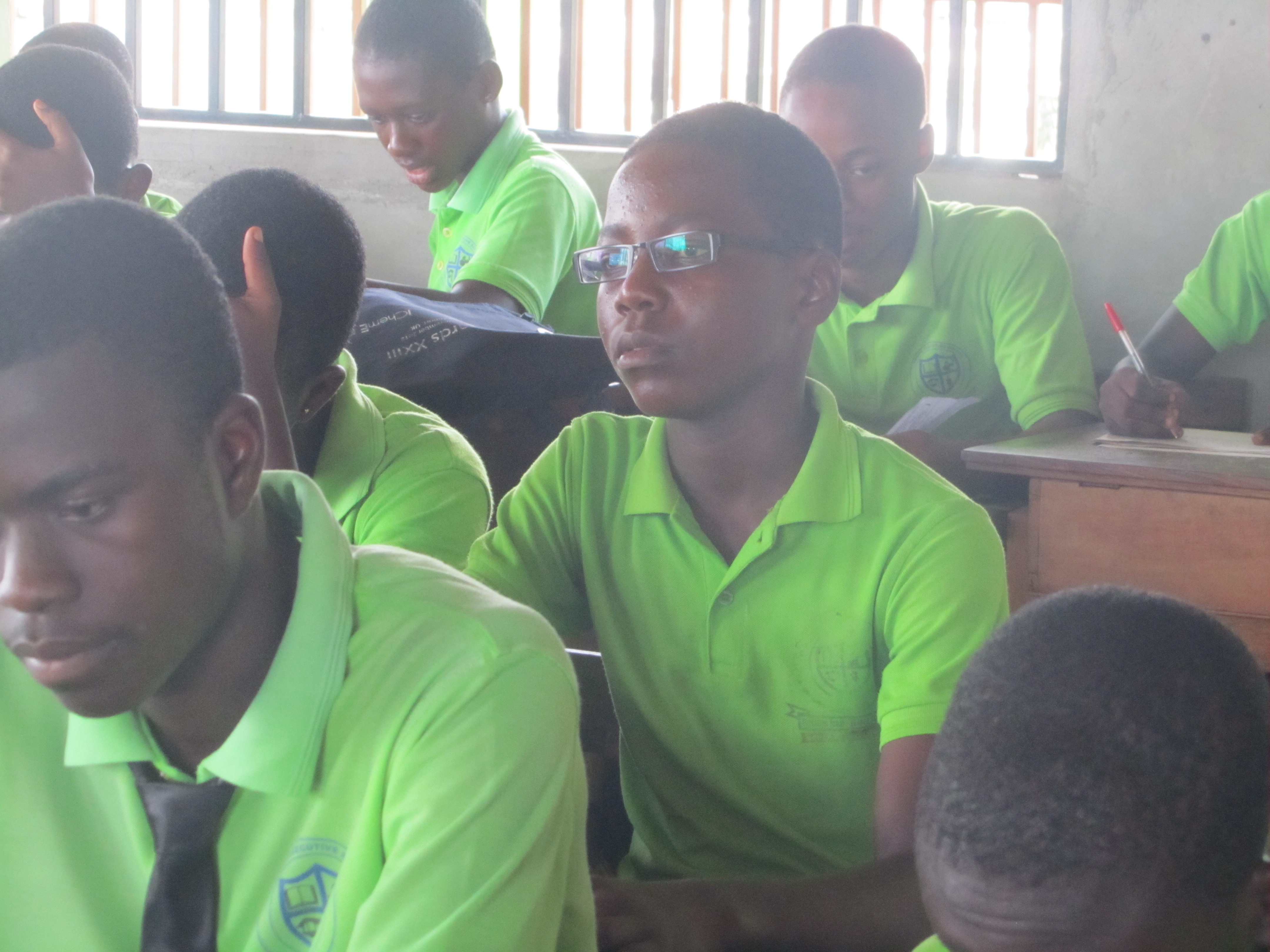
What if you were told by a respected family friend that wearing eyeglasses would cause your child to go blind? Imagine your shock and fear!
That was the situation faced by Hannah Quayson, a widow living in Kasoa, Central region, Ghana. Hannah works at a local convenience store to support her six children. After her husband’s death three years ago, she received a dire warning from a prophetess and friend of the family: Hannah’s youngest child, Ekow, then 11 years old, would go blind if he continued to wear the eyeglasses he had been prescribed since he was two years old. Not knowing any different, poor Hannah believed the prophetess and prevented her son from wearing his eyeglasses.
Now 14 years old, Ekow’s life changed dramatically. He had been one of the best students in his class, but without his glasses, he couldn’t see the chalkboard and couldn’t read. His teacher tried to get him to sit at the front of the classroom, but – typical of adolescent boys – Ekow insisted on sitting in the back row. His marks fell quickly.
Fortunately, luck smiled on Ekow last year, when the outreach team from Operation Eyesight’s Watborg Eye Services visited his school for a regular school eye screening. Ekow was diagnosed with abnormally low vision, yet the refractive procedure was able to bring his vision to normal.
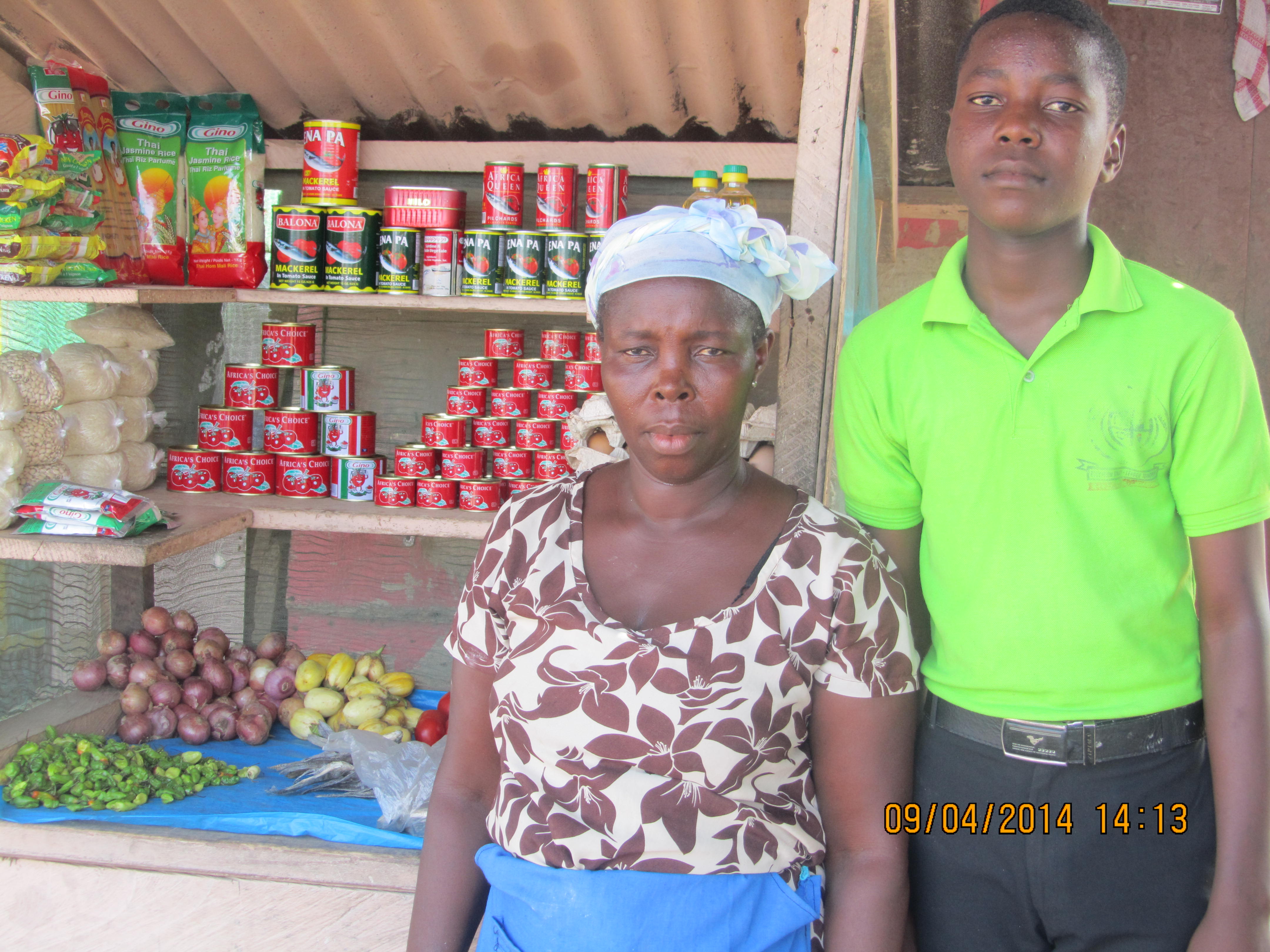
The outreach workers were even able to convince Hannah that her son would not go blind with the new eyeglasses. Now, thanks to his brand-new, custom fitted prescription glasses, Ekow is able to see clearly for the first time in years!
Ekow, his mother and the school are grateful to our donors for your unyielding commitment to the elimination of avoidable blindness. Thank you!
For just $20, you can provide others with prescription eyeglasses, too. See our Gift Guide to learn more.
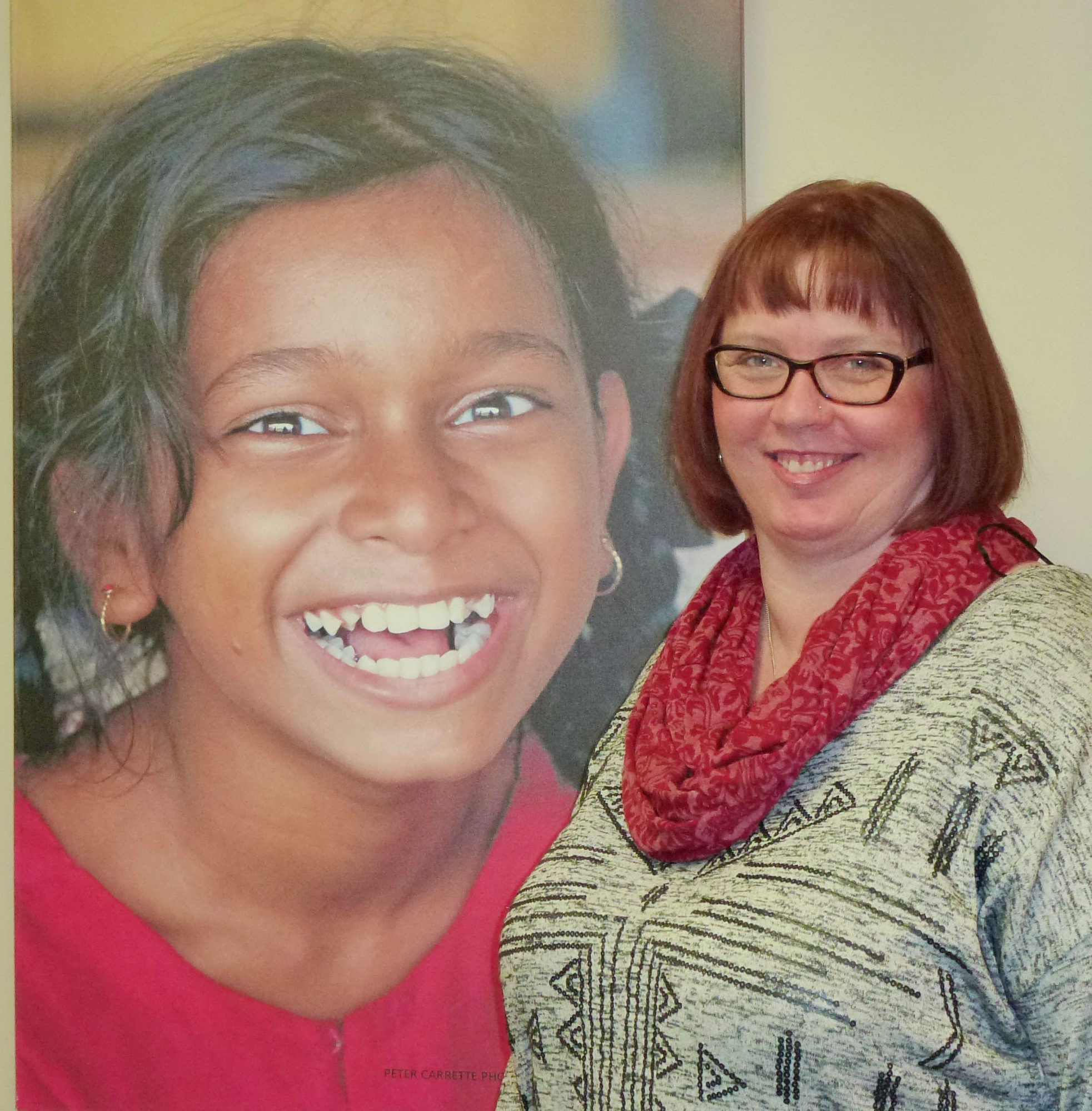
This week is National Volunteer Week – a time to recognize, celebrate and thank Canadian volunteers. Operation Eyesight is fortunate to have a large group of wonderful volunteers who help in our head office in Calgary – many of them on a weekly basis. One of our dedicated weekly volunteers is Mona Soyland.
Mona first heard about Operation Eyesight at a social gathering. No longer able to work full time due to a medical condition, she was hoping to find an organization to volunteer with on a casual basis – and Operation Eyesight was just the place she was looking for!
“Volunteering is a way for me to contribute to society while I’m not working,” she says. “And Operation Eyesight is a great place to volunteer. Everyone’s welcoming and they make me feel like I’m part of the family.”
Since she started volunteering in January 2014, Mona has come to understand, believe and promote Operation Eyesight’s mission to eliminate avoidable blindness. Her volunteer support includes making donor thank you calls, updating the database, conducting research, working in booths at festivals, and even taking photos and editing videos.
While she has a knack for the more creative tasks, she enjoys helping in any way needed. “I like to look for the challenge and try new things,” she says. “If I want to learn, the staff are always there to answer my questions.”
Mona is a virtuoso when it comes to donor thank you calls. Her kindness and enthusiasm is enough to brighten anyone’s day.
“I’m always interested in why people donate to Operation Eyesight,” she explains. “I love hearing their stories, and I can usually tell on the phone if someone is going to be talkative or not.”
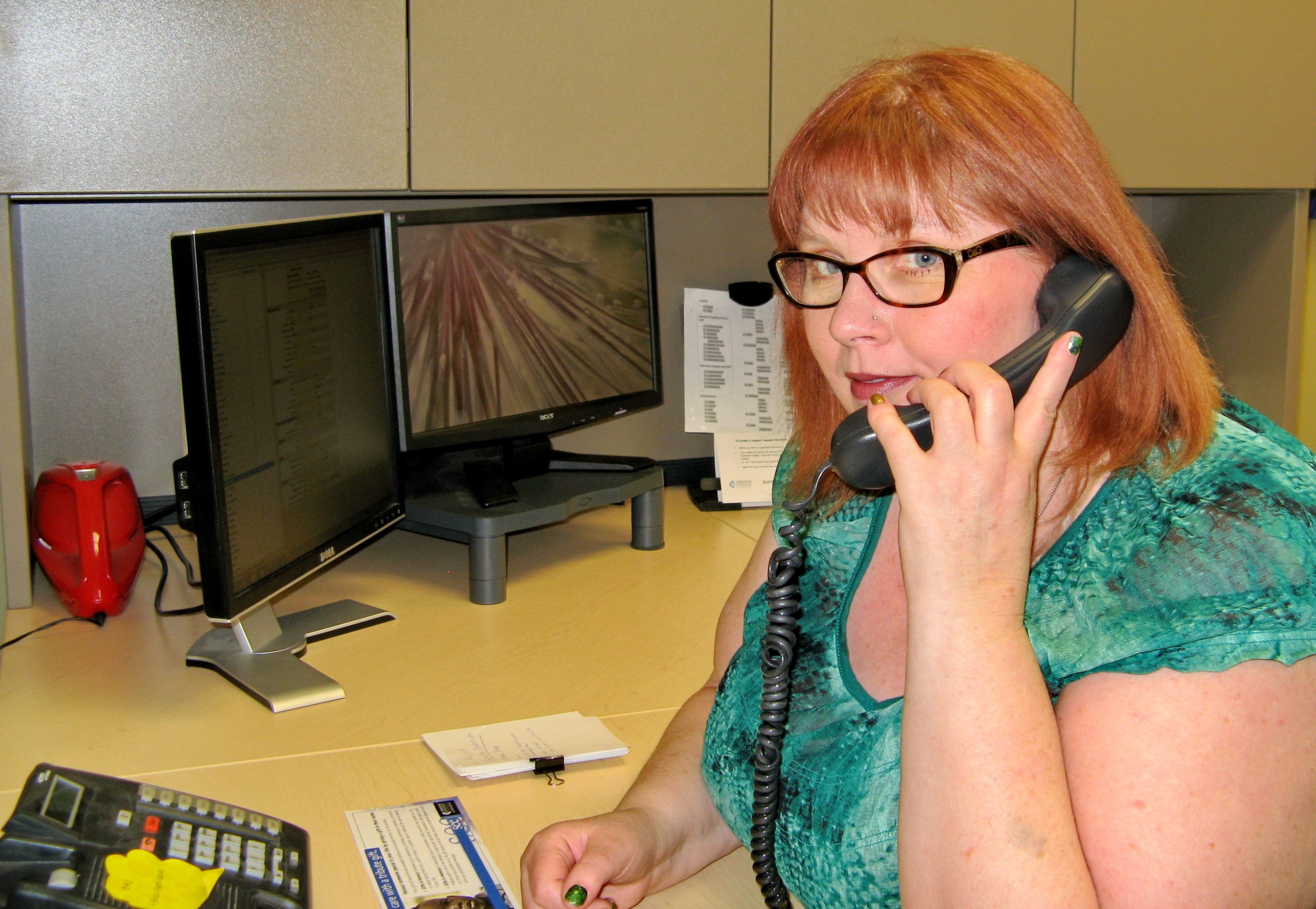
Donors often tell Mona that they appreciate Operation Eyesight’s careful use of donation money. “Operation Eyesight is a great organization that uses its funds wisely,” confirms Mona.
Mona says she would definitely recommend volunteering at Operation Eyesight to others. “It’s a great opportunity for those looking to challenge themselves,” she explains. “You can explore your limits from the office, or you can get involved with the festival side of things. And the best part is, the hours are flexible.”
Mona also volunteers with her condominium board, and she recently signed up to assist the visually impaired through the new “Be My Eyes” smartphone app. In her spare time she enjoys photography, watching movies, socializing with friends and travelling.
Thank you for being “part of the family,” Mona. We’re grateful to have compassionate and talented volunteers like you.
Happy Volunteer Week to all of our office volunteers: Alisha, Anita, Anjali, Jason, Jie, Joe, Joseph, Jueping, Laurie, Linda, Norma, Shreya and Sylvia. Also “thank you” to our youth club members, our school committee volunteers (Lisa and Sylvia) and our many festival workers!
We Canadians are a generous bunch. We want to help. And given the expense of prescription eyeglasses and how necessary they are for many of us to see, it’s natural that if we have an old pair, we want to donate them to be passed on to someone in need.
But Operation Eyesight no longer collects eyeglasses, and hasn’t since 2003.
That doesn’t stop people from mailing them to us, showing up with boxes full of them, or leaving a bag of them on our doorstep. It’s actually not helpful; we’re forced to throw away all the old pairs that we receive.
Here’s why. In order to be useful, a pair of eyeglasses needs to be fitted via a professional eye exam. To make use of an existing pair, we’d need to find someone with that exact prescription. Anything else requires a person to accept eyeglasses that don’t help them.
And it’s very time-consuming and difficult to match a person’s prescription to an existing pair of eyeglasses. Their vision might even be harmed if they are wearing eyeglasses that are not a perfect match for their prescription.

Providing eyeglasses to those in need is still vital to our approach. Here’s how we do it. Every Indian and African hospital we work with ensures that each patient who needs glasses gets comfortable, modern, NEW prescription glasses.
Those who can’t afford the cost (the equivalent of $2 to $4 in most locations) have those costs subsidized by local customers who can afford to pay for more expensive frames.
Some people may think “Used eyeglasses are still useful! Why don’t you try and use them?” In addition to the difficulty of matching used eyeglasses, there are also compelling economic reasons. It’s actually less expensive for us to buy locally-made eyeglasses for distribution in the countries where we work, than to collect, sort and ship used eyeglasses overseas. In fact, India no longer allows used eyeglasses into the country, as they interfere with their own eyeglasses industry.
So please, don’t leave your used eyeglasses at our door. We appreciate your generosity, but we can’t use them. And if you’d like to help in another way, please consider clicking here to donate $20, which can provide new, custom-fitted prescription eyeglasses for up to three people in Africa or India. Imagine their happiness at being able to see clearly!
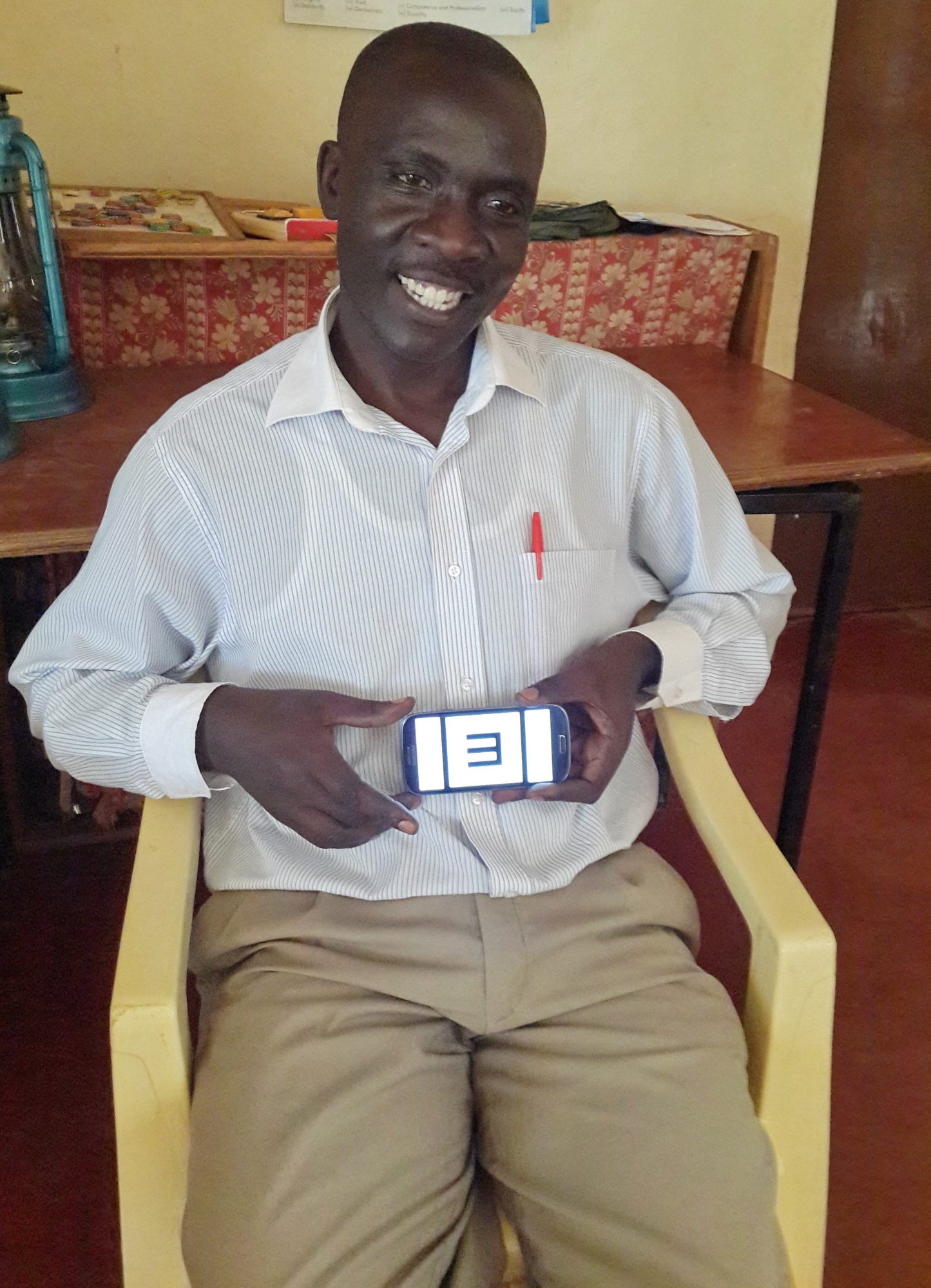
Last spring, we told you how Operation Eyesight helped fund an exciting technological development that will revolutionize eye examination: a smartphone application called Portable Eye Examination Kit (PEEK).
Now being tested in rural schools in Kenya, the school-based PEEK pilot project is helping build capacity of teachers to monitor and evaluate the visual acuity of their students.
Wilberforce Nyukuri, 41, has been a teacher for four years at Kiminini Primary School, located in Transzoia County in Kenya’s Rift Valley. Before he was sensitized about eye problems, the teacher admits that it was not easy for him to recognize children with low vision or other eye issues. The only help he could offer a child was to move them to the front of the classroom to better see, or inform their parents.
Through Operation Eyesight’s Child Eye Health project supported by Seeing is Believing, Wilberforce was trained on the principles of primary eye care, and later was picked for PEEK training.
Wilberforce praises PEEK’s efficiency, adding it has completely removed paperwork from the screening exercise. Data is transmitted directly from the smartphone to a doctor’s computer. “PEEK is perfect. It is very fast to screen and less tiring,” he says, noting about 950 pupils were screened at his school as part of the PEEK study.
Dr. Hillary Rono, an ophthalmologist in charge of Kenya’s North Rift Zone (population 2.5 million people), is an investigator in the pilot project. His interest in validating PEEK arose from the scarcity of eye workers and the need for early detection and treatment of children with visual impairment.
According to Rono, school screening in most parts of Kenya is conducted by eye health workers, which takes time that could otherwise be used in treating patients. By using mobile phone technology and PEEK, teachers can independently conduct screening in their schools.
Technology is creating important new ways to help fight avoidable blindness – and we will keep you up to date on PEEK’s progress! Special thanks to Seeing is Believing for funding this exciting project.
Last September, we told you about Sarah Kiruri, a teacher at Kishermoruak Primary School in southern Kenya. Today we’d like to tell you about Ridgewood Rotary Club, a generous group of donors working behind the scenes to help keep Sarah’s school running smoothly.
In 2008, Ridgewood Rotary, a club from New Jersey, USA, formed a partnership with Kishermoruak Primary School. Since then, Ridgewood Rotary has supported the school through a variety of capital projects: building classrooms and administrative offices, construction of a fence around the compound and completion of a water project. Ridgewood Rotary has also provided over 300 students with hot lunches every day since the club’s partnership with the school began.
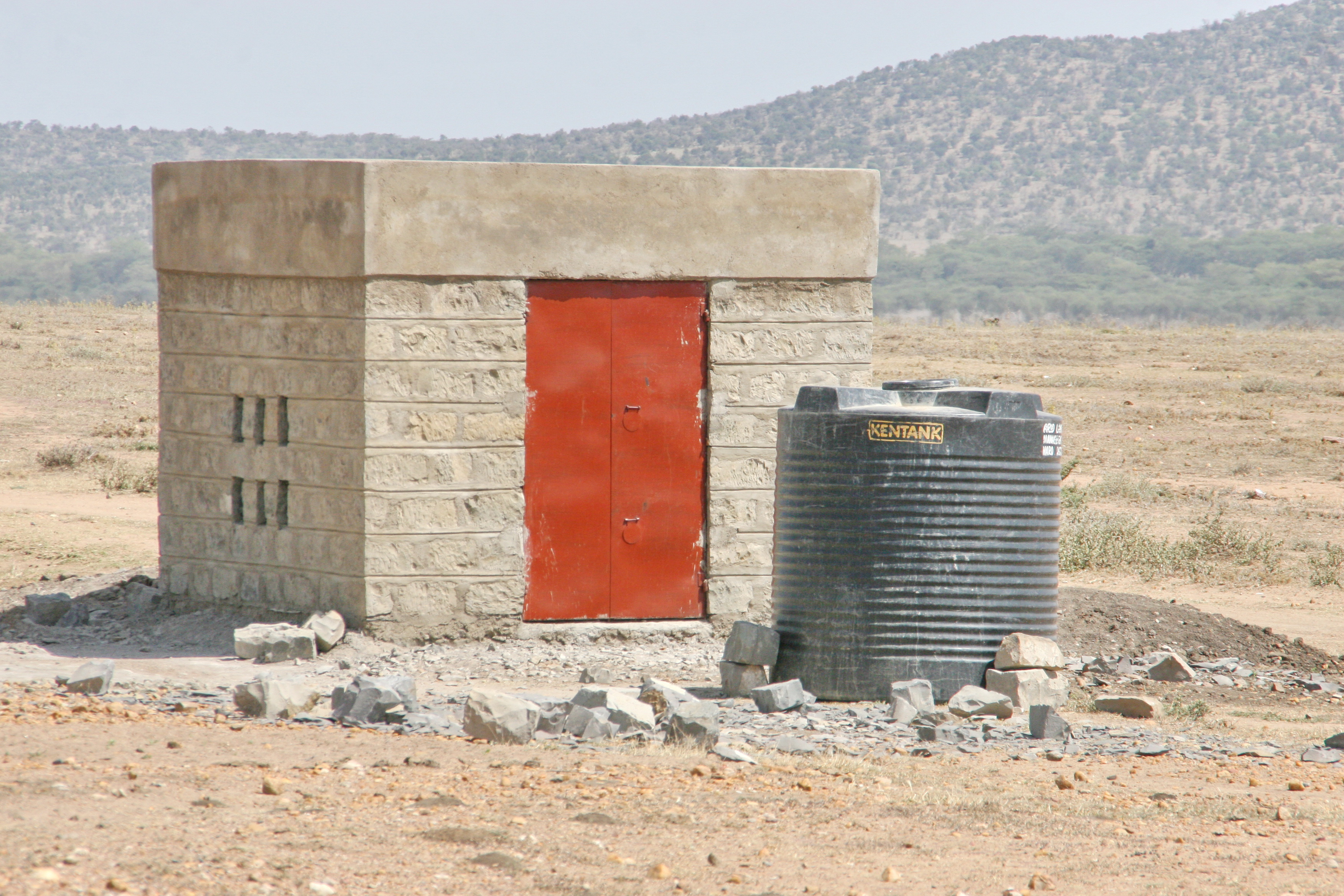
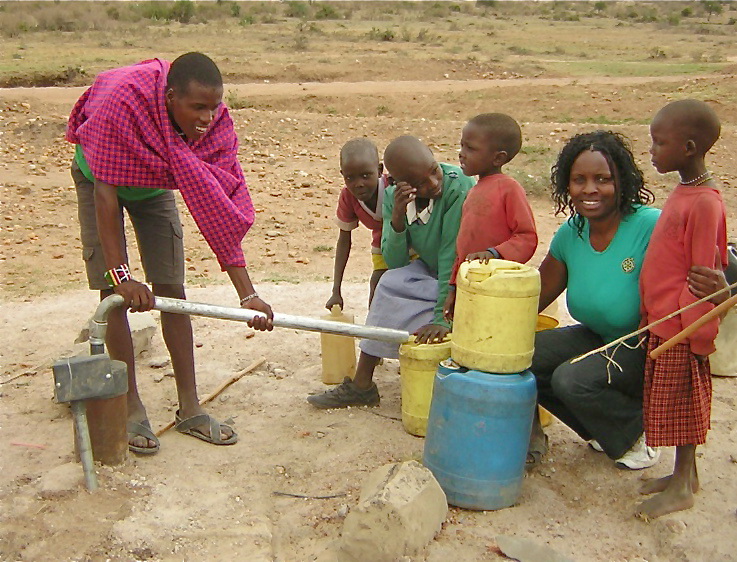
In 2008, Operation Eyesight developed a borehole in Kishermoruak as part of our efforts to prevent the spread of blinding trachoma. Our agreement with the community required that the residents provide a pump house to accommodate the diesel generator and pump needed to make the borehole operational.
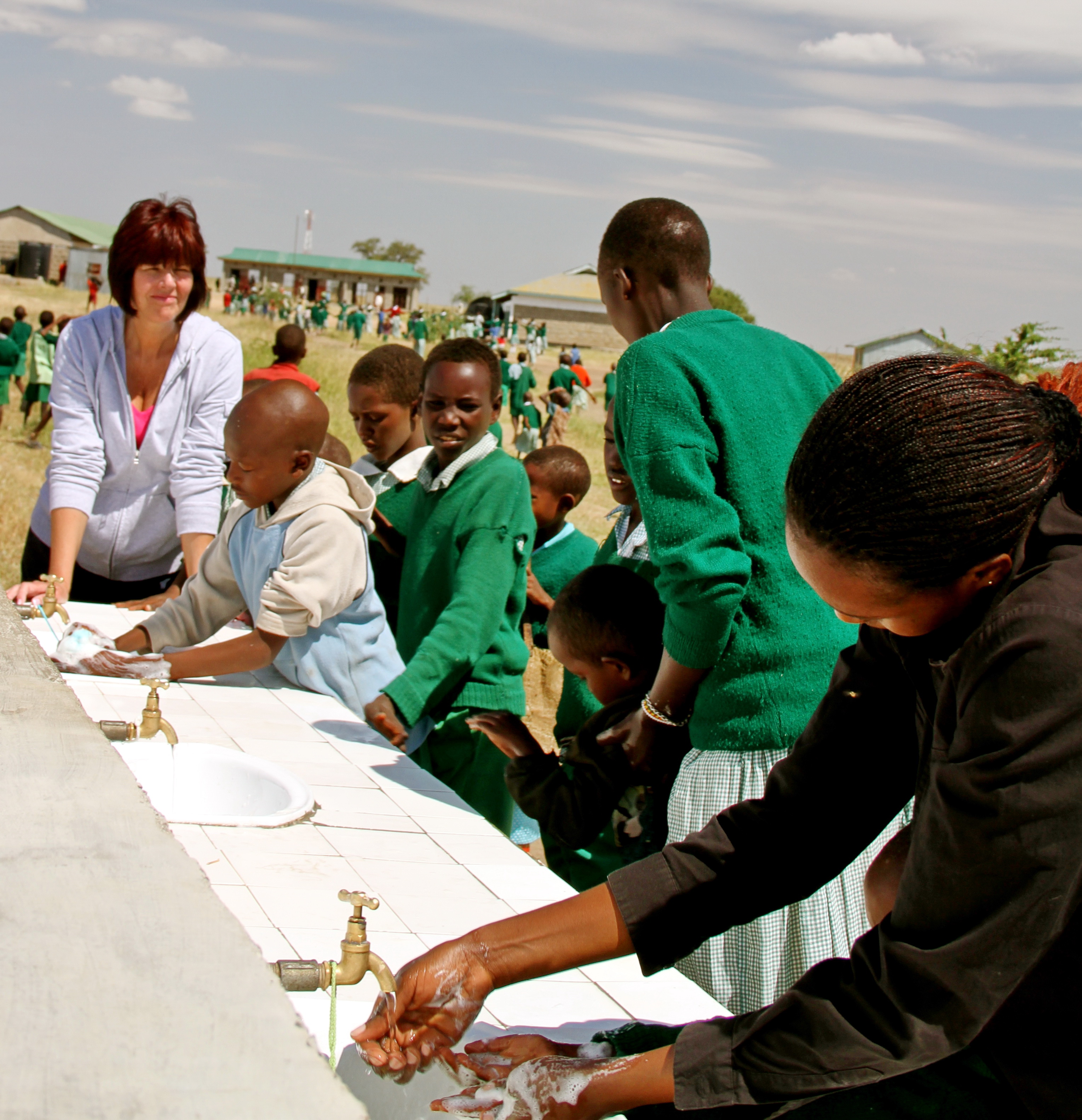
Ridgewood Rotary provided the funding needed for the pump house and, as with the other capital projects, the school’s parent council provided the water necessary to prepare mortar and plaster for the walls of the facility. In addition, a washing station was built to provide students with sinks where they could wash their hands before lunch.
The borehole now serves the community of more than 1,000 men, women and children. With the provision of fresh water, the community is now cleaner and healthier. In addition, improved sanitation helps prevent the spread of the eye disease trachoma, which Operation Eyesight is ultimately working to eliminate.
Jerry Kallman, chairman of the Ridgewood Rotary Club Foundation, and his wife, Lorraine, visit Kishermoruak Primary School every year. (You can read highlights from Jerry and Lorraine’s past trips here.)
Their visits always begin with a meeting with the head teacher and the parents’ council, as all parties are involved with the decision-making and implementation of every project. Like Operation Eyesight, Ridgewood Rotary understands the importance of community engagement and sustainable development.
Thank you, Ridgewood Rotary Club, for your incredible support! It’s amazing to see the real difference you have made, and will continue to make, in this community. Thank you, and congratulations on your 90th anniversary!
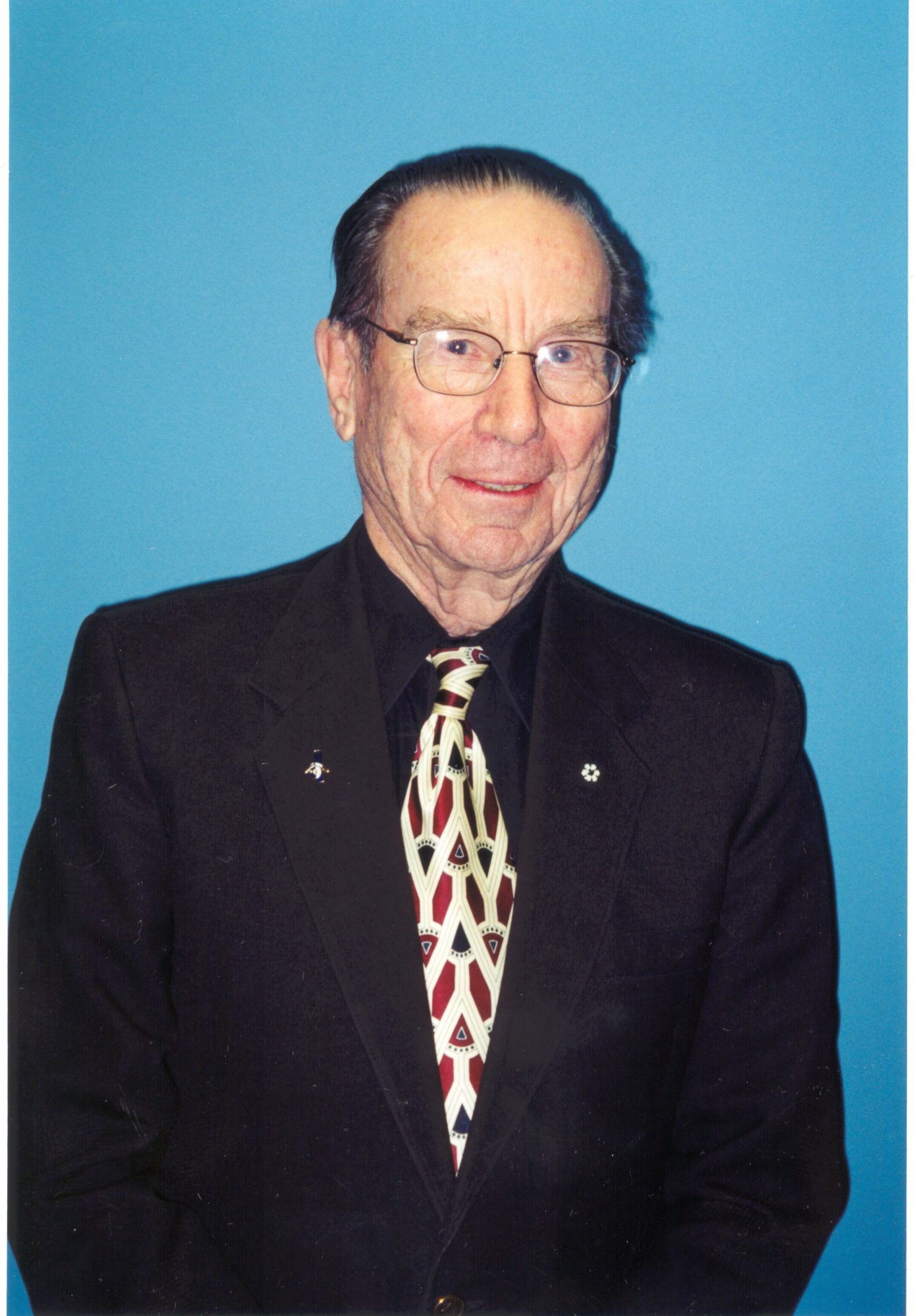
When Operation Eyesight’s founder Art Jenkyns passed away on January 26, 2005, we knew that the world had lost a rare individual. Much has changed since the first meeting of “The Gullison Club” in 1963, when Art and his fellows at the Baptist Men’s Club raised $840 in support of Dr. Ben Gullison’s Arogyavaram Hospital.
A lot has changed since Art’s passing, too. In the past 10 years, we have adapted our methods and worked to tackle the root causes of avoidable blindness.
One such example is our effort to eliminate the agonizing eye disease trachoma. In 2007, we drilled our first borehole in Kenya’s Narok district, part of a strategy to change the conditions that allow the trachoma-causing bacteria to spread. Since then, we have drilled boreholes in Kenya’s West Pokot district and Zambia’s Sinazongwe region.
Another change is that we now work more closely with our partners. Our India staff have created a model of hospital-based community eye care that provides important technical advice rather than financial support. This model was endorsed by Vision 2020 India and represents a unique way of thinking about ending avoidable blindness. It involves establishing local referral and treatment services and training local community eye health workers.
These solutions are designed to create eye health care that can be sustained without foreign financial assistance, so that the places where we work will be able to eliminate avoidable blindness once and for all.
Art Jenkyns believed that we have the means and responsibility to help people who suffer from avoidable blindness. While those means have changed, the responsibility remains, and we are so thankful that our generous donors agree that this serious health issue is a challenge that must be addressed.
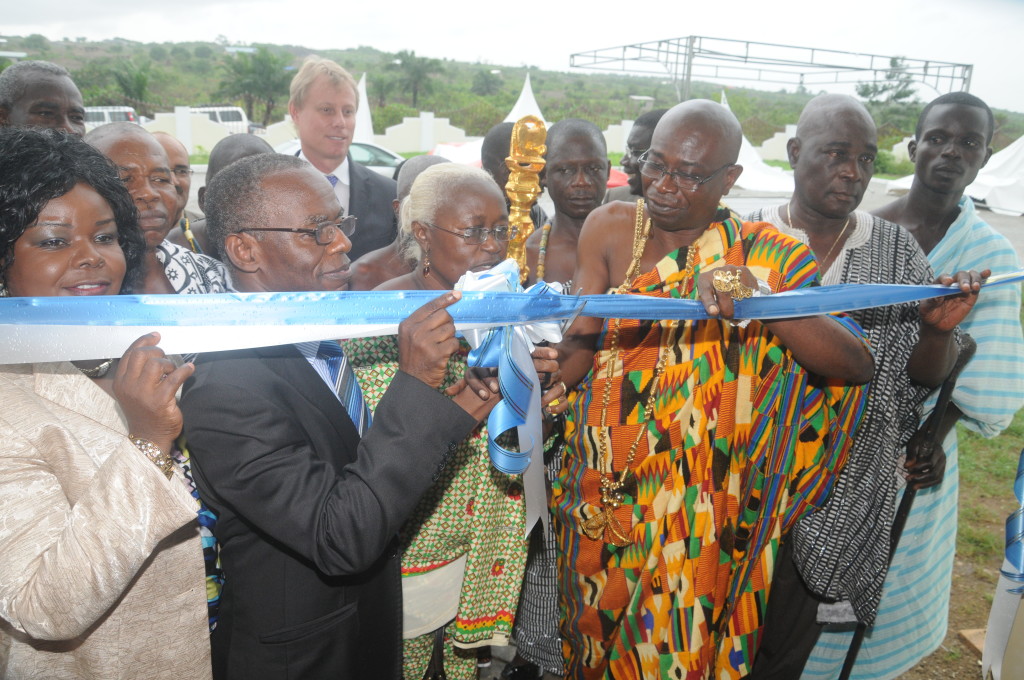
We thank everyone who honours Art by making sure that his message is heard. We know that his dream of a world without avoidable blindness will one day be a reality!
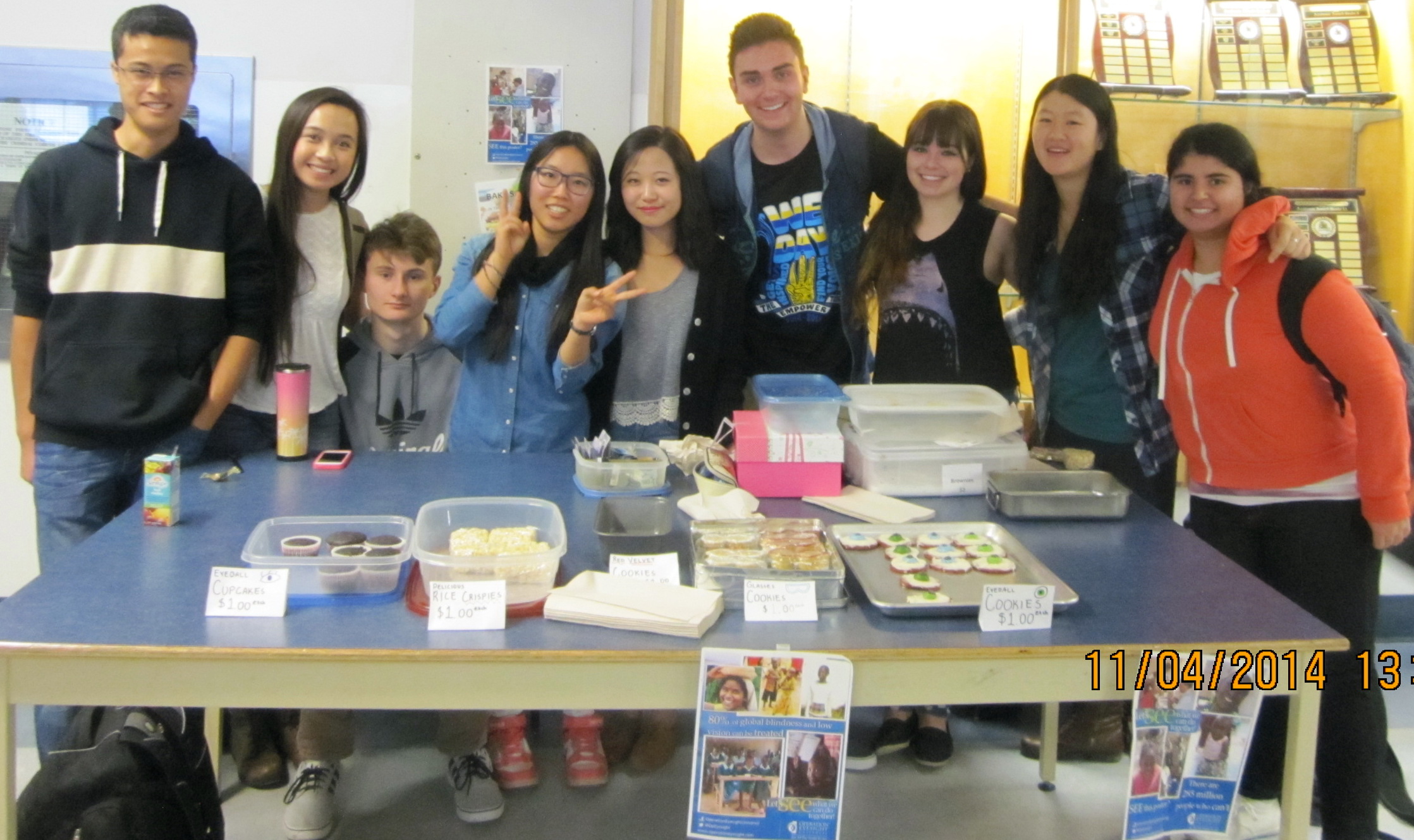
We’re excited to announce that we now have a student club: Youth for Operation Eyesight! This initiative was created by our school committee (run by our Philanthropy team and two enthusiastic volunteers) as a way to educate Calgary youth about our work and provide them with an opportunity to give back to the global community. We now have seven youth groups across six different schools in Calgary.
Sonya Soh, a student at Queen Elizabeth High School, shares her story below. Thank you, Sonya, for your inspiring words and for your club’s dedication to eliminating avoidable blindness!
In the past five months, my peers at Queen Elizabeth High School and I have learned so much through the operation of our own school club, Knights for Sight. Through fun meetings and various events, we’ve not only strengthened our bonds of friendship but have also come to truly sympathize with individuals plagued with vision problems worldwide. This growth in our companionships and compassions would not have been possible without the amazing opportunity Operation Eyesight presented us through their youth committee.
I first began this remarkable journey as a lone, timid student among a crowd of unfamiliar youth in Operation Eyesight’s board room. At this first meeting, I felt intimidated by the task before me: to spread word of Operation Eyesight’s cause and work. How could I, the only student there from Queen Elizabeth High School, possibly make a difference for Operation Eyesight and the millions of people they strive to help?
My first attempt to resolve this was to suggest a fundraising idea to an existing club within my school. They rejected it. I then turned to a more daunting idea: start my own club.
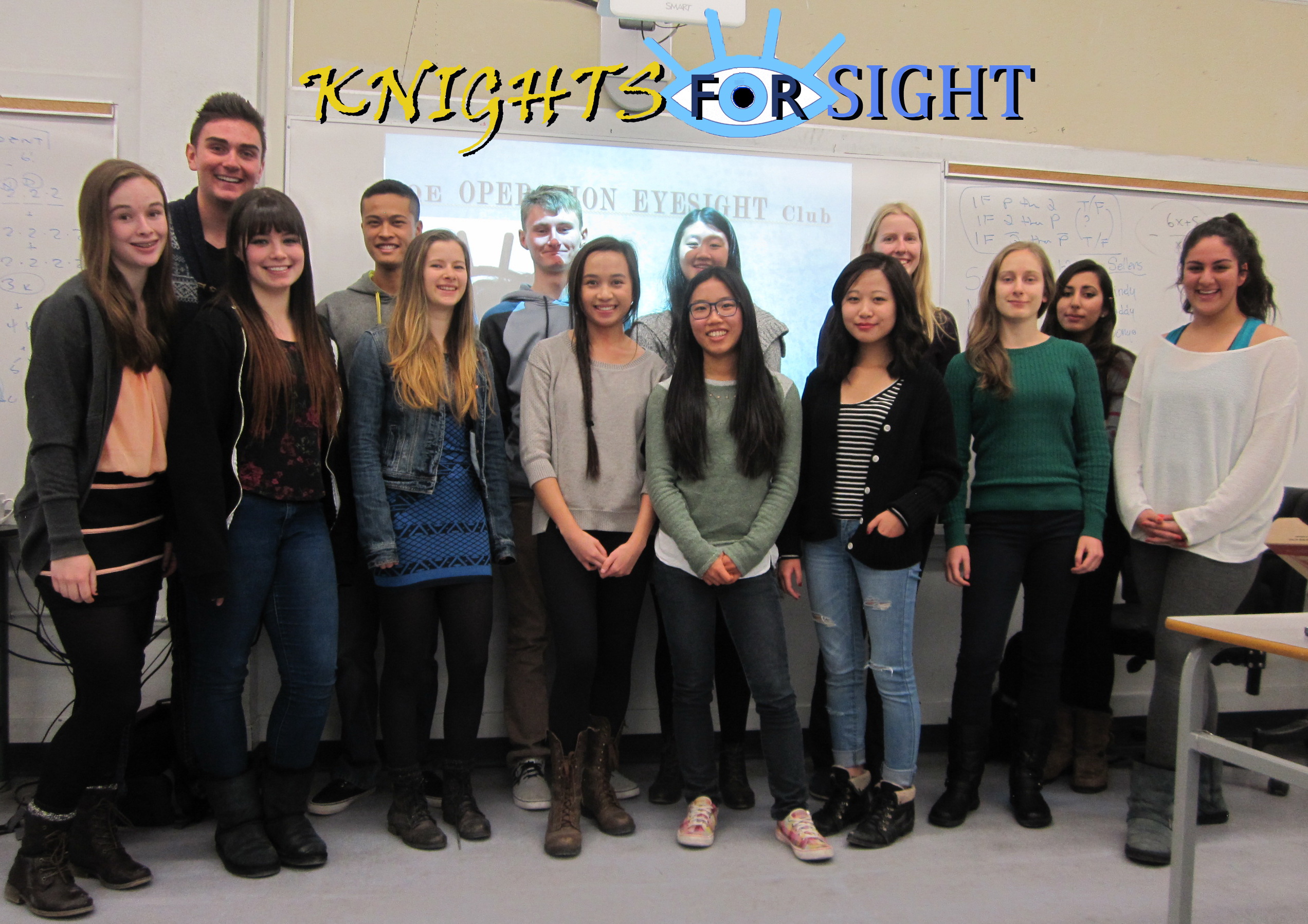
Starting Knights for Sight was not an easy task; with a month of begging my friends to join me, I barely gathered six people. We planned a simple bake sale, then moved on to a unique cataract simulator game and continued on with a couple more food sales. Along the way, Knights for Sight somehow more than doubled in number, and its determination grew beyond my dreams.
To be honest, some part of me still questions whether I have truly made an impact on even a fraction of the people affected by avoidable blindness around the world. But I know my peers and I have tried. We have taken initiative, we have been courageous enough to attempt something we never thought we were capable of attempting, and we have been dedicated.
What exactly Knights for Sight has done for the people suffering from vision problems worldwide, I cannot say in fact. But I sincerely hope we have given these people clean water and the workforce needed to sustain their health and facilities for generations.
In truth, it is possible that those affected by avoidable blindness have done more for the youth of Knights for Sight than we have for them. These people have inspired Operation Eyesight’s work. They have, by extension, made us realize that our daring endeavors are more than worthwhile, as they may bloom into something more magnificent than we could ever have imagined.
Thanks for sharing your story with us, Sonya. And a big thank you goes out to all the “Knights for Sight” at Queen Elizabeth High School!
To organize a fundraiser at your school (or workplace), visit our website.
When you think of Operation Eyesight and our mission to eliminate avoidable blindness, the word “cancer” may not come to mind. However, eye cancer is a cause of blindness, and in some cases, this blindness could have been avoided with early detection.
Retinoblastoma, a malignant tumour that starts in the cells of the retina, is the most common type of eye cancer in children. According to The Times of India, retinoblastoma accounts for three percent of all cancers affecting children under the age of four. Around 2,200 new cases of eye cancer are reported every year in India, which is just one of the countries in which Operation Eyesight works.
"Timely treatment can save 95 percent of the children suffering from the disease. In 75 per cent of the cases, the child's vision can be saved. Hence, awareness, early detection and treatment are extremely crucial," says Dr. Swathi Kaliki, consultant, Orbit and Ocular Oncology Services, at the L V Prasad Eye Institute in Hyderabad, India.
Through Operation Eyesight’s school and community outreach programs, in both India and Africa, we are able to screen children for eye health problems and refer them to the nearest partner hospital for treatment.
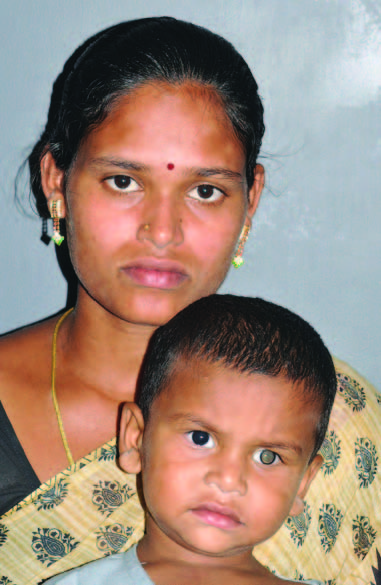
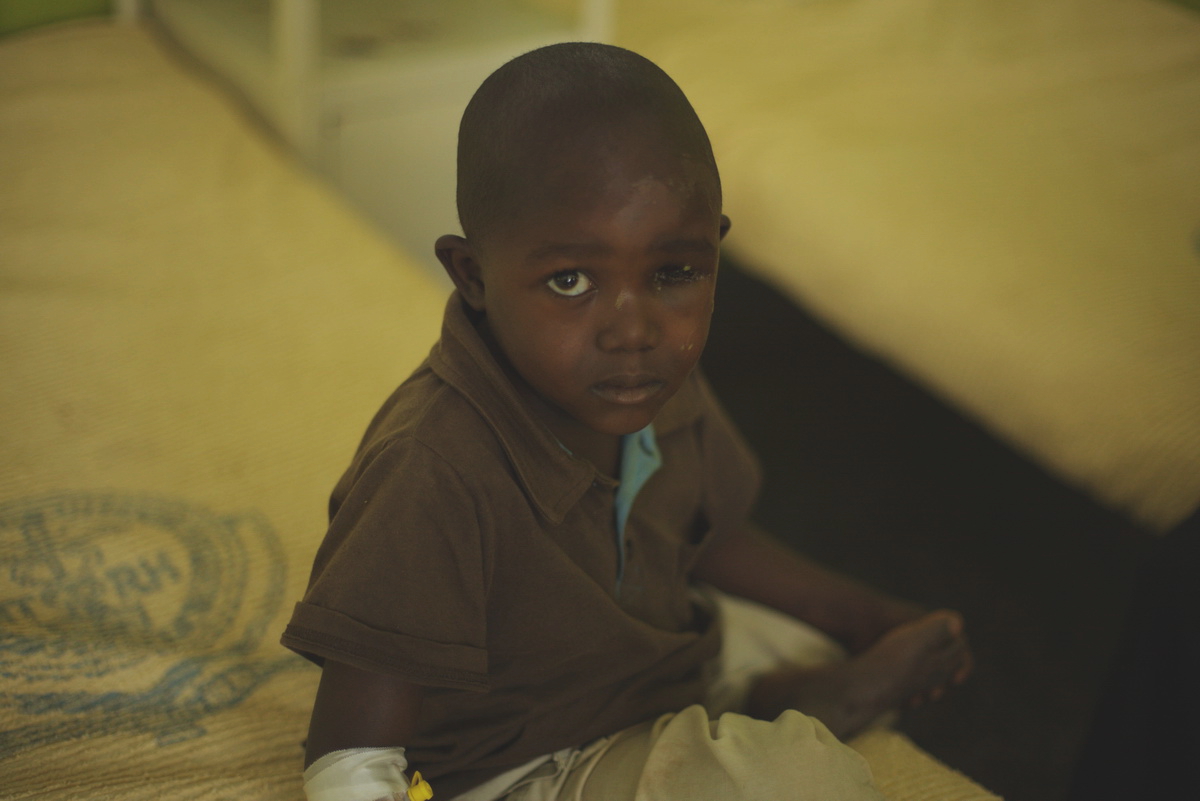
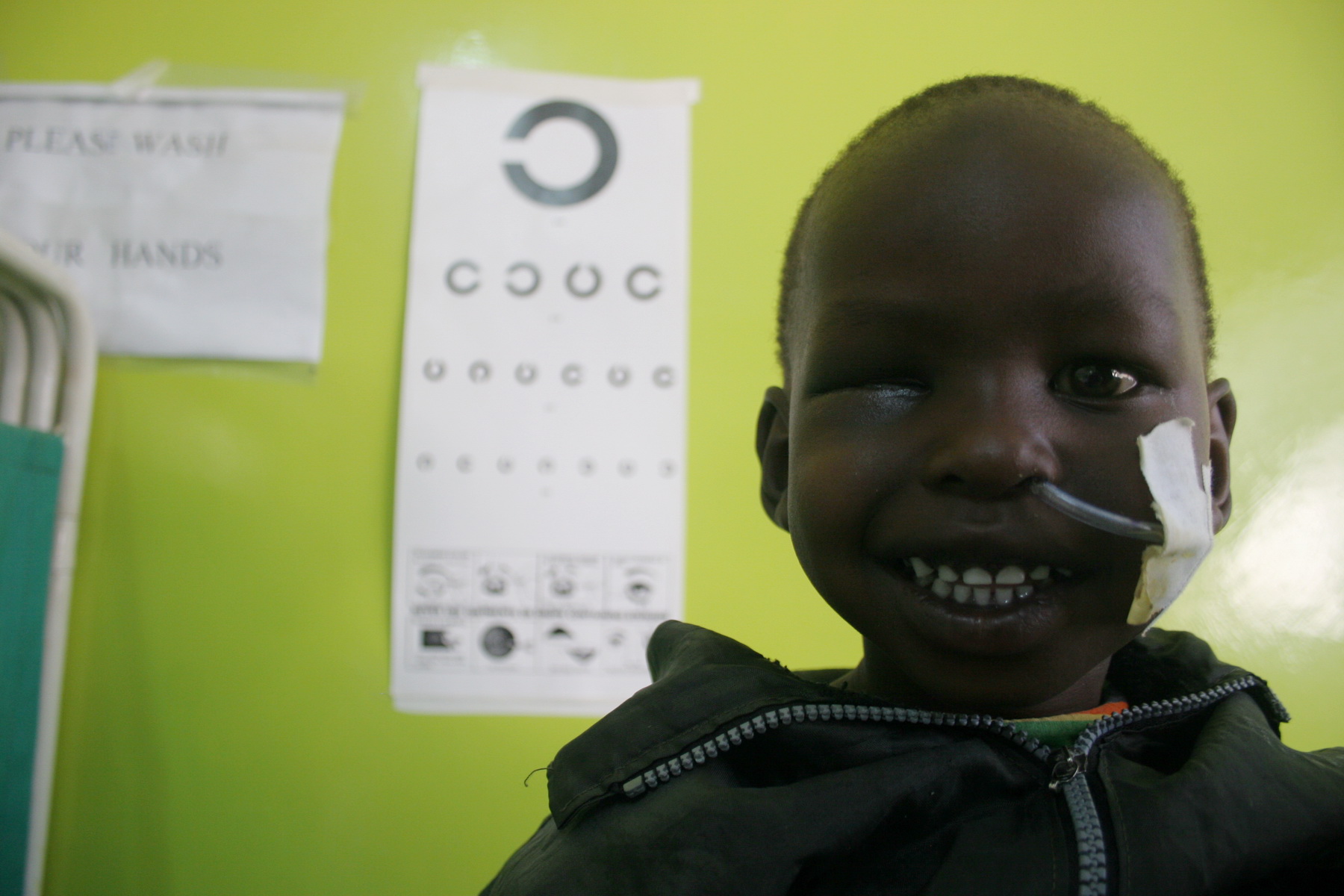

Sheri, Evans, Brian and Xavier are just four of the beneficiaries of our donors’ support. By providing much-needed funds for our community outreach and treatment programs, our donors have helped many other children like them.
Tomorrow, on World Cancer Day, I hope you will consider making a donation to Operation Eyesight so we can continue to treat children with eye cancer and preserve their vision.
I also encourage you to learn more about the symptoms of eye cancer and schedule regular eye exams yourself, so cancer and other blinding conditions can be detected and treated as early as possible.