

Two-year-old Logar and his family live in the remote village of Moili in northwestern India.

Little Logar was born blind with congenital cataracts, likely due to a combination of malnutrition and poverty. He couldn’t play with other children and would be unable to go to school or work in the future. There wasn’t much of a future for this little fellow.
Tragically, Logar’s father and aunt are also blind as a result of congenital cataracts and are afraid to have surgery. His mother Dhulki and grandfather work hard to support the family, but they still live in extreme poverty.
While his father and aunt accept their choice to remain in darkness, Logar’s mother and grandfather weren’t prepared to accept that fate for the youngster. His grandfather heard about medical help available at Operation Eyesight’s hospital-based community eye health program, located at nearby Ogna clinic.
Since Logar required specialized pediatric surgery, the family made the long 90-km journey to Alakh Nayan Mandir Eye Institute for cataract surgeries. The hospital, funded by Operation Eyesight’s generous donors, is an advanced secondary care centre that serves the underprivileged people of the region.
Dhulki is thrilled with the results of her son’s surgeries. “Before the operations, Logar used to fall; but now that he can see, he can walk alone,” she explains. “He has started to play with his friends.”
This formerly blind toddler will be ready to go to school in a few years. Thanks to our donors, his future is bright!
Did you know? Almost 65 percent of the people in Logar's region of India live below the poverty line.
To all of our loyal donors, partners and friends:
When I visited India for the first time last year, I was struck by the sheer number of people who seemed to be everywhere. That’s why it was hard to imagine that there are areas in India where people had trouble accessing eye care.
However, often people who need care the most can’t make it to a hospital. Community eye care brings medical care to them – reaching marginalized individuals and families right where they live.
Here’s a great story that shows how meaningful our community eye care programs can be, thanks to our kind and dedicated donors.
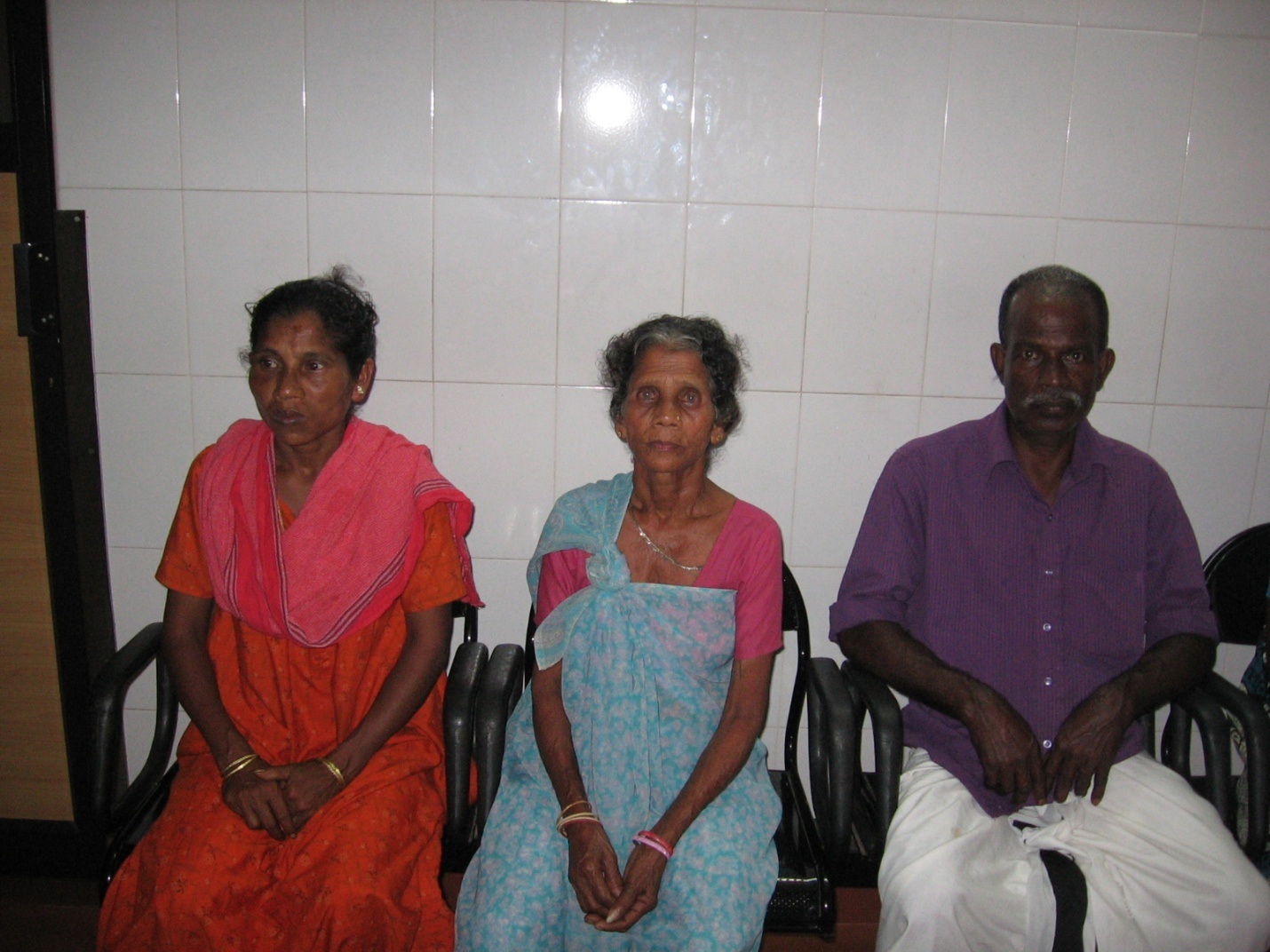
Girija, 45, Kuppal, 80, and Thankappan, 55, are a family living in a tribal colony at Mamlakandam, an inaccessible hilly terrain in southern India, in the area covered by St. Joseph’s community eye care program. Together, they earn just over Rs. 2,000 (approximately $40 CAD) per month cutting bamboo.
When all three started losing their vision, they were worried. Over the span of a couple of years, their vision got so bad that they had to stop working. “We were cursing our fate,” they explained.
Thankfully, St. Joseph’s conducted an outreach clinic through the community eye care program near their home. All three were diagnosed with near mature cataracts in both eyes. They were quickly taken to the hospital, where each underwent cataract surgery with lens implantation.
Two months after the surgery, all three were able to return to work, and offered their gratitude to the generous donors who helped them. They explain, “This has entirely changed the living conditions for us and our family. A million thanks!”
Operation Eyesight partner hospitals work with local health professionals to bring sight- and life-saving screenings, education and eye care to communities that otherwise wouldn’t have access to them. Visit our Gift Guide today to give this life-changing gift to your loved ones, friends and colleagues this holiday season.
It’s been a great year for storytelling here at Grey Mist Lifting! We’ve certainly enjoyed the opportunity to tell you an inspiring story every Friday. Together, we’ve travelled to Africa and India and introduced you to some of the children, women and men whose lives have changed, thanks to our supporters.
Here are five highlights to check out:
We have many more heartwarming stories and great photos to share with you in the coming year, so please check back each week. Thank you for your support!
This is one of my favourite times of the year. Lights are going up around my neighbourhood. The first strains of carols are chiming cheerily in stores. And my grandchildren are gearing up in anticipation.
Ophthalmic nurse Carolyn Chenalan Jepkemboi has a smile as bright as the Kenyan sunshine and a personality to match. Carolyn, who works at the eye clinic in the town of Kapsabet, Kenya, cares for patients with eye health issues, and assists with cataract and trachoma operations. “I wanted to be a nurse since primary school. It’s wonderful to help blind people have vision again,” she says cheerfully.
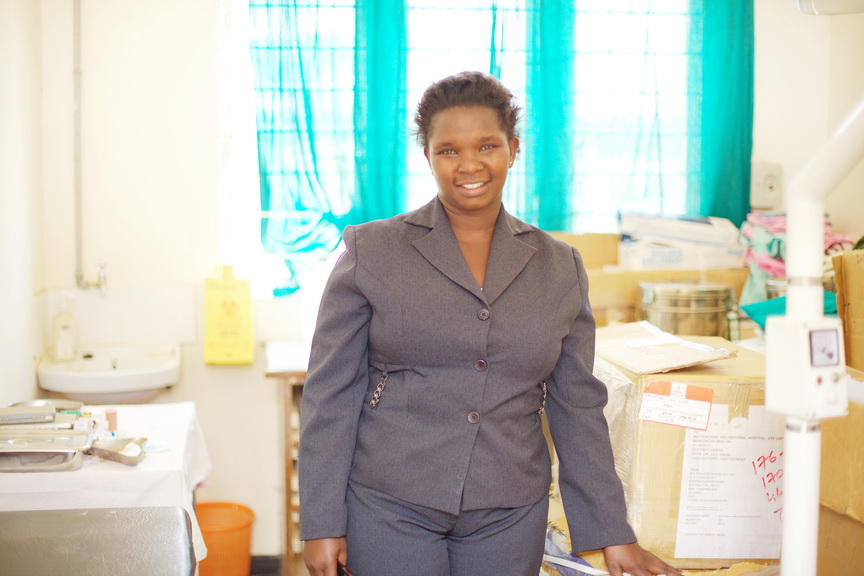
Carolyn achieved her childhood dream with the help of funding from Operation Eyesight.
“I’m a project!” she says, smiling. “I’m very grateful to you. Operation Eyesight is wonderful; you help a lot of people.”
Not far away in the village of Iten, ophthalmic clinical officer and cataract surgeon Agnes Maiyo repeats Carolyn’s thanks. “We really appreciate the support from Operation Eyesight! I did my training through your organization, and now I’m a cataract surgeon. I’m proud of my training; it changed my life.”
Further to the north in Kitale district, Judith Boiyo is a trained community health worker, identifying patients who need eye care and accompanying them to Kitale Hospital.
Judith told me, “People say there’s no need to help old women. Old age is their only problem. I tell them everyone should be helped. I chose this work because people don’t know how to manage their health, and it means a lot to me to help them. I’m happy and I like what I do.”
Like many other eye health care professionals throughout Africa and India, Carolyn, Agnes and Judith received training thanks to generous donations from Operation Eyesight supporters. Now they possess the skills, knowledge and motivation to help care for the eye health of their entire communities.
Just imagine how the impact of our donors’ original gifts has grown!
Not only does Operation Eyesight fund leading-edge training for community workers, cataract surgeons and ophthalmic nurses, we train vision care technicians, optometrists and highly skilled ophthalmologists. Won’t you help other people in India and Africa achieve a meaningful profession that can help save the eyesight of thousands of others? Visit our online Gift Guide today to buy your gift of training for eye care professionals!
As a child, I was not happy to learn that I needed glasses. Why? I was worried about looking like a nerd and getting teased at school.
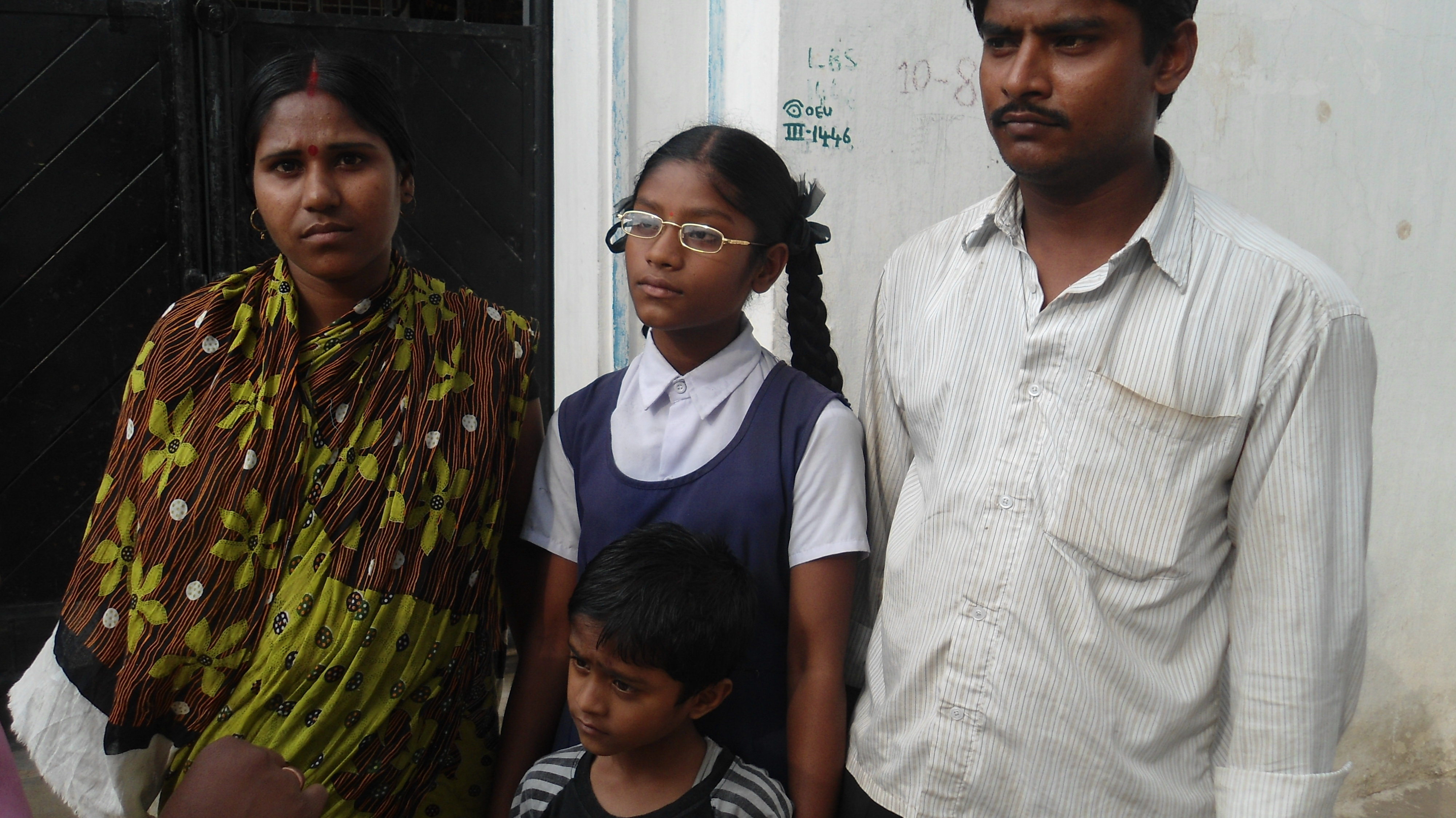
My reaction seems to be pretty common here in North America, but in India and Africa, most children welcome eyeglasses as a precious gift. Here’s a great story from India that shows why.
Reethu Malli, who lives with her family in Fatehnagar slum in New Delhi, was an excellent student – so much so that her father, a factory worker, made major financial sacrifices to get the 12-year-old into a nearby private school. That’s why her parents were concerned when she started complaining of headaches and trouble seeing the blackboard. Her teachers also noticed her behaviour changed and she even fell down the school stairs.
When her father took her to a local doctor, he prescribed rest and multi-vitamins. After several days, there was no improvement. In fact, Reethu’s marks plunged and she started staying home to avoid school and her friends. Her parents were very concerned – what would happen to Reethu if she couldn’t get a good education?
A neighbour recommended the local Operation Eyesight vision centre, which provides treatment free of charge. After and examination there, the technician recommended eyeglasses. Reethu and her family were unconvinced that such a simple thing could be the answer.
Fortunately, one of our community health workers followed up with the family and convinced them to get Reethu screened again. When she was diagnosed with refractive error for a second time, they agreed to try the eyeglasses, which were available without charge to them thanks to generous Operation Eyesight donors.
Today, thanks to those brand new, custom-fitted eyeglasses, Reethu can see clearly again. She is playing with her friends, attending school and achieving good grades once more! Her glasses help ensure she gets a good education and a bright future. Her parents are thrilled. And so are we. It’s a privilege to put our donors’ gifts to use in ways that truly change lives.
You can change the lives of three children like Reethu by giving just $20 through our online Gift Guide today. Give gifts that give twice this holiday season!
There’s a famous anecdote about a little girl who walked along a beach after a storm, tossing stranded starfish back into the safety of the ocean. When asked why she bothered when there were thousands of starfish, she replied, “I made a difference to that one.”
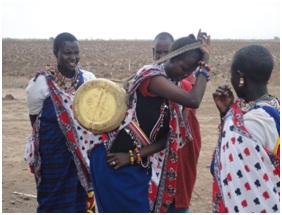
Last week, I told you about how women and girls in many Maasai villages have to journey kilometres every day to search for water. Their lives are an endless routine of water gathering, so necessary in their parched, dusty land. Yet sometimes, a life can be changed…
Rebecca is 28 years old and lives on a Maasai homestead in Narok district, Kenya with her husband and their four children. Accessing water used to be a very stressful part of Rebecca’s life. She trudged up to 10 kilometres every day to access water from the Siyiapei River for her family and their small but precious herd of cows, sheep and goats.
Fortunately, Rebecca’s life took a significant change for the better a few years ago, when Operation Eyesight, the Kenya Ministry of Health Services, and Kenya’s Water Resources Management Authority drilled a borehole near their village.
The borehole is less than one kilometre from their homestead, and Rebecca and her husband are employed as the caretakers of the water project. This has given them an additional job of which they are very proud, as well as a steady monthly income.
Rebecca’s family has also earned the trust of the community as they regulate the water for domestic and livestock use and manage the banking that results from the water sales. Water beyond personal use is sold for a modest fee to help pay for maintenance of the well, generator and housing – all of which ensures the borehole’s sustainability for future generations.
The well has had significant health benefits for Rebecca and everyone else in the village. Water-borne diseases have been reduced, which has also reduced the money spent on medical services. In addition, access to clean water has allowed for improved personal hygiene, reducing ailments such as trachoma and skin infections which have plagued the area for years.
Rebecca hopes that “such worthy help will land in another community and that Operation Eyesight will get more money to continue helping others.” She is most grateful to our generous donors for supporting the well and freeing people like her from the fear of avoidable blindness.
Like the starfish, Rebecca’s life was changed because someone cared enough to make a difference! Learn more about how you can help people like her.
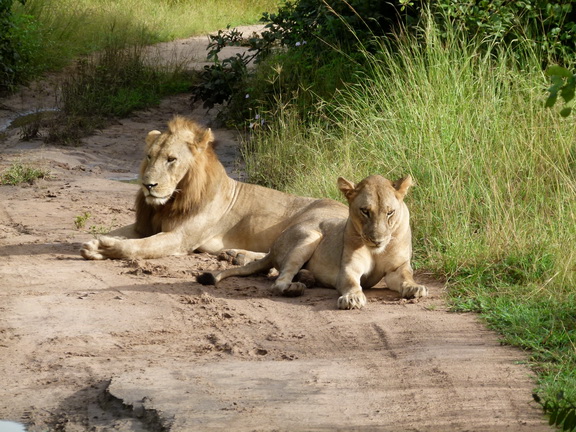
A big, cold glass of water is one of life’s simple pleasures. When you’re thirsty, there’s nothing better. But what if, on the way to the tap or water dispenser, a lion leapt out at you? Or an elephant charged you? Or a 15-foot long crocodile with a big toothy grin was lurking in wait?
Such scenarios seem farfetched to us, but they’re a reality for millions of people in Africa. Water gathering is a dangerous yet essential activity in many countries.
In Zambia, lives are lost every day because lakes and rivers are infested with ferocious crocodiles. Rather than risk being ambushed in their daily quest for water, many women and children prefer to search for small streams and dig shallow holes to collect drinking water in plastic containers.
This method is uncertain at best; it might take 12 hours to collect 20 litres of water, and animals often contaminate the water by drinking and bathing while the container is filling.
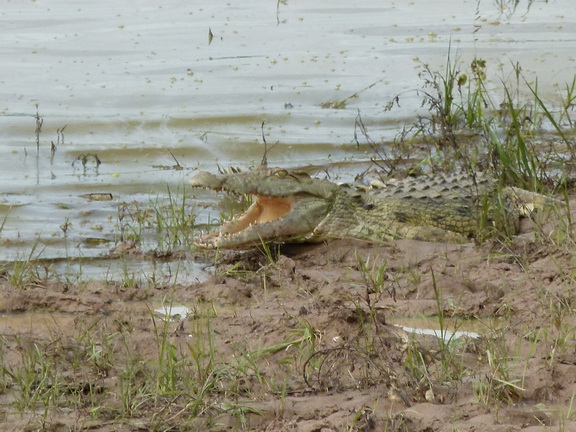
On the plains of Kenya, the Maasai tribespeople don’t necessarily face crocodiles, but other dangers abound. In self-defense, tribes surround their villages with fences made of acacia wood and thorns. The sharp fences usually deter lions and other predators, although elephants and buffalo have been known to push right through them.
A single lion would probably steer clear of a settlement in any case, my driver Eric told me. “If a lion wanders into a village, three or four people can scare it off themselves just by yelling. Lions don’t like noise, and many have been conditioned to be afraid of the Maasai. The men don’t often kill the beasts, just wound them with spears and arrows to inflict pain and teach them to be afraid of people.”
However, the relative safety of the village is lost to many Maasai women and girls each day when they have to walk five to 10 km to fetch water for their families. Even if they manage to avoid predators along the way, the water they obtain is often contaminated with dirt and animal waste. Sparse as it is, the water must be used for drinking, cooking and watering herd animals.
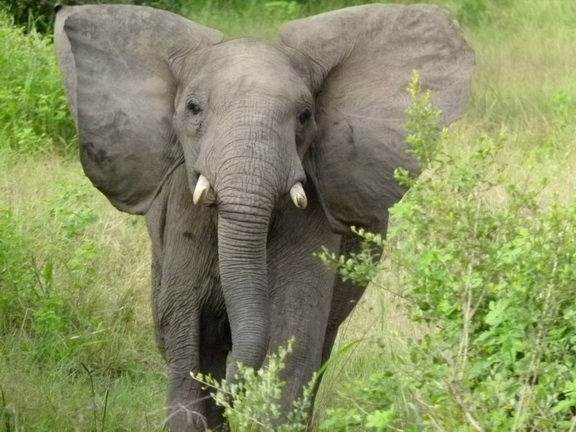
I found it surprising that elephants can be more dangerous than lions. Elephants frequently do kill humans, and many Africans fear the huge creatures a great deal, as they are protected by governments and can’t be killed, even in self-defense.
“If a woman or child is standing between an elephant and water or food, the beast may try to catch her and stomp her,” Eric told me, adding elephants have even been known to bury bodies by breaking off tree branches and covering them up.
“The only thing you can do is report an elephant to the game wardens, who might show up a month later. If the elephant is still there, they would only fire guns into the air to try to scare it off.”
While the dangers of lions, elephants, buffalo, crocodiles and other wild animals are still a reality in many parts of Africa, some fortunate communities in Kenya and Zambia now have safe, clean, protected water, thanks to Operation Eyesight’s generous donors. As one of the Maasai told me, “Water means happiness, energy and safety to our people.” Learn more about our water projects.
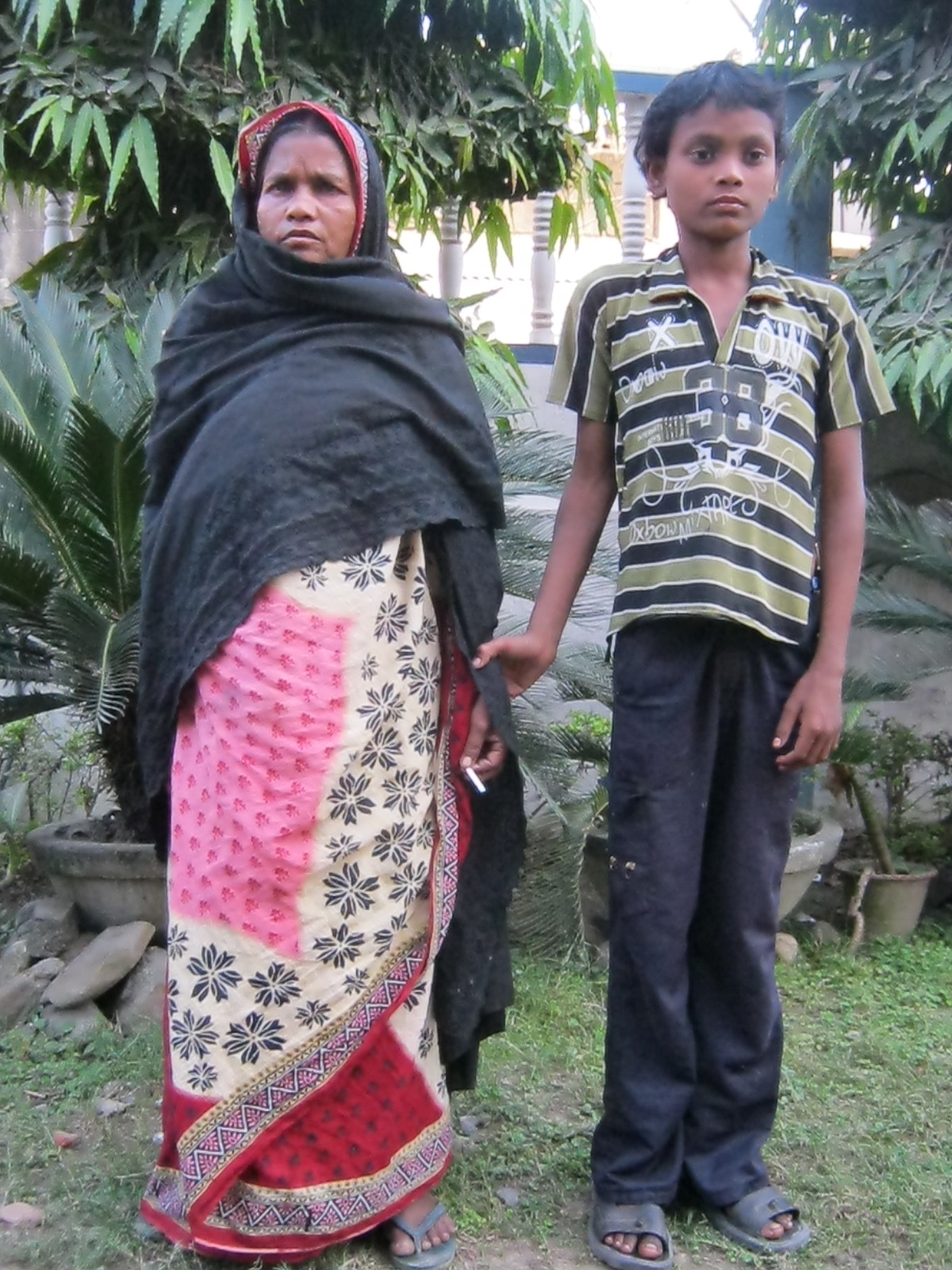
The expression, “Seeing the world through a child’s eyes,” is generally imagined to be an idyllic state. However, what if you had to rely on your 10-year-old son to be your “eyes” because you can’t see?
That’s exactly what happened to Asrofi, a 50-year old mother who lives in a tiny village about 100 kilometres away from Thakur Sitaram Sevakenda Eye Hospital, Operation Eyesight’s partner in West Bengal, India.
Essentially blind from cataracts, she depended on her young son to not only do all the cooking and household chores, but act as the small family’s sole bread winner. He earns about 63 rupees (CDN$1.17) per day as a farmer.
When neighbours told Asrofi that she could get help at Thakur Sitaram and didn’t have to live in darkness, she was hopeful. The hospital provided transportation to and from her home, as well as cataract surgery, free of charge. There was no way Asrofi could have afforded treatment without support from Operation Eyesight donors.
Today, Asrofi can take care of their home, cook and even spend time with others in her village. She is happy instead of hopeless. Though her young son is still farming, he has many more options open to him now that he no longer needs to care for his mother.
Asrofi has a few simple, heartfelt words for Operation Eyesight’s supporters: “Thank you for helping my family.”
Learn more about Operation Eyesight’s partnership with Thakur Sitaram Sevakenda Eye Hospital.