

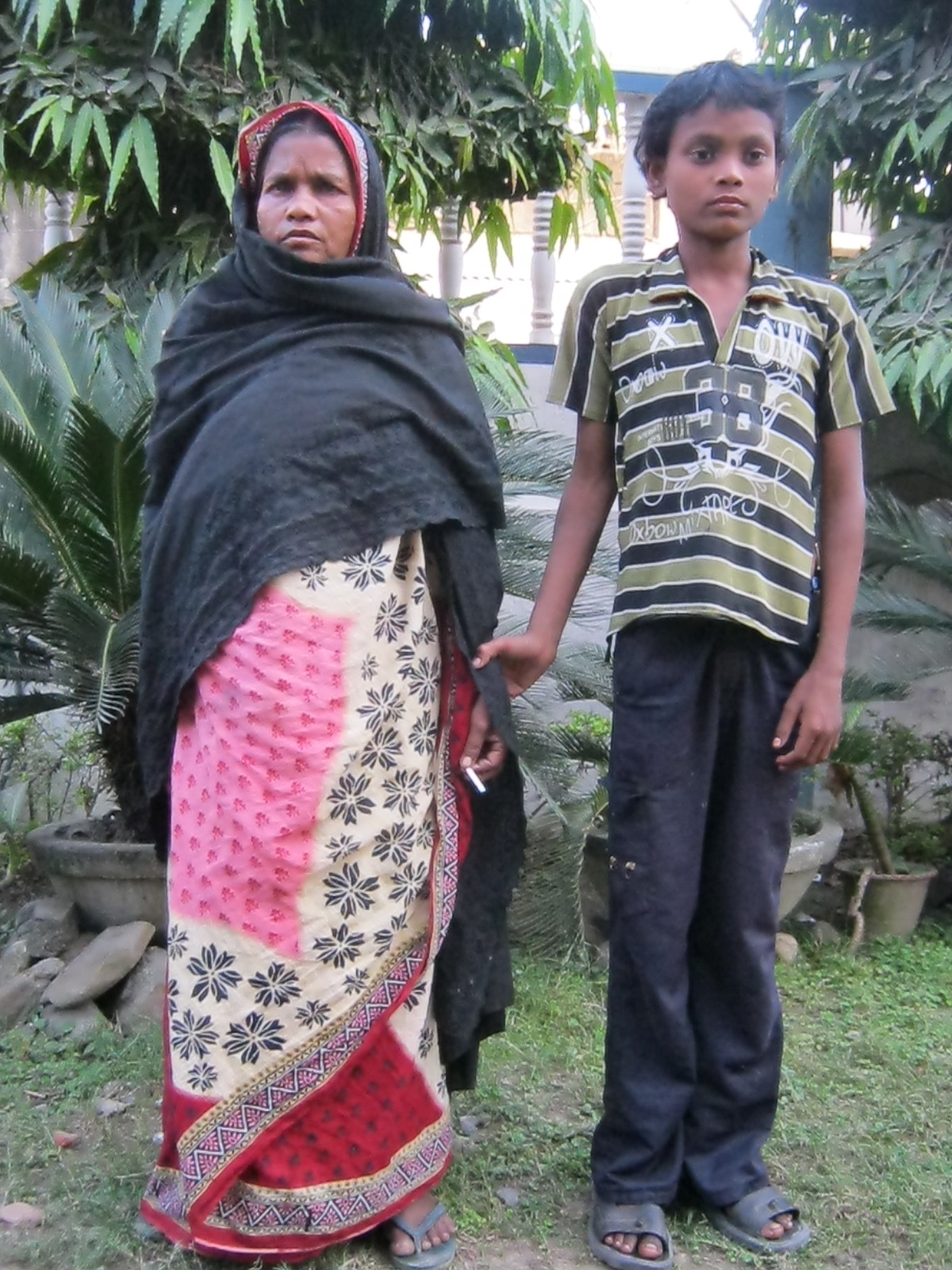
The expression, “Seeing the world through a child’s eyes,” is generally imagined to be an idyllic state. However, what if you had to rely on your 10-year-old son to be your “eyes” because you can’t see?
That’s exactly what happened to Asrofi, a 50-year old mother who lives in a tiny village about 100 kilometres away from Thakur Sitaram Sevakenda Eye Hospital, Operation Eyesight’s partner in West Bengal, India.
Essentially blind from cataracts, she depended on her young son to not only do all the cooking and household chores, but act as the small family’s sole bread winner. He earns about 63 rupees (CDN$1.17) per day as a farmer.
When neighbours told Asrofi that she could get help at Thakur Sitaram and didn’t have to live in darkness, she was hopeful. The hospital provided transportation to and from her home, as well as cataract surgery, free of charge. There was no way Asrofi could have afforded treatment without support from Operation Eyesight donors.
Today, Asrofi can take care of their home, cook and even spend time with others in her village. She is happy instead of hopeless. Though her young son is still farming, he has many more options open to him now that he no longer needs to care for his mother.
Asrofi has a few simple, heartfelt words for Operation Eyesight’s supporters: “Thank you for helping my family.”
Learn more about Operation Eyesight’s partnership with Thakur Sitaram Sevakenda Eye Hospital.
Who cares about preventing blindness? We do, and we know you do too!
Today, the second Thursday of October, is World Sight Day... a day when countries around the world mark an international day of awareness about avoidable blindness. This year, we’re celebrating by unveiling a new animated video, “Who Cares?” in honour of our upcoming 50th anniversary.
To create the video, we were delighted to work with the talented animators and storytellers at Umbrella Pro, Alana Thorburn-Watt and Levente Kovacs. If the names sound familiar, they created our first animated video, "See This?" for World Sight Day 2011. We were thrilled with the result!
Levente told me, “Creating the video for Operation Eyesight’s 50th anniversary was a great honour. We take pride in developing this animated video for an organization built up of wonderful individuals all dedicated to helping those less fortunate. We hope to expose Operation Eyesight to a greater audience and show people that major world problems can be solved by caring for the greater good of the community.”
He added, “Giving back and sharing our success with others will only spread optimism and prosperity throughout the world. Together we can create a world and a legacy that we wish to leave behind for future generations.” We couldn’t agree more! Thanks, Levente and Alana for your enthusiasm and creativity.
World Sight Day is momentous for Operation Eyesight in another way: we opened a new eye hospital, the Ophthalmology Centre at University Teaching Hospital in Lusaka, Zambia. What will this new hospital mean to Zambians? Learn more.

We certainly celebrated World Sight Day with style last week... by opening a beautiful new centre for eye health at University Teaching Hospital (UTH) in Lusaka, the capital city of Zambia.
“My government wishes to express its sincere gratitude to Operation Eyesight, who put in a huge capital-intensive investment to construct this centre,” Zambia’s Minister of Health, Hon. Dr. Joseph Kasonde, told a crowd of supporters at the opening event. He added, “This eye centre of excellence will certainly raise the profile of eye health services delivery at UTH and in the country as a whole.”
The original UTH eye clinic was a small and dilapidated heritage building, which needed almost total reconstruction to ensure it met clinical quality standards. Today’s bright and beautiful Ophthalmic Centre will offer ophthalmology specialities for treating pediatrics, vitreo-retinal, anterior segment, and glaucoma, as well as provide community eye health and research. It will train professionals (including ophthalmologists) in various eye health areas, and will provide a research and resource centre for all eye health services in the country.
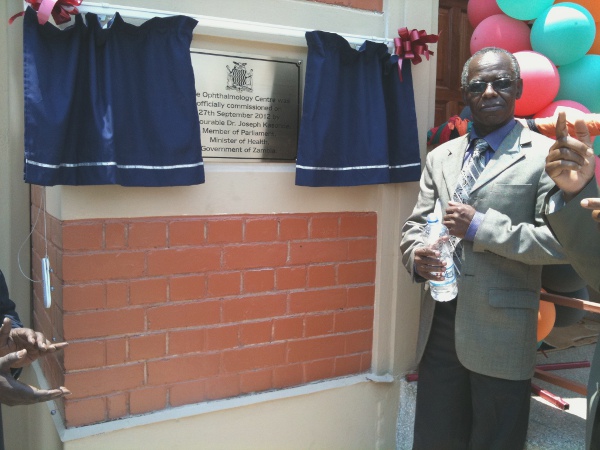
Not only will this facility increase staff training, improve patient screening and treatment, and realize improved surgical outcomes and productivity, there is also another reason to celebrate its grand opening: it’s a wonderful example of what’s possible when we collaborate with generous donors and governments.
The Ophthalmic Centre is the culmination of eight years of hard work and strong partnerships between Operation Eyesight, Nava Bharat Ventures Limited of Hyderabad, India, the Canadian International Development Agency, the Government of Zambia’s Ministry of Health, and University Teaching Hospital. As our Regional Director for Africa, Dr. Boateng Wiafe, told me, “This was a classic example of true partnership. Every partner brought something to the table to get the work done.”
All of us at Operation Eyesight congratulate and acknowledge the partners and donors who made the construction of the new Ophthalmic Centre possible. We were proud to have been part of this project.

We especially would like to thank Delphin Kinkese, our Zambian country manager, and Dr. Grace Mutati, chief ophthalmologist of University Teaching Hospital, for overseeing the project and ensuring the opening was a huge success.
I know the centre will provide Zambians a great resource within the full continuum of eye care services for many years to come!
Operation Eyesight has been working to prevent avoidable blindness in Zambia since 1985, and has been supporting University Teaching Hospital since 2005. Where else do we have hospital programs? Find out here.
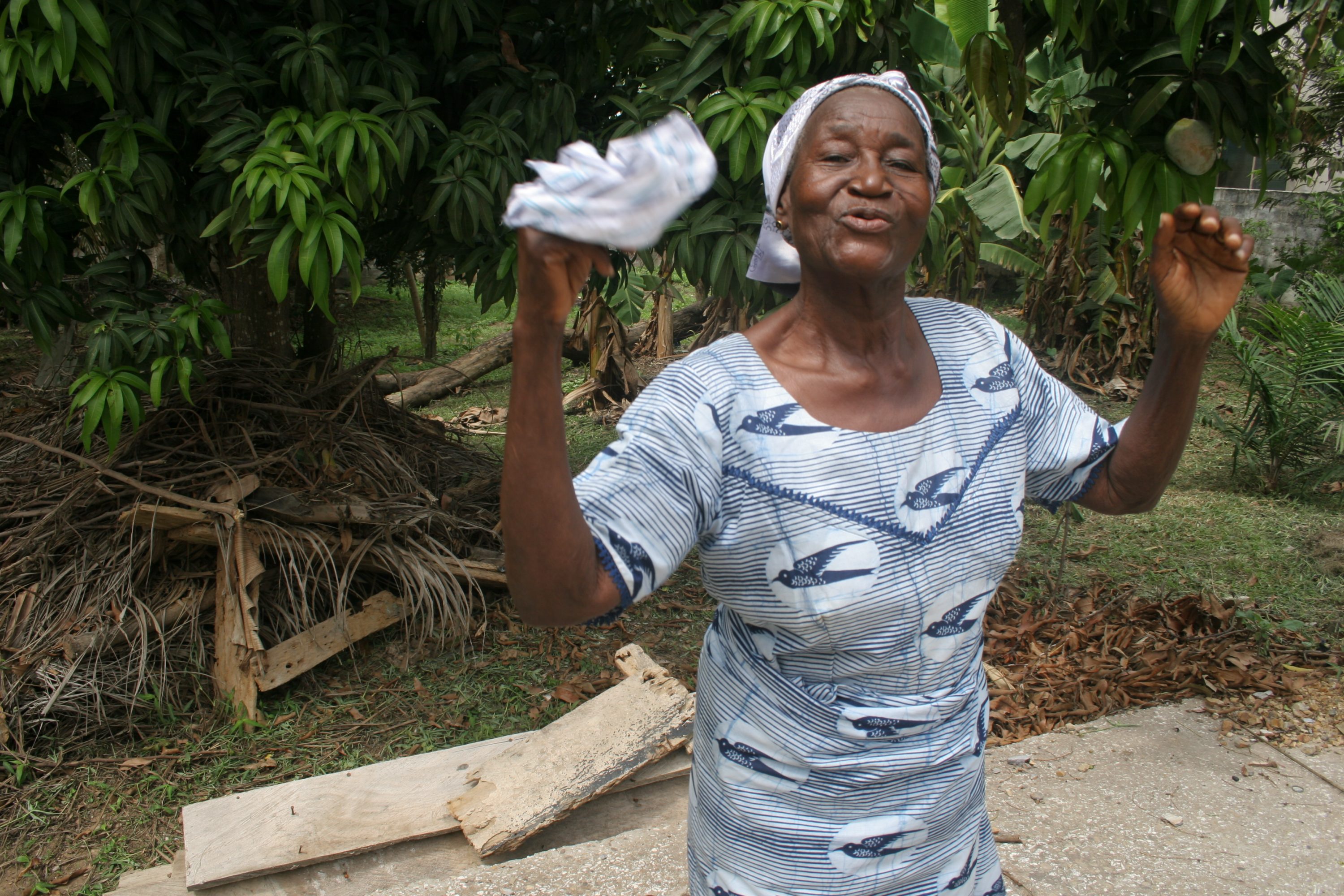 Ever seen someone dancing for joy?
I was fortunate enough to witness just such a spontaneous outpouring of elation when I was in Ghana last year. While at Watborg Eye Hospital, I met Janet Ofosuhene, a 75-year old woman who lives in the town of Kwahu Mpraeso.
Four years ago, Janet noticed her vision start to deteriorate. Everything became progressively more blurry, until finally her husband had to help her do everything. Eventually, her right eye totally lost vision, although she could still make out shapes with her left eye.
Fortunately, a friend who had eye surgery at Watborg recommended the hospital to Janet’s daughter. Joyce Ofosuhene was able to take her mother to Watborg, where she was diagnosed with bilateral cataracts in both eyes. Successful surgeries soon followed.
When the bandages came off after the operation, Joyce was overjoyed to be able to see clearly. And for my part, I was delighted when she started singing and dancing for me, waving her handkerchief and clapping her hands.
“I missed seeing my daughter and my three grandchildren. The doctor took very good care of me here and gave me time to get my sight back. He did a good thing; very good. I’m going to tell others about my operation. Next week, I will bring some people here so they can be helped.”
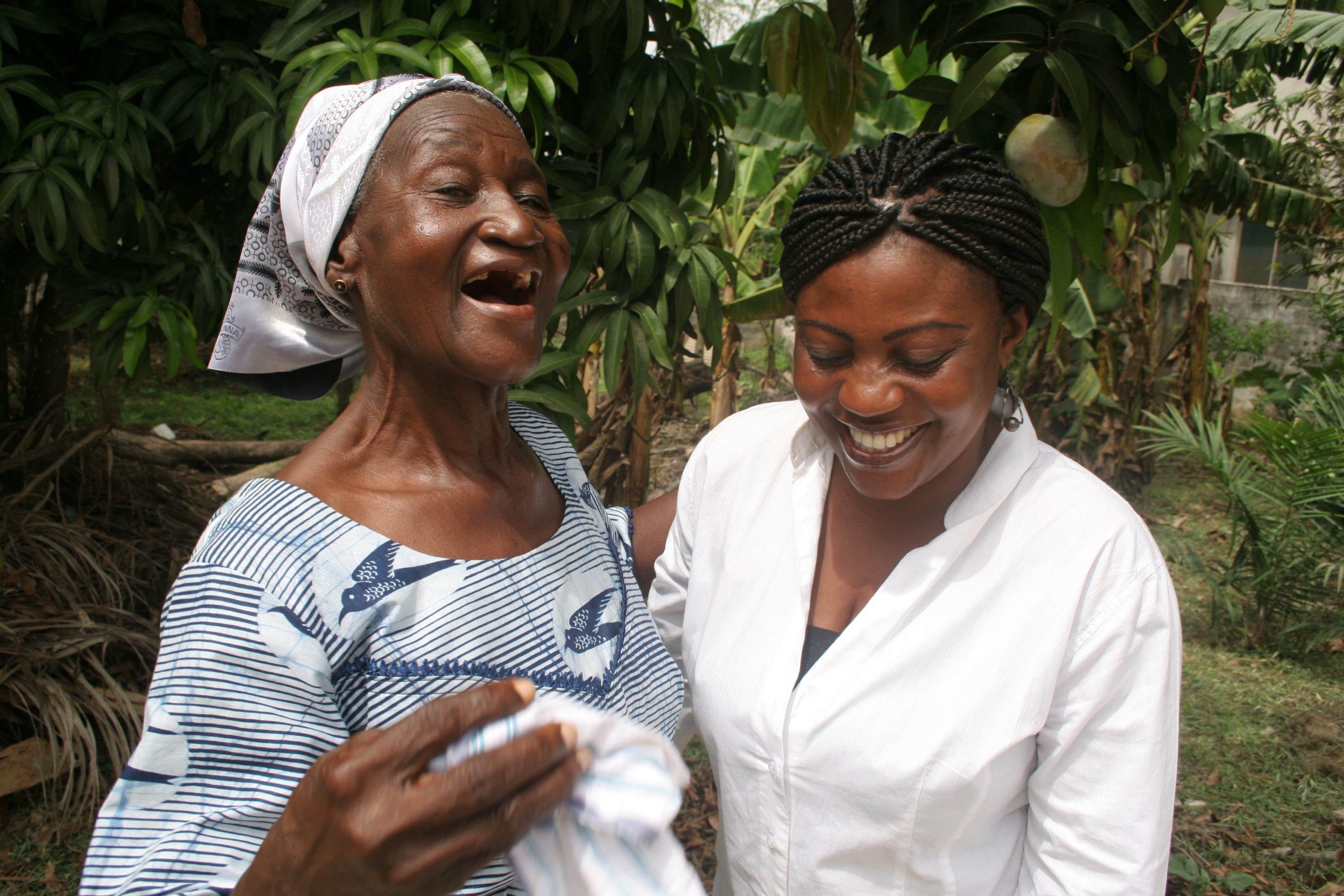 “God should bless the doctor and Watborg and anyone who helped them,” she told me. “I will remember them in my prayers.”
Since I met Janet, Operation Eyesight’s new Watborg hospital opened in April 2012. Learn more about this long-awaited regional hospital that serves over a million Ghanaians. And if you’d like to make a gift that will help people like Janet regain their sight, visit our Donate page.
This is a video post.
https://vimeo.com/88277666
A few weeks ago, I wrote about grandchildren from my and my wife Margot’s points of view (we’re known to our grandchildren as Nana and Papa). Here are some other terms for grandparents: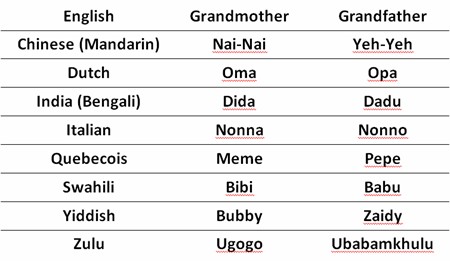 I note that the United Nations’ International Day of Older Persons is coming up in a few weeks, which is a great time to think of the issues that seniors face, but also the contributions they make in all kinds of ways. At Operation Eyesight, we believe that everyone has something to contribute, young or old, rich or poor.
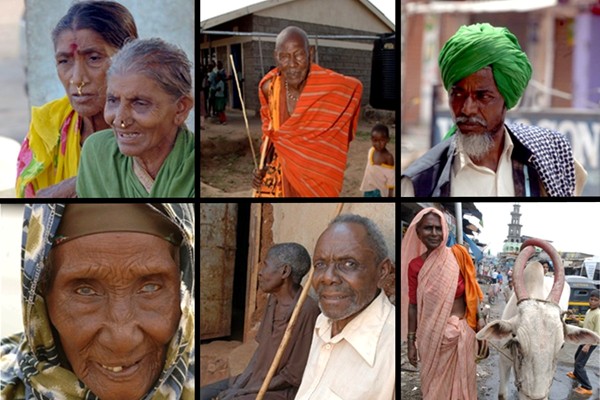 Photos by Peter Carrette
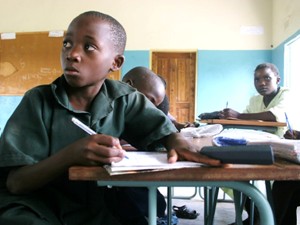
It’s September and all over the world, children have trooped back to school. It’s an exciting time of year for children. Bright eyes ready to read and write – it’s great to be a kid.
But what if the kids have no school?
We work with rural people in Kenya and Zambia and we know they are just as committed to education as anybody else. But we learned something interesting; when a village has no reliable source of water, teachers often won’t work there. It makes sense when you think about it. The teacher is responsible to get water for the students, and that water source may be many kilometres away.
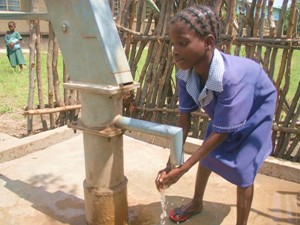
At Operation Eyesight, we know that the conditions that contribute to eye health have a positive affect on other aspects of life. One of those conditions is clean water – lots of it, nearby.
Zambia is a country that often struggles to get enough water. But in the Maamba Sinazongwe District, there is water and a school and teachers – wow! In 2008, Operation Eyesight established a well to stop the threat of trachoma in the district, and other things started happening. Just look at the kids.
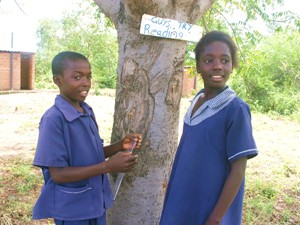
The Mweela Basic School opened in 2009. It has over 250 students in grades one through eight, and many of them have a long walk to get there. But they know when they arrive that there’s plenty of water for washing and drinking. And food. The school has a garden with okra, beans and maize, some of which is also sold to buy school supplies. The healthy crops are watered from that same well.
To all our donors who helped make that water source a reality, here are a few words from Gillian Ngandu, the school’s head teacher: “Thank you very much – we like the water very much. We find it has helped the children very much. The water is clear and clean. It makes a big difference for the girl children because they like to wash, but the boys still have to be encouraged,” she says, smiling.
“We can do anything with water. Other schools envy us.”
If you would like to contribute to Operation Eyesight’s water projects in Africa, click here to visit our online Gift Guide.
If you’re someone who reads this blog each week, you know how proud we are of our approach to eye care and development. We believe we’re on the right track – helping people with immediate needs but also helping communities become self-sufficient in the long run.
 That confidence was confirmed this week at the International Agency for the Prevention of Blindness (IAPB)’s Ninth General Assembly in Hyderabad, India.
From Monday to Thursday, we had multiple opportunities to share our vision with doctors, scientists and experts in eye care from around the world. Operation Eyesight’s focus on quality and sustainability is admired by many and shared by a growing segment of the international eye care community.
IAPB, based in London, England, is at the centre of all worldwide efforts to bring reliable eye care to everyone, including the poorest. At this event “everyone who is anyone” in the eye care world was there, with over 15,000 delegates from 87 countries.
It was convenient that this year’s event was in Hyderabad, because that’s also the location of Operation Eyesight’s India office. Our staff made nine presentations on various topics and exhibited static scientific displays (posters) that explain aspects of our work and approach.
As well, many of our programs partners from India and Africa were there, and some made their own presentations and exhibited their own scientific displays.
We also had a large and well-situated display booth that drew around 300 visitors a day, and proved to be the site of many important conversations and meetings.
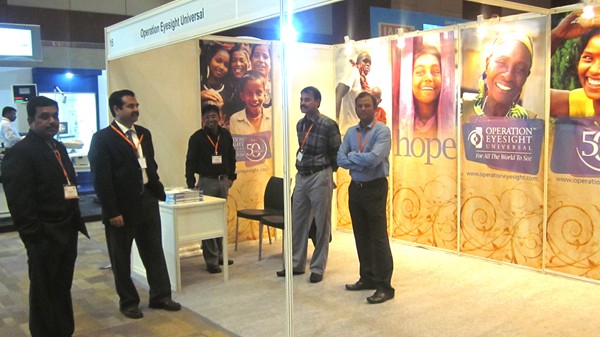
One of the things that makes these general assemblies so important is that they are rare and therefore keenly anticipated. Occurring only once every four years, they are the Olympics of eye care – you can be sure that everyone who attends is really paying attention. For Operation Eyesight, our staff learned a great deal and we, in turn, were able to showcase our own innovations to the experts of the world.
Speaking of innovations, the conference organizers offered something very cool. During the coffee and lunch breaks throughout the conference, they ran a Dialogue in the Dark. This dining format occured in complete darkness with visually impaired waiters serving the refreshments. Dialogue in the Dark is rated by Forbes International as among the top 25 unusual “dining” experiences that one must try once in their lifetime. However, for most of the delegates at this conference, it wasn’t just a novelty experience – it was a poignant reminder that “sight is life,” especially for the worlds’ most vulnerable people.
To learn more about IAPB and the scope of the conference, click here.
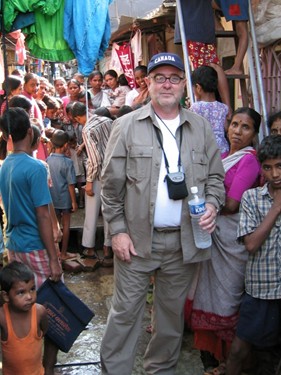
It’s great being a grandfather, or in my case, a Papa. My wife Margot (known to the little ones as Nana) and I have four grandchildren – two girls and two boys – three of whom are pre-school age. These kids are all bright, creative, funny and full of life – the apples of my eye. I can’t imagine losing them or seeing them lose any of their potential.
If you are a grandparent, you know what I’m talking about. We try to help our grown children to be good parents, supporting them and the little ones as best we can. Mostly, grandparents have all the fun.
What’s not fun is when tragedy occurs. That’s when Papa and Nana want to come to the rescue. But sometimes, we’re helpless.
Through my work at Operation Eyesight, I have visited our programs in India and Africa a few times, and I’ve seen many children in the hospitals and eye clinics.
Imagine being a parent or a grandparent, and seeing a child lose an eye from an accident, or lose all their vision from disease or disability. Imagine being helpless to do anything about it. Remember that in many parts of the world, blindness is not a disability, it’s a death sentence. Blind children often die before the age of five.
With Grandparents Day coming up on September 9, I’m reminded of the fact that around the world, a child goes blind every minute. While the child suffers, their parents and grandparents agonize over finding a solution. The fortunate ones are those who have an eye clinic close at hand – one that can offer good treatment at low cost or for free. That is, of course, where Operation Eyesight comes in, thanks to the donors who made that free treatment possible. The children I saw in our clinics and hospitals were the lucky ones.
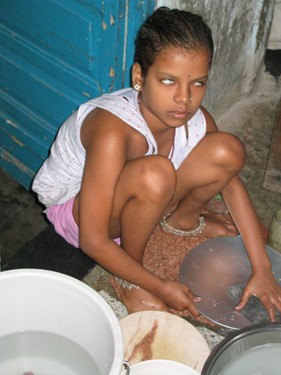
In one of India’s urban slums, I remember meeting a family with a blind girl. She was not so fortunate. She probably didn’t get the help she needed as a young child and will spend her life doing menial tasks, always relying on her family.
But thanks to our donors, Operation Eyesight is building eye care capacity where it is needed most. With your help, the day will come when even the poorest people will get the help they need. What you’re doing is actually taking away the fear of blindness from those parents and grandparents. What a gift!
You can make such a gift today. Consider sending an e-card on Grandparents Day, September 9. You can say thanks to a wonderful Nana or Papa in your life, while at the same time helping people of all ages in India and Africa.
Trachoma is the world’s leading cause of preventable blindness. I have seen people suffering from it in developing countries like Kenya and Zambia, where it is the most common and widespread eye health issue.
An agonizing disease borne of a lack of clean water and poor sanitation, trachoma causes permanent blindness if left untreated. The eyelid turns inward and the eyelashes rub against the eyeball, resulting in intense pain and scarring of the cornea. I’ve heard the pain described as, “Every time you blink, imagine your eyelashes scratching your eyeballs like a metal brush.”
Have a look at this short video of an elderly woman in Kenya’s Pokot district. As a patient, she is not uncommon, because women are three times more likely than men to suffer the late, blinding stage of trachoma called trichiasis. And like the child who leads her grandmother in these photos, children are often taken out of school to care for their relatives, increasing the impact of the disease.
This disease can be treated by removing scar tissue on the eyelid, as you can see in the video, and it can be prevented through the SAFE strategy, which also improves the general health and prosperity of the whole community.
Operation Eyesight has followed this strategy by providing 51 waterpoints in Kenya’s Narok district, and is now working in Pokot to bring relief to the residents suffering in this district. Our donors’ support is making a difference in eliminating this agonizing disease!