

Have you ever found that sometimes, the simplest messages are the most heartfelt?
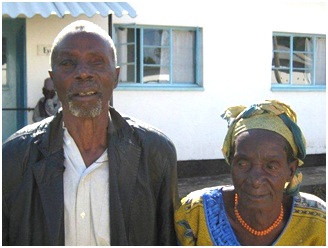
Let me tell you about Dawson, 72, and Anisa, 68. This elderly couple live in a tiny one room thatched house in the village of Kajilo, located in Zambia’s North-Western Province. Until quite recently, their lives were miserable because neither of them could see. They just sat by their hut day in and day out, waiting to be fed and taken care of by their nephew. They were helpless and a burden to their family.
Throughout Zambia, and also other African countries like Ghana and Kenya, radio is used to reach wide areas with simple but urgent messages about public health and education. Radio is a relatively inexpensive technology, so it is put to great use in Africa. Many people with serious health problems, like Dawson and Anisa, might not even know there was help available to them if it weren’t for these broadcasts.
After Operation Eyesight’s Mukinge outreach program was announced on community radio, a community health worker named Musanda brought Anisa and Dawson to the mobile eye clinic. There, they were both diagnosed with cataracts and referred to the hospital for surgery. The result: clear vision for both of them.
We’re happy to report that today Dawson and Anisa are self-sufficient and able to farm enough to feed themselves again. They can visit neighbours, go to church and avoid dangers like wildlife predators and deadly snakes. They have their lives back!
They have a special message for our donors: “We’ve very thankful that you have a passion for poor blind people in rural places like ours. Thank you!”
Visit our Donate page today to learn how you can give the gift of sight to people like Anisa and Dawson.
Grandpa would be immensely proud of the work Operation Eyesight is doing and the millions of people who can see today, thanks to the generosity of our donors. That’s the message Glenys Jenkyns, granddaughter of our founder Art Jenkyns, shared at our recent Annual General Meeting.
Fired with enthusiasm about Operation Eyesight’s mandate to eliminate avoidable blindness, Glenys proved a natural spokesperson for this issue. She had recently come across a letter her grandfather had written, advising her what to do when faced with a seemingly insurmountable challenge.
To read more about Art Jenkyns’ vision to rid the world of avoidable blindness, read Our Story.

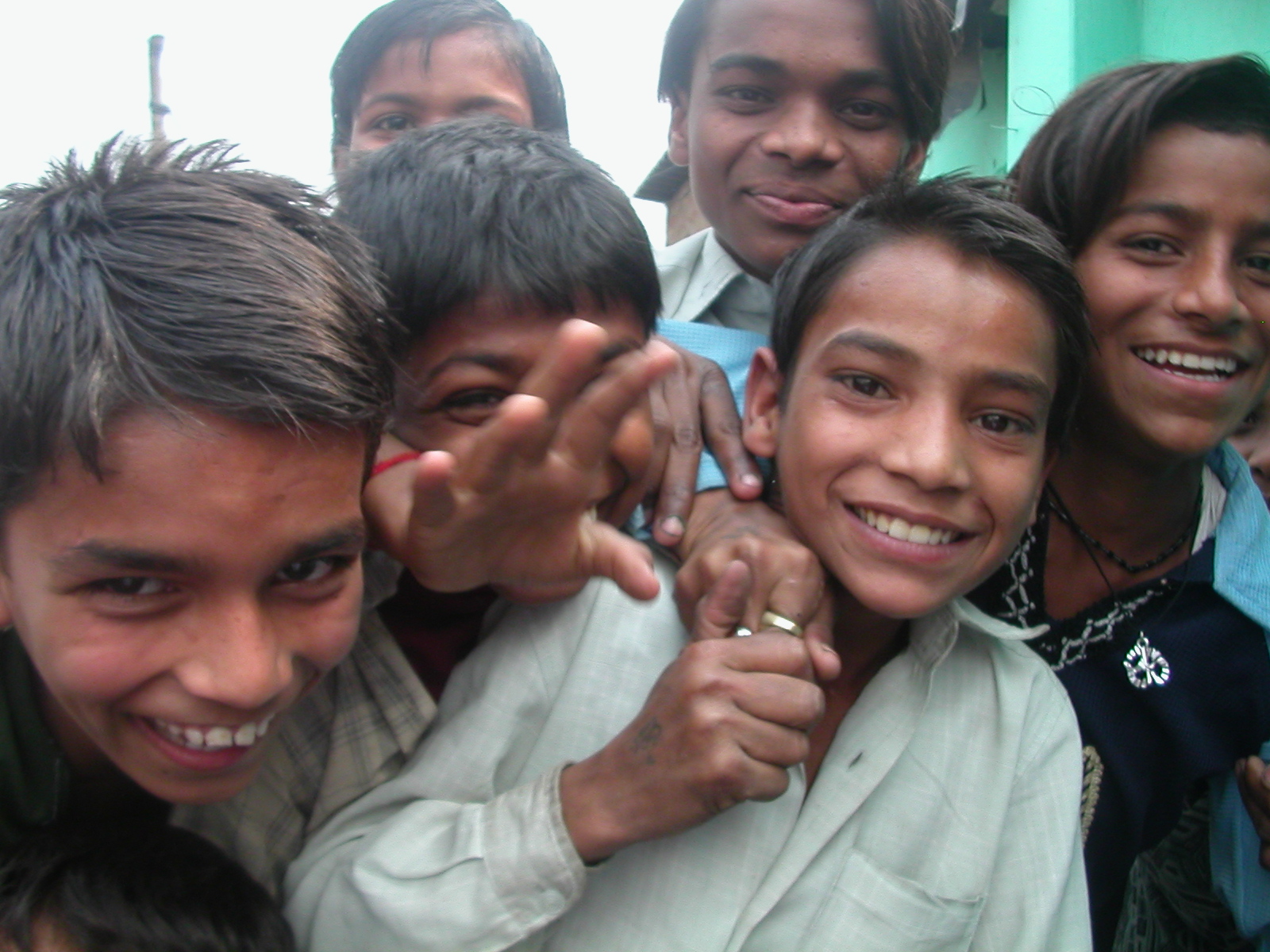
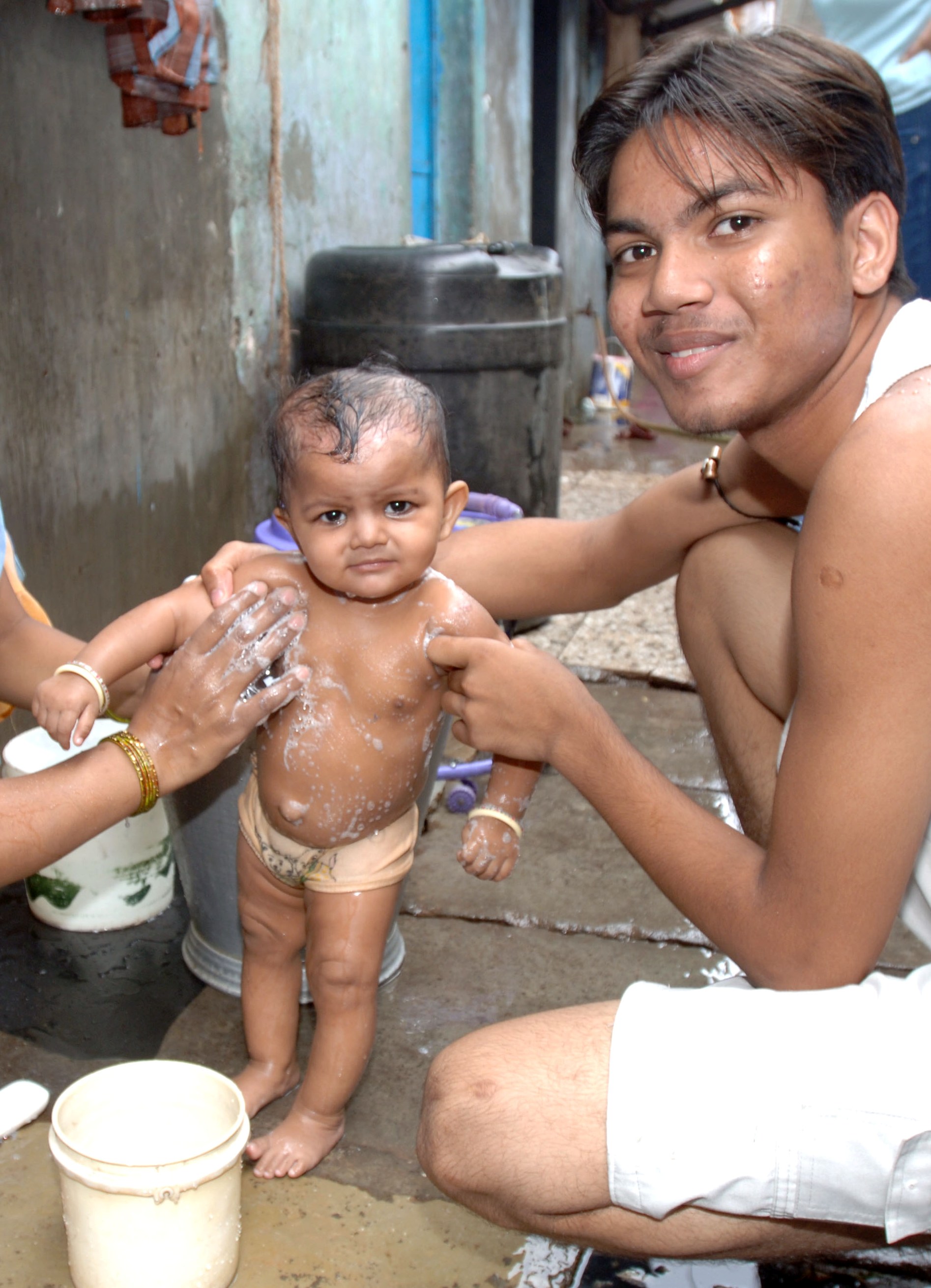
Fun in a slum? What a concept! But it’s true – I have met cheerful and playful people in the slums of India that I have visited. For most of us, it’s hard to imagine that a slum can represent anything other than disease, despair and grinding poverty. But surprising things can happen in surprising places.
Here’s a story for you. In the Rasoolpura slum in Hyderabad, community development teams attached to Operation Eyesight are hard at work bringing eye care and health education to thousands of people. A simple message like “you don’t have to be sick and blind – we can help” should draw everyone in the district. But sadly, a great many people who need help still don’t ask for it, so our teams have become very creative.
A few years ago, the Rakshana community development team under the leadership of Jyothi Rao (a very resourceful community health care worker) organized what they described as a “week long extravaganza which would get the women-folk of this slum excited and curious while also make a meaningful difference by addressing various issues close to their hearts.”
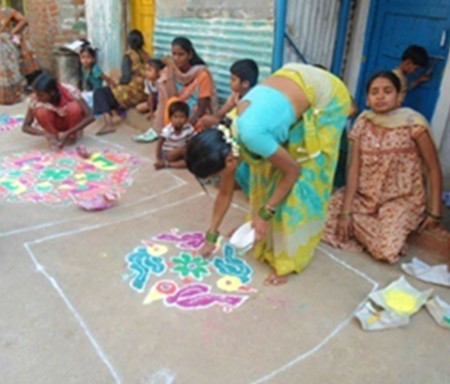
The week culminated in a mega-health screening program promoting health-seeking behaviour in the community. Team members, who are mostly women from the same neighbourhoods, went door-to-door and personally invited nearly every women in the slum (that’s a lot of women, but it’s a compact area).
The “extravaganza” featured games like musical chairs, lemon-on-a-spoon races and talent-based competitions such as rangoli (decorative designs made on floors of courtyards with colored rice, dry flour, sand and flower petals), mehendi designing (application of henna on palms) and painting competition for children. Jyothi and her team were thrilled with the turnout and the experience of seeing these women and children laughing and enjoying themselves.
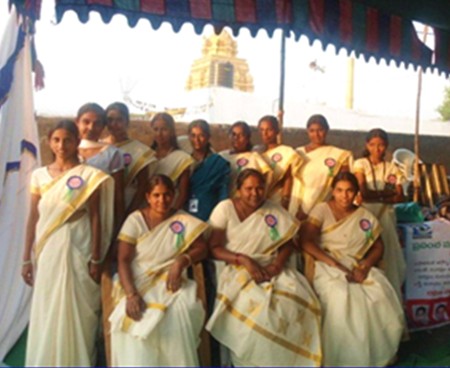
The buzz (and no doubt some trust) that was created led to a tremendous turnout to the actual screening for eye problems and other health issues. This slum neighbourhood is well on its way to being a much healthier place.
This story underlines an important principle about Operation Eyesight’s work: even the poorest, most humble of people have hope, initiative and capacity. When that is encouraged in individuals and multiplied across a whole community, there’s no telling what good things can happen. This is what can ultimately turn a slum into a healthy community.
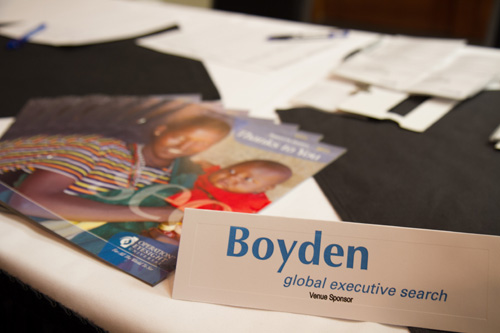
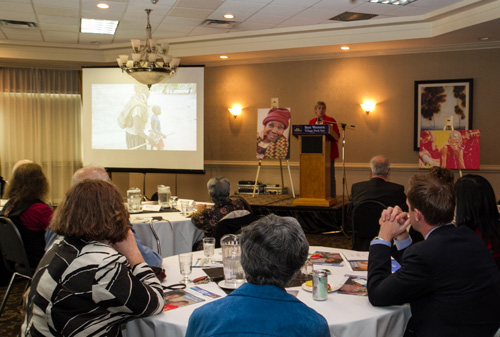
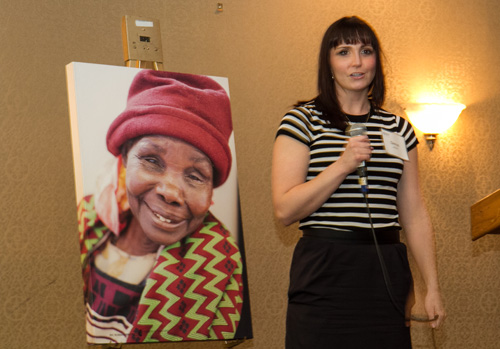
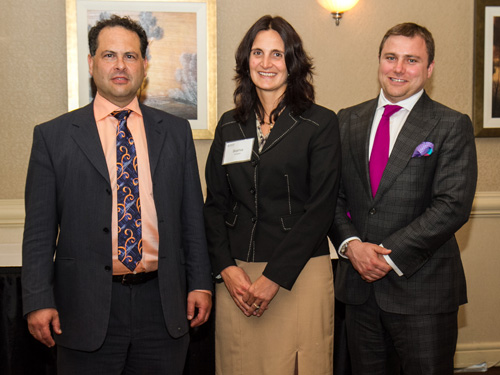
Local donors, volunteers, board members and staff gathered for our Annual General Meeting at the Best Western Village Park Inn in Calgary, Canada on June 20. Each year, we take the time to pause and reflect on the progress we and our partners have made in the fight against avoidable blindness – progress made possible by our kind and generous supporters. For those of you who couldn’t join us, here’s the evening captured in a photo essay (click on the image for a bigger version).
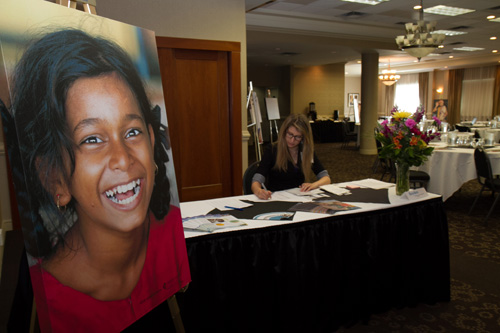
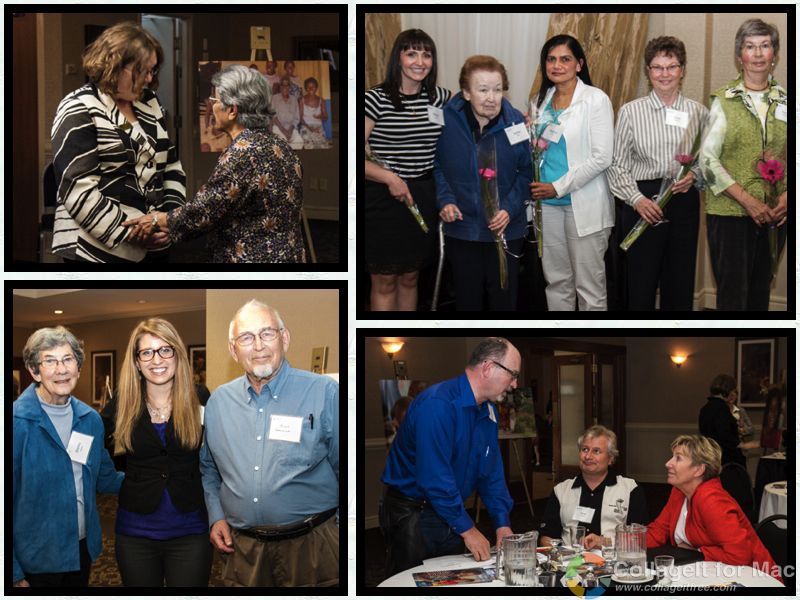
Photos by Ming Emma Ko.
A Sunday School class at Grandview Baptist Church (now Grandview Calvary Baptist Church) in Vancouver was all the inspiration that then-teenager Eileen Maharaj needed to support Operation Eyesight. “My teacher regularly had ‘mission moments’ in our class and one of those moments was about Operation Eyesight,” explains Eileen. “It inspired my imagination. Blindness is something that everyone can shudder at. No one wants to be blind. To think that it could be remedied was really exciting.” She has been a loyal and enthusiastic supporter ever since.
 Eileen was fortunate to meet and get to know the man whose work inspired Operation Eyesight, Dr. Ben Gullison – or “Dr. Ben” as she affectionately calls him – and his wife Evlyn when they made trips home from India and after they retired. She also met founder Art Jenkyns on one of his many trips to raise support in Vancouver. “They were both lovely men,” remembers Eileen.
Through their eyes, she quickly saw the difference she could make in the lives of those afflicted with avoidable blindness. “Lives change, particularly in India, where they believe that when you’re blind it’s your karma and you deserve to be blind. It was more than just giving someone sight, it was changing their whole karma. Nothing could give you better value for money than that.”
When Operation Eyesight introduced the monthly giving plan, Eileen enthusiastically signed up. “It just seemed so much easier than phoning up and making a big effort each time. It’s a very painless way to give.”
Over the past 30-plus years of giving, Eileen has generously transformed the futures of hundreds of people. While she’ll quickly divert attention away from herself, she’s a passionate advocate for Operation Eyesight and the monthly giving program. “It’s so easy. If your money is taken off the top like your cable or telephone bill, you don’t miss it; and everyone can afford it. You might have to skip a latte or two. If you can afford a TV, you can afford to give to Operation Eyesight and prevent blindness.”
Sachin is a 59-year-old farmer and traditional healer who lives with his family in the village of Bhutini Para in the Rajganj Block of West Bengal. As the chief breadwinner, he was very concerned when he began to lose his vision. It got so bad that he could no longer farm or deliver herbal medicines to his patients. He was worried about how his family would make ends meet. In fact, his daughter had to quit school for a year because their finances were so tight.
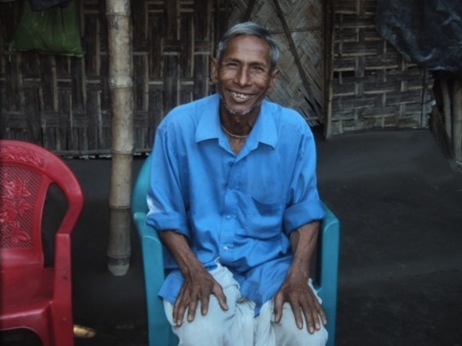
A community health worker from Siliguri Greater Lions Eye Hospital’s community eye health program –which is supported by Operation Eyesight donors – visited Sachin’s home and recommended that he be examined at the local eye clinic that was being held in his community. There, he learned that he had cataracts in both eyes. Siliguri hospital transported him to and from the hospital and performed surgery on both his eyes—all at no charge to him.
Surgery has changed Sachin’s life. Not only is he back at work, his daughter is back at school and he’s a vocal advocate for the community eye health program. He promotes and regularly attends the clinics in his area. He also brings patients to get the benefits he received!
Sachin has a special message for our donors: “I thank all the people who helped me get my vision back. I wish you all the success for your future.”
Operation Eyesight piloted the model for our innovative hospital-based community eye health program at Siliguri Greater Lions Eye Hospital starting in 2010. Because of this pilot’s success and that of two others, the program was implemented at 9 additional partner hospitals in India. The Siliguri program is focused on providing care to people in the Rajganj block in the Jalpaiguri district of West Bengal.
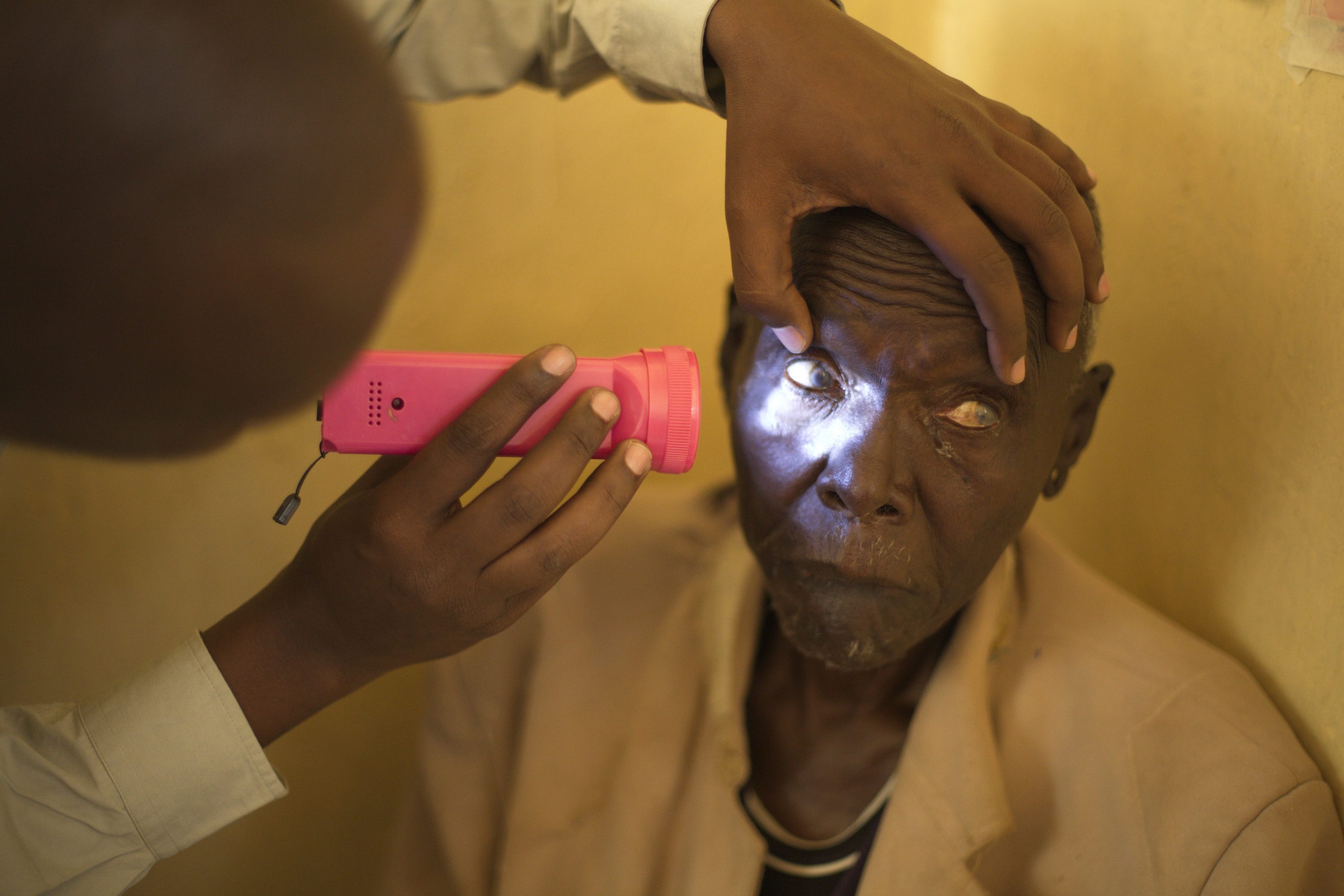
If you live in Campbell River, BC, you might open your mail one day to find a greeting card and gift from an enthusiastic Operation Eyesight supporter... even if you don’t know him personally.
For the past 30-plus years, Don McIver has celebrated local milestones by giving friends, strangers and organizations like Rotary and church groups a tribute gift from Operation Eyesight: a cataract surgery that will restore the sight of someone in a developing country.
“I like the idea of giving,” he says. “My wife Joan and I were hooked from the first time we gave that gift. To think that two people with no medical capabilities could give the gift of sight to people in far-away countries... it was the best thing we could do for anyone.” He hopes the recipients, in turn, like the idea and choose to give themselves.
Don volunteers for a number of local events, including the Campbell River Dance, film festival and Christmas craft sales. He sets up a table offering what he calls “eye cards,” greeting cards from Operation Eyesight that fund cataract surgeries in Africa or India. Many people contact the organization to purchase the cards, and at least one couple bought all their Christmas gifts through Operation Eyesight, thanks to his promotion.
Don is pleased that additional good is resulting from his steady volunteer schedule. “I’m always happy when we can give more cataract surgeries. Thirty dollars won’t do much for us here, but we can make such a difference in another person’s life by giving.”
As a father and grandfather, Don recognizes the difficulty presented by being blind in a developing country. “It’s difficult enough to raise kids here in Canada. But imagine when a mother loses her vision, or a husband loses his job. Imagine when children are born with congenital cataracts.”
Don regularly reads SightLines newsletters and watches the videos that offer a glimpse of lives impacted by generous donors. He has worked with the community television station to air Operation Eyesight videos, further helping to share the organization’s story with a wider audience.
Long retired from his work in a local pulp and paper mill, Don now enjoys being outside as much as he can. He himself recently had cataract surgeries, and is now doubly appreciative of healthy eyes.
“There are so many nice things in nature to enjoy,” he muses. “What pleasure we have from eyesight!”
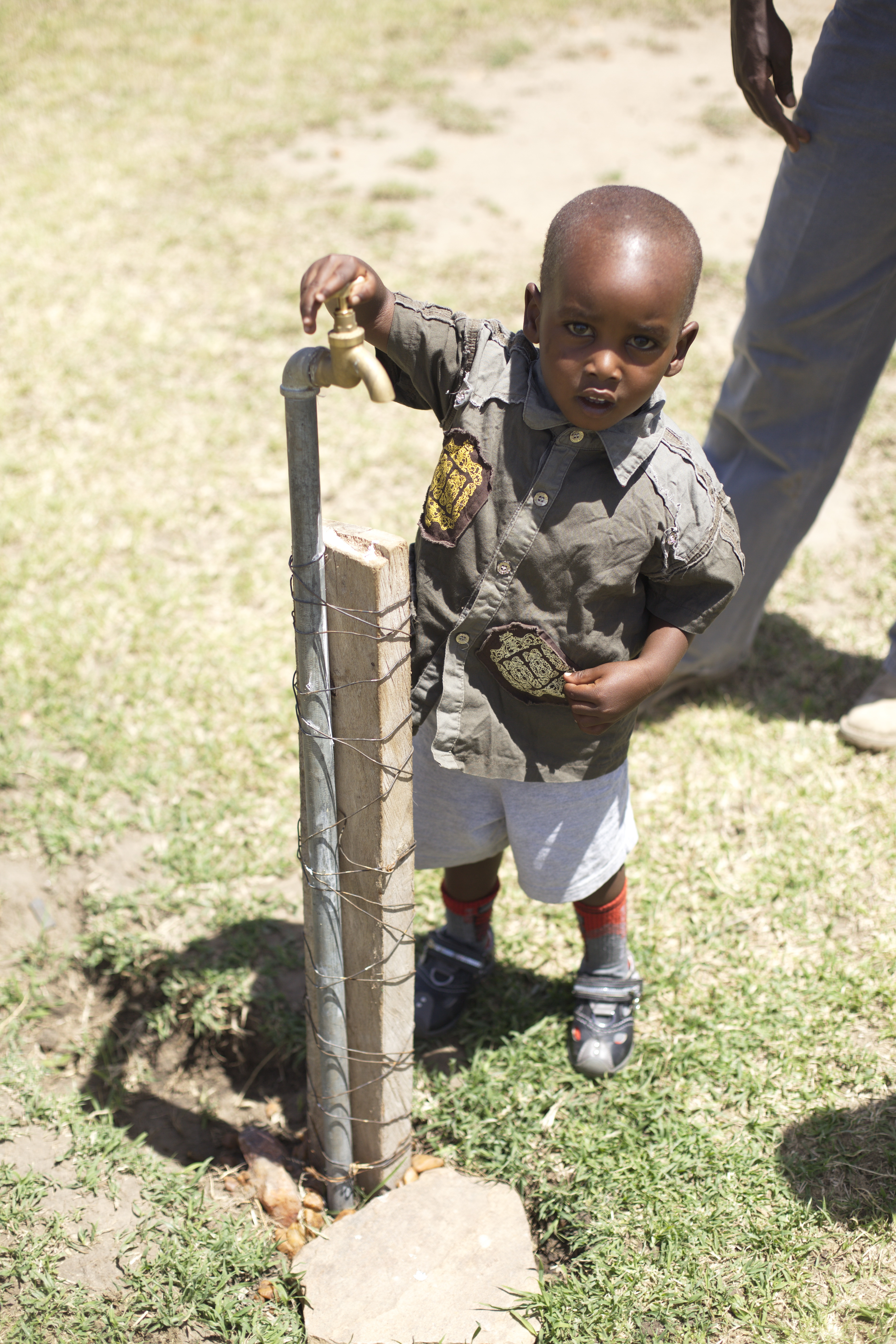
American journalist and historian Henry Adams once said, “Teachers affect eternity; you can never tell where their influence stops.” The teachers of Edmonton Public Schools have taken that statement to another level with their Charity Trust Fund.
A generous supporter of Operation Eyesight for more than 25 years, the Edmonton Public Teachers’ Charity Trust Fund’s mandate is to support Edmonton children and their families, as well as to provide general community support and reach out on an international basis. “It’s a wonderful way for our members to give back to their community,” explains Nels Olsen, a teacher and chair of the donations committee. “Our members find the Charity Trust Fund payroll deductions a convenient way to donate to local and international charities.”
The Charity Trust Fund was established more than 40 years ago and distributes donations to about 35 agencies each year. Operation Eyesight, the only internationally-focused recipient for many years, gained the Charity Trust Fund’s support for a couple of simple reasons: “The committee felt that the organization had a very large impact for what amounted to a modest donation, and Operation Eyesight uses the money we give so effectively.”
Donating internationally helps to give their students perspective about supporting community both at home and abroad. “It also shows our members that they have impact far beyond Edmonton and Canada,” says Nels.
In fact, their impact is international and reaches some of our world’s most vulnerable people. By supporting projects like community development in India and hospitals and outreach programs in Africa, countless children, women and men see a brighter future, thanks to the compassionate members of Edmonton Public Teachers Local No. 37.
A dad is respected because he gives his children leadership.
A dad is appreciated because he gives his children care.
A dad is valued because he gives his children time.
A dad is loved because he gives his children the one thing they treasure most: himself.
~ Author unknown
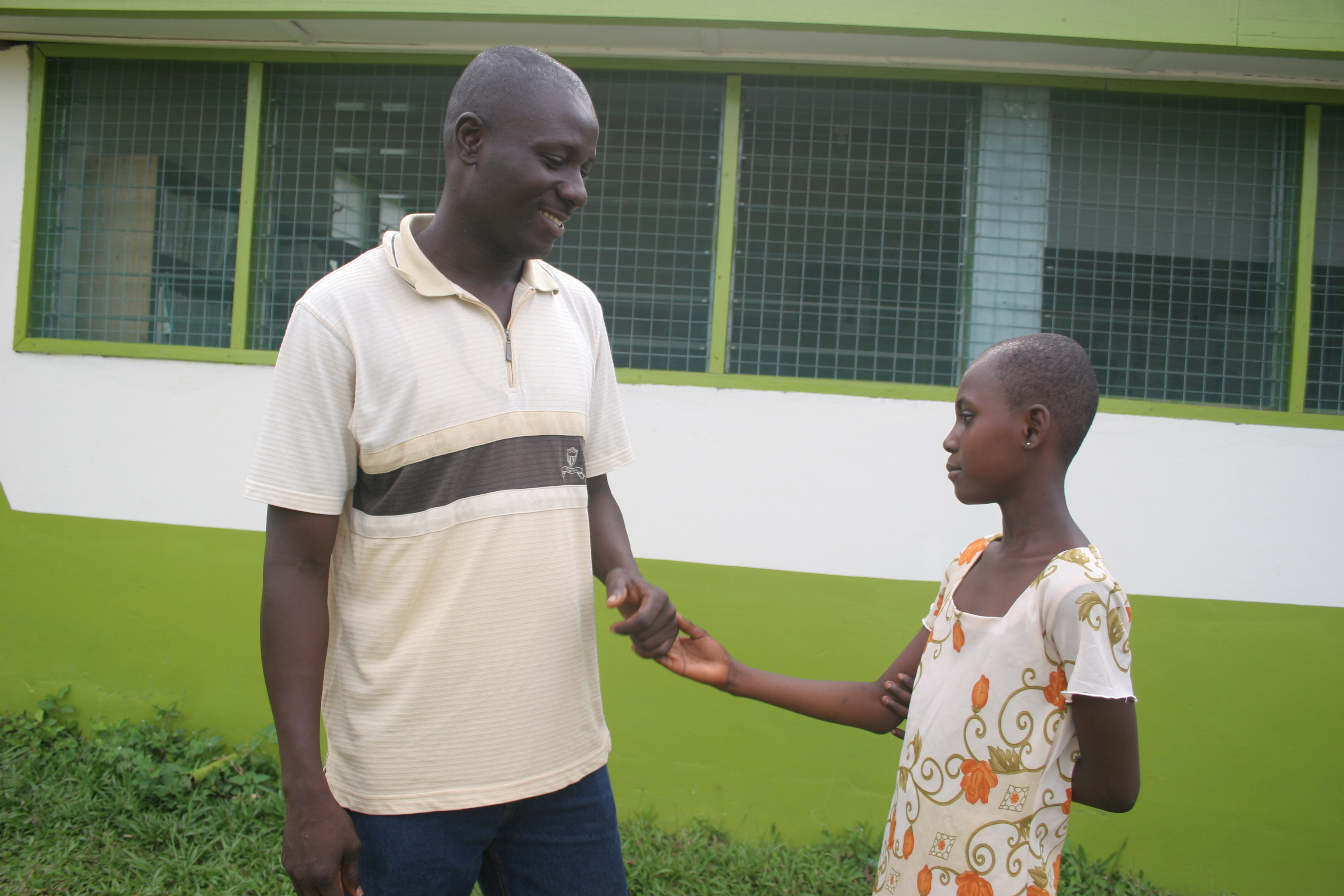
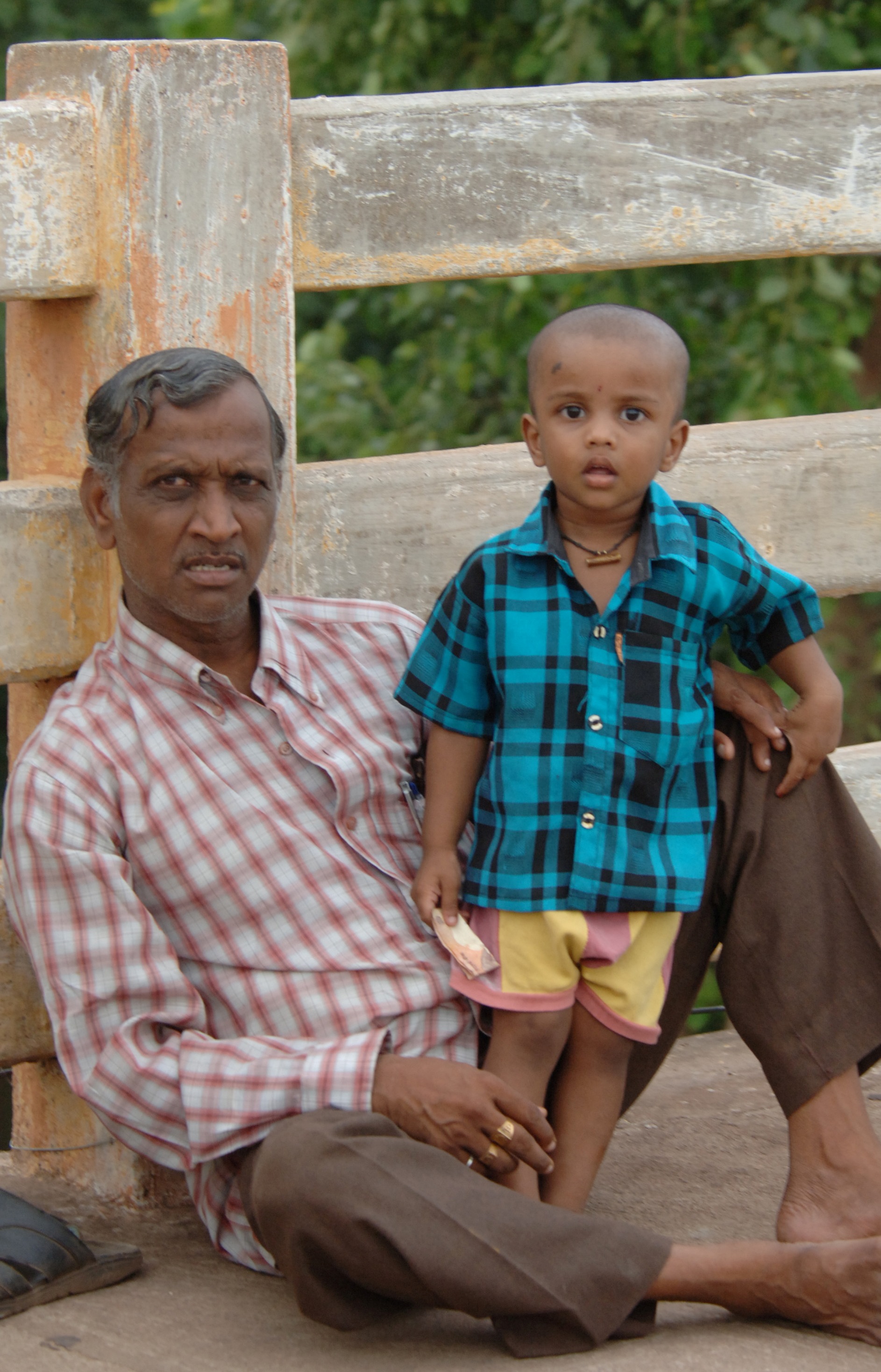
With Father’s Day only two days away, we take this opportunity to showcase some of the dads and grandfathers we have encountered through our work both in India and Africa. Click on the images to see bigger versions. It’s not too late to send an eCard to your father, grandpa, or spouse. Celebrate him with an eCard and a meaningful gift that honours him and helps fathers and families in Africa and India.

As we looked back on the 2011 year during our annual general meeting this past week, I was filled with immense gratitude for our donors. All of the work we do – every single project we undertake and every single person whose life is changed – is thanks to your kind generosity.
Because of you, millions of people have avoided becoming needlessly blind. Girls and boys go to school, learn their ABCs, and play with their classmates. Men and women provide for their families and go about their lives. They have brighter futures because of you.
Here are just a few of our 2011 highlights.
In India, 2011 was the first full year of operations for our hospital-based community eye health programs, which are designed to provide comprehensive eye care and blindness prevention to India’s poorest. Last year, the programs screened almost 40,000 people and provided education in child care, nutrition and general health to almost 250,000 people.
This is a remarkable achievement, given that our health education program reached just 18,000 people in 2010.
Another 2011 highlight was the opening of India’s Little Flower Hospital eye department building. It will be a “centre of excellence” to serve the 32 million people in Kerala and surrounding states.
In Africa, we met our four-year target of completing 51 waterpoints in Kenya’s Narok district, including the amazing transformation of Ongata Naado. The tiny village went from a dusty, dry outpost with a ramshackle school to a progressive community with gardens, a water distribution service and a brand new school for 650 students. How? Operation Eyesight donors invested in a borehole and educating the community about taking care of this precious resource. See the pictures and read the full two-part story here and here.
Ongata Naado is just one example of more than 40 communities in Kenya and 50 in Zambia with similar stories – all because they worked with Operation Eyesight over the past several years. This is the kind of difference you are making to some of the world’s poorest people.
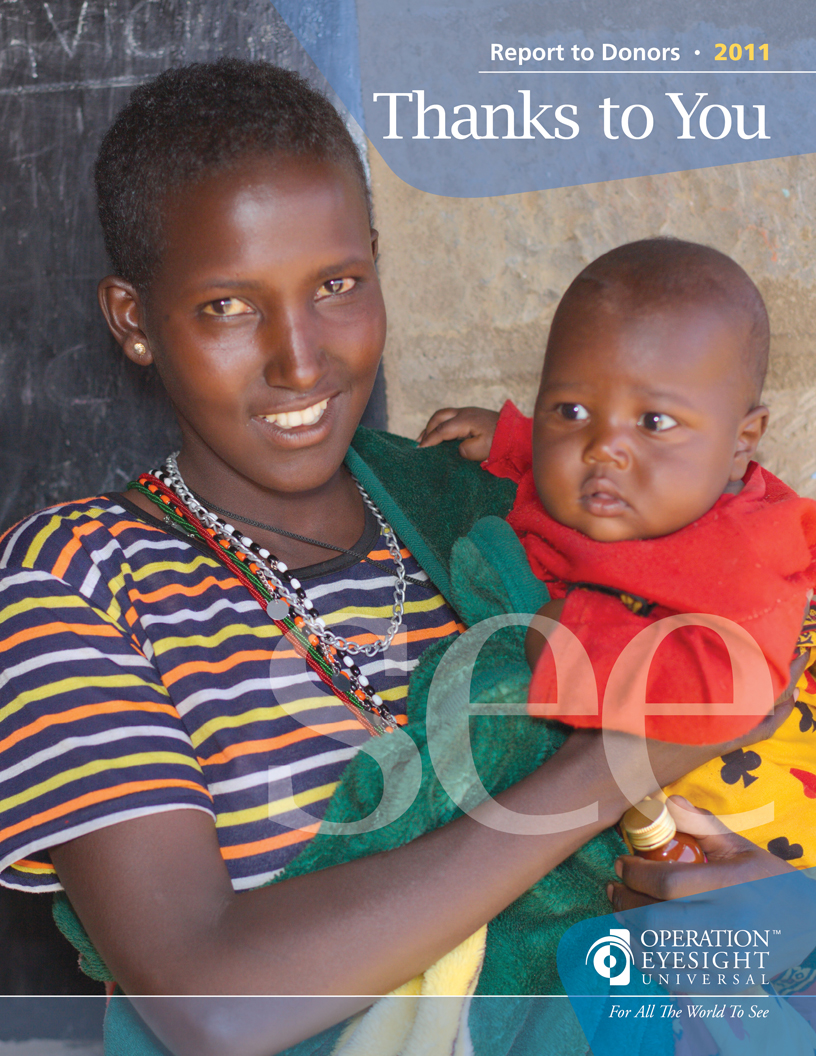
Our 2011 Report to Donors tells the full story of all that we accomplished together. As you read the report, I hope you’ll be as excited and as interested as I was! After all, it’s all thanks to you.