

On May 25, I wrote about why quality is so important to Operation Eyesight. In case you’re wondering why I’m writing about this now, it’s because too many people are afraid to get the help they need.
For years now, we’ve known that next to cataracts, the second leading cause of avoidable blindness in developing countries throughout the world is failed cataract surgeries. It’s a terrible shame. And yet, it continues!
The practice of offering substandard care to eye patients is fueled by the urgency to reduce the huge crowd of people still waiting for cataract surgery. But there is another way to look at this, and that is through the eyes of people threatened by blindness.
In my last blog post, I asked you to picture a poor Indian woman who is going blind from cataracts. If we could actually take the time to know her, we would learn why she refused free medical help. We may discover that she has some questions of her own, such as, “Why are you offering to do this for me?” and “Can I really trust you?”
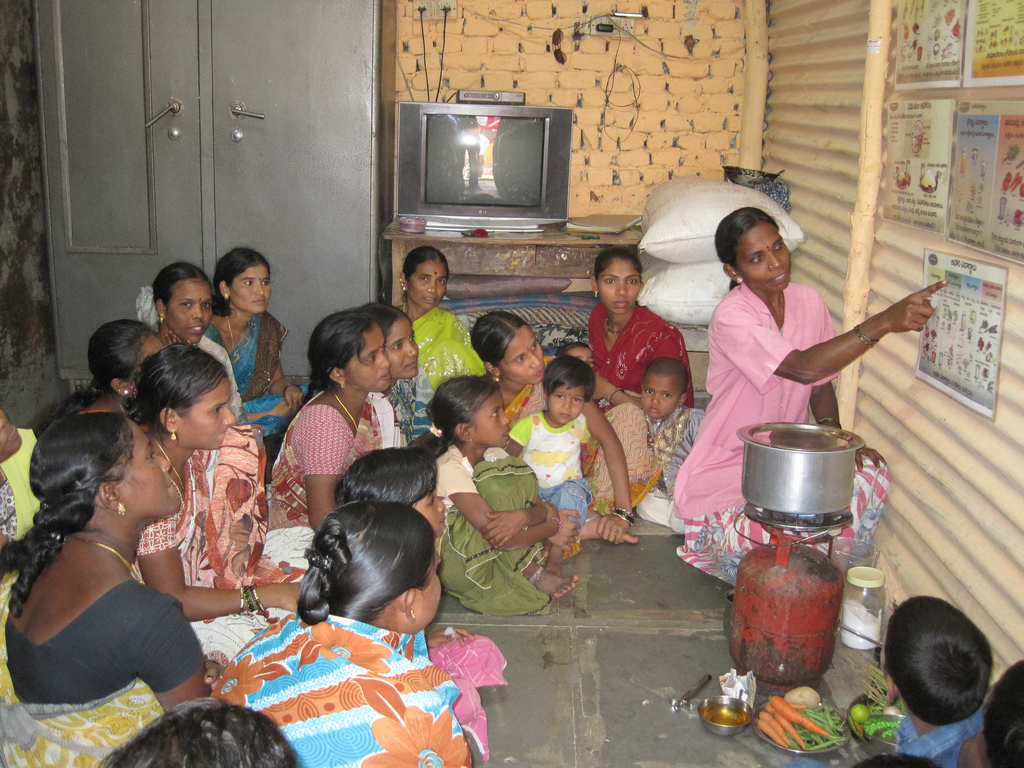
We got to know thousands of others with similar stories. We did it by recruiting people from these same villages and teaching them about basic eye care. These Community Health Workers were trained to take this knowledge back to their villages and share it with the people. We learned a lot from the people, and they learned a lot of about eye health and the hospitals that wanted to help them.
For the hospitals we support, the concept and practice of quality permeates the whole organization. What I described in the last paragraph is quality that cannot be easily measured: service to individuals, trust and respect. This goes hand-in-hand with quality that can be measured: hospital cleanliness, clinical outcomes, infection rates, etc.
If these hospitals follow accepted international protocols and standards, failures from infection are kept to a minimum. This translates into good outcomes, and word gets around – reputation and trust is built. Out in the surrounding villages, the community workers help alleviate patients’ fears, and they facilitate the process of diagnosis, treatment and recovery.
This cycle of relationship and healing just keeps rolling along, contributing to sustainability. In fact, we have a saying: “Sustainability is a by-product of quality.” And that is how avoidable blindness is reduced in an entire district – people within reach of the hospital have the opportunity to get the help they need, and blindness that can be treated or prevented becomes a thing of the past.
At Operation Eyesight, we are also working to eliminate the backlog of people who are blind from cataracts. But our commitment to the poor of India and Africa requires that we take their needs and fears seriously.
That tribal woman I mentioned? She can see now. And she says thanks.
Learn more about the difference our Community Health Workers are making!
I once met a little boy with one eye.
Last year while in India, I visited the L.V. Prasad Eye Institute in Hyderabad, India. This world-class centre for vision care works closely with Operation Eyesight. I was touring the facility, marvelling at all the different departments. LVP handles just about every kind of eye problem you can imagine, including really complicated cases like corneal transplants.
In their Ocular Prosthesis department, I met a set of parents with a little boy who was being fitted for an artificial eye. I was impressed to learn of all the care that goes into the creation and fitting of these objects. They are made from medical grade acrylic and are designed to be an exact replica of the companion eye, complete with a natural look and movement.
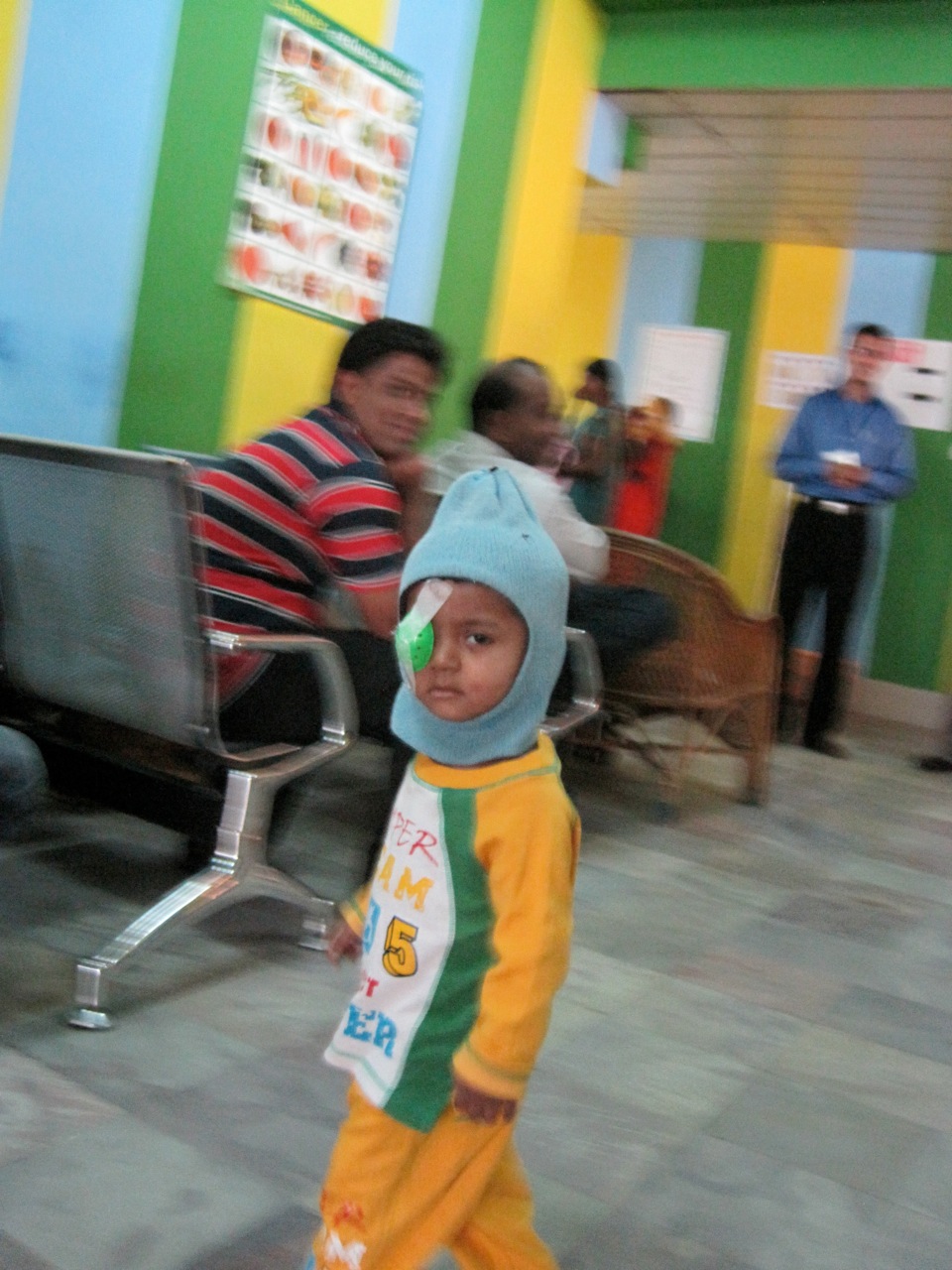
More impressive was the effect it had on the boy. This little guy, about seven years old, experienced an eye injury that became infected. By the time he got to the hospital, it was too late to save his eye, but LVP still performed a miracle. Here he was, dressed in his Sunday best with mom and dad, for the big moment.
When the boy looked in the mirror, instead of a gaping hole he saw two eyes looking back at him. His delight and excitement was palpable. And the look on his parents’ delighted faces also told a story: My son will not be singled out as the kid with the disfigured face – he’ll be like everyone else.
According to the World Health Organization, in many countries 85 percent of small children who are blind die before the age of five. With large populations of low income people and families already struggling to survive, blind children are often neglected. It’s not that their families have hard hearts – they just have to make hard choices about their limited resources. The same goes for any child with a serious disability.
Operation Eyesight’s strong commitment to community eye care means that parents of children with eye problems will learn that help is available, and be able to respond before it is too late. Like the little boy I met, it was a community worker that put his parents in touch with LVP. They weren’t able to save his eye, but they did save his dignity and his opportunities for the future.
In countries where resources and access to eye care are scarce, schoolteachers and midwives are often trained as primary health caregivers, able to identify eye problems when interacting with local communities.
Take some time to reflect on how vulnerable little kids can be, and let’s remember the struggling kids who need our help.
The school year is drawing to a close. If your children or grandchildren have a favourite teacher, consider giving an eCard from Operation Eyesight. By doing so, you’ll be helping children in India and Africa.
Have you ever wondered why Operation Eyesight is so big on quality? It’s a fair question. Why insist on high international standards for poor people? Isn’t just about anything better than what they have?

To answer that, picture a tribal woman in a remote part of India, who is going blind from cataracts. She’s a poor woman who knows if she can’t see she can’t work; and if she can’t work, she doesn’t eat. The woman knows there is an eye clinic not too far away that can fix her eyes free of charge. But she doesn’t go.
Why not? Because she knows people with similar problems who have gone to that clinic, and came back worse than before. The woman may be poor, but she’s no fool. She would rather live with the grey fog of cataract-clouded vision than risk being permanently blinded, or in pain due to a botched surgery.
Throughout India and other countries with large populations of low income people, this scenario plays out over and over. Cataract is the main cause of avoidable blindness everywhere, affecting millions of people; yet cataracts are relatively easy and inexpensive to correct.
Many charitable eye clinics, in their efforts to restore sight to cataract sufferers, have been pushing people through the system for years. Medical teams cut corners and take chances that would be unthinkable in other countries. The emphasis on quantity (instead of quality) translates into failed surgeries. It’s still happening today. Many hospitals that offer free treatment to the poor receive their funding based on the number of people they treat, instead of how many people get healed.
In 2003, a landmark research project studied the impact of all those cataract surgeries. It confirmed that yes, cataract was the number one cause of blindness – about 50 percent of all cases. Cause number two? Failed cataract surgeries.
This news landed with a thud throughout the international eye care community. I can tell you how Operation Eyesight responded: we resolved to place quality among our top priorities. We communicated this expectation to our medical partners, and lost some who were unwilling to work towards our goals in the process. Since then, we have invested in upgrades to facilities, training, equipment and procedures. While this is still a work in progress in some regions, we are working with all of our hospital partners to achieve World Health Organization (WHO) standards in surgical outcomes – the same as in Canada, where I live.
But there’s more! Quality is not just about best practices; it’s about how we regard the people who need our help – people like that same tribal woman I mentioned earlier. Come back on June 8 when I’ll describe what we see when we look through her eyes. And learn more about our approach to quality in our Spring 2012 newsletter, “No compromise: Quality is key to achieving sustainable development.”
Growing up, my two kids were prone to the usual childhood mishaps... scraped knees, bumped heads, sprained wrists, even the odd black eye. Fortunately, their eye injuries were rare and never vision-threatening.
In Africa, however, I saw children with eye traumas caused by large razor-like acacia thorns, sharp splinters of firewood, poorly-aimed rocks and sticks thrown at animals... even misdirected footballs.
I met four-year old Ian in Kenya’s Moi Teaching and Referral Hospital, where this appealing little fellow was recovering from an injury that almost cost him the sight in one eye. Watch his story on the following video photo essay.
And parents, you can help ensure your children’s eyes are protected from trauma by supplying well-fitted safety equipment during sports and recreational activities. Visit the University of Rochester (NY)’s Medical Centre for some useful eye safety tips.
In the course of our work in Africa and India, we see a lot of mothers. They may have different appearances, household incomes, occupations or roles in the community. They may be first time parents, mothers of five scraping by with limited resources, or grandmothers barely recognizing their grandchildren because of their cataracts. The only thing that doesn't change is their love and care for their families.
Here are some of the memorable mothers we've encountered in the past few years. Click on the images to see a bigger version of the photos, or read about their stories and our programs in the places they live.
May 13 is Mother's Day. It's not too late to send an eCard to your mom, grandmother or spouse. Celebrate her with an eCard and a meaningful gift that honours her and helps mothers in India and Africa.
What a great week for Operation Eyesight, and for the people of Ghana!
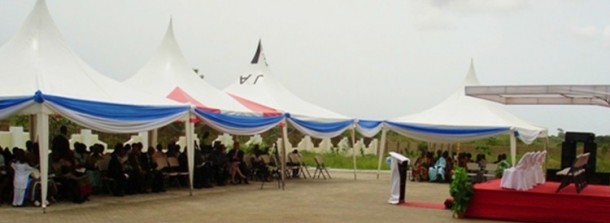 On Wednesday, we opened a brand-new facility to replace the old Watborg Eye Services clinic, which is located in the Awutu Senya District, just outside Ghana’s capital city, Accra. As you can imagine, the completion of a significant capital project like this is cause to celebrate. Finally, after years of planning and months of construction and equipping, this hospital is ready to go.
From my perspective as vice-president of our International Programs, I can tell you that the original clinic was well used, serving a population of over one million. But it was too small and worn out, and not able to meet the critical needs of these residents. Ghana has a population of 23 million, of which more than 200,000 are blind, mostly from avoidable causes. With increased space, more well-trained doctors and nurses, and the latest equipment, the new facility is going to make a major dent in those statistics, both in the areas of treatment and prevention.
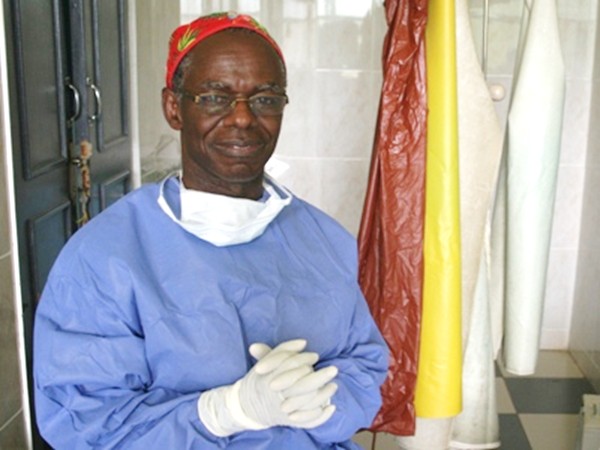
Dr. Boateng Wiafe, the talented surgeon and administrator who directs all our projects in Africa, has been closely associated with Watborg for many years. You can imagine how thrilled he is to finally have better tools to do the job. The hospital is staffed and equipped to treat a wide range of eye problems according to international standards of excellence – offered to all, regardless of their ability to pay. It will also provide training programs, outreach eye screening for school children, and education to increase the awareness of blindness as a major public health issue.
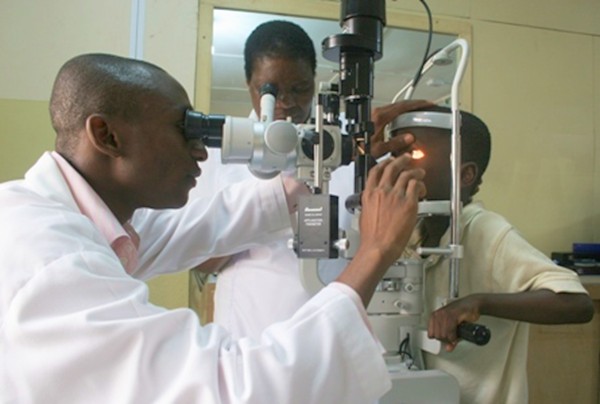
In these and other ways, the Watborg hospital is truly unique, and will serve as a model that can be replicated in other African countries. I know it will have a huge impact on the availability and quality of eye care throughout West Africa.
Dr. Wiafe is pleased with the way the surrounding community was involved in the process, and how it will benefit in many practical ways. Here’s what he had to say:
“The Awutu Senya District is one of the newly created districts in Ghana. The district has some health centres, but the new and expanded Watborg Eye Services is the first eye hospital in the district. Just by opening up this area, we have increased development activities in the area. Besides the construction, Operation Eyesight put in the access road, and brought in water and electricity. So even before the facility has officially opened, it has activated the community.“We envision this facility will provide quality eye care to the district. Formerly, residents would have to travel long distances to access eye care services, but now this barrier has been removed. The Institute will provide employment for some of the residents in the area. Already, a restaurant has been opened at the junction where the access road joins the highway, and we anticipate some shops and services will open. Taxi services will start coming to the facility, to bring patients.
“The community will also benefit from eye health education. The district director of health has already started using the Institute to train nurses and midwives as well as the volunteers on eye health. This will trickle down to the community so that they will all enjoy healthy eyes.”
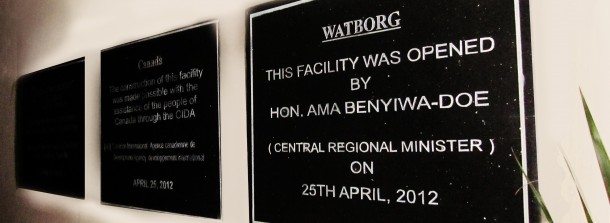 Last week, we experienced the thrill of opening a new facility for Watborg Eye Services, just outside of Ghana’s capital city of Accra. This is an important development for Operation Eyesight, and we hope our supporters are as excited as we are. As I mentioned in last week’s post, this hospital has the potential to set new standards and benchmarks for eye care in Ghana and throughout Africa.
Equally remarkable is how this project was accomplished through friendship between Canadians and Ghanaians. It started some years ago when Operation Eyesight became acquainted with ophthalmologist Dr. Boateng Wiafe. Our original support for Watborg Eye Services grew into an enduring relationship with Bo, leading to his appointment in 2009 as Operation Eyesight’s Regional Director for Africa.
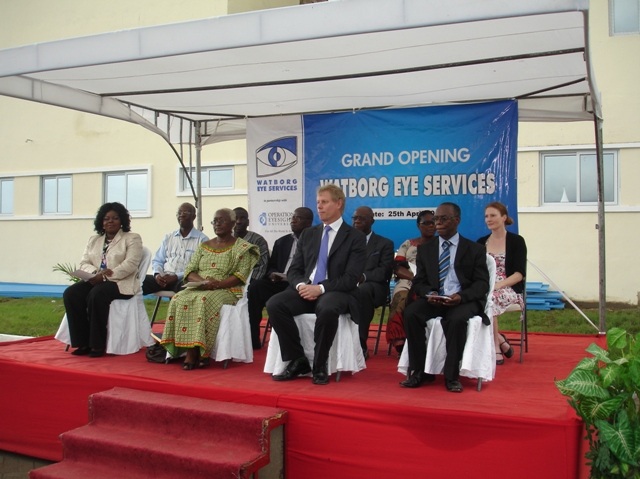
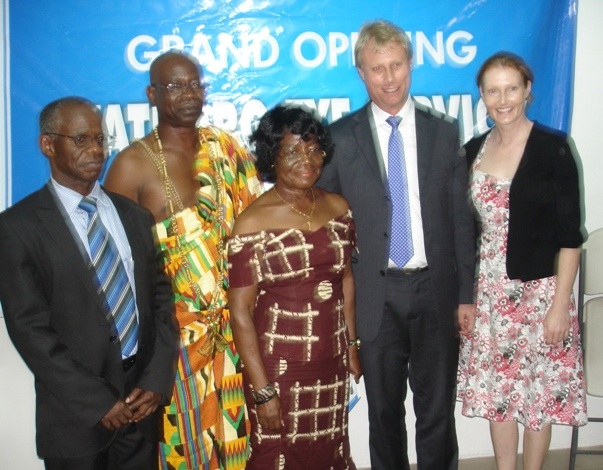
More recently, the Taylor family of Calgary came to learn of Bo’s work, and they agreed to work with him to build something new. Don Taylor is president of Engineered Air, a market leader in heating, ventilation and air conditioning in North America. His son Cameron, who attended the opening, is president of Sherwood International Capital Limited. This family has a deep concern for the people threatened by blindness in Africa, and their generosity was a major factor in the completion of the new Watborg Eye Services facility.
To put this in perspective, I’d like to quote Pat Ferguson, president and CEO of Operation Eyesight: “The Taylors’ very generous donation for Watborg’s new facilities will strengthen Ghana’s eye care system and ensure those living in the area, regardless of income, have access to the best possible care. Operation Eyesight is focused on building support for sustainable eye health initiatives among threatened populations in Africa and India. For the poor in these countries, visual impairment is more than a disability – it’s a direct threat to life.”
Speaking of Canadians who care about Ghana, we’d also like to thank the Government of Canada which also made a large investment in the project through the Canadian International Development Agency (CIDA).
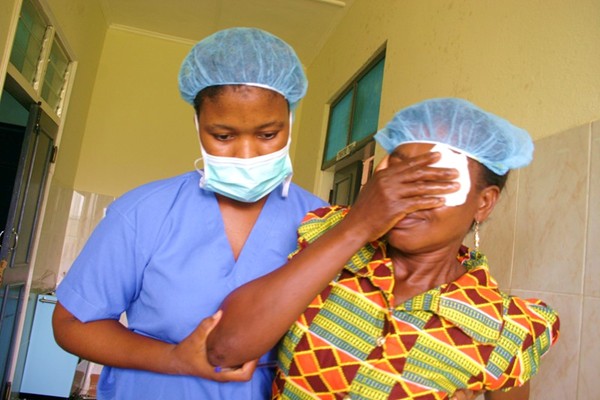
Now that the hospital has reached this major milestone, Watborg’s ongoing success will depend upon excellence in day-to-day running. Much of that will fall to the nurses, of which I was one myself once. May 6 to 12 is International Nurses Week – a time to recognize the many contributions that these professionals make in the smooth running of any medical facility. I know Dr. Wiafe would agree with me. Best of luck to them all.
Ultimately, Operation Eyesight’s goal in Africa is to help each country achieve a comprehensive health care system that includes eye care – one that they can sustain without foreign support. Our commitment to sustainability – both fiscal and programmatic – will ensure that these collaborative projects and programs will continue long after our departure.
Our regional director for Africa, Ghanaian ophthalmologist Dr. Boateng Wiafe, has worked closely with the ministries of health in Zambia, Kenya, Rwanda and Ghana for many years. He and his staff have discovered that such collaboration within existing health systems encourages local leaders to manage their own affairs, while creating models that can be replicated in other regions.
“Operation Eyesight empowers Africans to take care of Africans,” he says.
In her 2009 book, The Challenge for Africa: A New Vision, the late Kenyan activist and Nobel Peace Prize winner Wangari Maathai wrote, “The challenge for [Africa’s] leaders, both governmental and nongovernmental, is to acknowledge and then channel Africans’ capabilities and energies into effective action for development.”
We believe international non-governmental organizations (INGOs) that choose to support and build on resident expertise can create long-term sustainable solutions that respect and steward the talents and abilities inherent in Africans. Developing countries understand their social and economic challenges and usually have the expertise to solve their own problems. They may only lack sufficient human and financial resources, and that’s where we can help.
Operation Eyesight has had notable success using these strategies. We invite other INGOs to contact us to learn more about our approach to sustainable development.
We have many great stories to share with you about the difference our donors have made in Africa and India... check out our success stories today!
Working with African people for many years, we have been constantly impressed with their initiative, leadership and awareness of their own social, economic and health care challenges.
These are not helpless people. They have many of the tools they need to improve their own systems, except financial and human resources.
With this in mind, Operation Eyesight has committed to working collaboratively with local governments and communities for the long-term health and well-being of the countries and their citizens.

Over our organization’s history, we have chosen to embody the concept of the Declaration of Alma-Ata. This international declaration, signed in 1978, emphasizes the importance of primary health care, which the World Health Organization categorizes as “geared toward self-reliance and self-determination.”
An excerpt from the declaration reads, “The people have the right and duty to participate individually and collectively in the planning and implementation of their health care.... Governments have a responsibility for the health of their people which can be fulfilled only by the provision of adequate health and social measures.”
Rather than sending expatriate medical staff to perform eye surgeries in the four African countries – Ghana, Kenya, Zambia and Rwanda – where we work, Operation Eyesight made a conscious decision to collaborate with local governments and citizens at community, regional and national levels.
We chose to not simply fund cataract surgeries; instead, we manage a comprehensive range of all levels of eye care, from training community workers to building or refurbishing hospital infrastructure.
We collaborate with local public health, water and sanitation departments and with ministries of health. The outcome? Supported, expanded and improved health systems. Such partnerships encourage the ownership and participation of communities, regions and countries that is crucial to sustainable development.
Return next week to learn about our goal for our work in Africa, and its long-reaching implications. Read more in our Winter newsletter about how we work “narrower and deeper” in these countries.
When medical personnel are scarce and rural populations are sparse, it’s time to get creative.
Basic eye care is a significant problem in many parts of Africa; in fact, sub-Saharan Africa has one of the highest rates of visual impairment and blindness in the world. Poverty, disease and lack of access to eye care all contribute to unnecessary blindness.
Luckily, in many developing countries (including the four African countries where Operation Eyesight works), it is proving remarkably cost-effective to provide frontline workers with basic training in eye health and disease prevention.
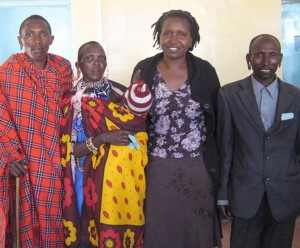
Public health care workers, schoolteachers, midwives and even traditional healers (many of them local to the districts they serve) are being trained to identify eye problems when interacting with local communities. They then can provide referrals to medical care. This type of community development program is highly effective in identifying health risks.
When I was in Kenya last year, I met some community health workers who are making a significant impact on eye health in their districts.
Janice Cherono is a public health officer, hired through Kenya’s Ministry of Health, who works at Naroosura Eye Clinic, a satellite clinic of Narok District Hospital. Janice supervises 40 community health workers and 25 active volunteers, teaching them to help individuals and communities become aware of all aspects of health, including sanitation, face and hand washing, trachoma prevention and the importance of pit latrines.
The frontline workers report to Janice any health concerns they come across, including trachoma, diarrhoea, malaria and malnutrition. They are equipped to treat minor ailments, and frequently refer severe cases to clinics or hospitals.
“We have face-to-face meetings when we go on outreach trips, and we visit schools to inform children, so they can tell their parents,” Janice told me. “Many people are willing to listen but some are resistant to change. We try to reach the community members who are role models for their community. They are opinion leaders. There is strength in community health workers, but we need assistance to train more.”