

Last week, I told you how many African countries are training frontline workers, including public health care staff, schoolteachers, midwives and traditional healers, to identify eye problems and other health concerns when they are working in the community. This type of community development program is highly effective in identifying health risks.
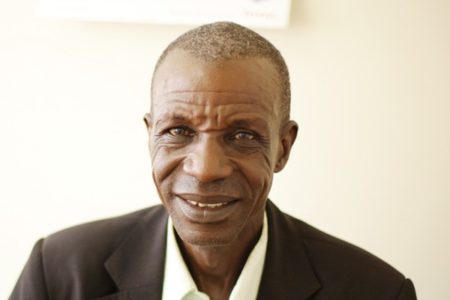
When I was at Kitale Eye Unit, I met Bernard Simiyu, a 61-year old local man who had been a community health worker for four years. He regularly walked great distances, covering a large district of about 50 rural homesteads and checking in with families to identify eye injuries, cataracts and refractive error (the need for prescription eyeglasses), among other medical conditions.
“Bernard and our other community health workers help identify patients for us. We hope to get bicycles to help them in their work,” said Dr. Hillary Rono, referring to the large districts the frontline workers canvass on foot.
Rono, the ophthalmologist at the eye unit, told me that Bernard was one of 32 community health workers in the Greater Trans-Nzoia District. The Ministry of Health trains the workers with support from Operation Eyesight and other NGOs.
If patients don’t live too far from the hospital, the frontline workers can literally lead them to the eye unit, or can use their hospital-sponsored mobile phones to call and arrange for a doctor or clinical officer to visit the rural area.
Bernard himself had been blind from cataracts, and was operated on five years earlier at another Operation Eyesight-supported eye unit at Moi Teaching and Referral Hospital. His son knew where the Kitale hospital was, and was able to escort him there, so Bernard appreciates the importance of having someone knowledgeable accompany a patient.
He told me, “When you are blind, it’s like being in a hole. You cannot see what’s going on. I was feeling painful when I wasn’t whole, so I decided to help other people to see. Eyes are so important.”
Would you like to help frontline workers like Janice and Bernard? Your gift can help train community health workers in Africa.
On March 7, I spoke to business leaders and members of the international eye care community at the launch of Operation Eyesight UK in London. We made some important connections, and the trustees of the UK board are off to a great start. We certainly want people in the UK to know that Operation Eyesight has a unique approach to international development, and we made some important points that were well received, leading to further conversations with audience members. Here are just a few of the points from the speech I delivered at the event.
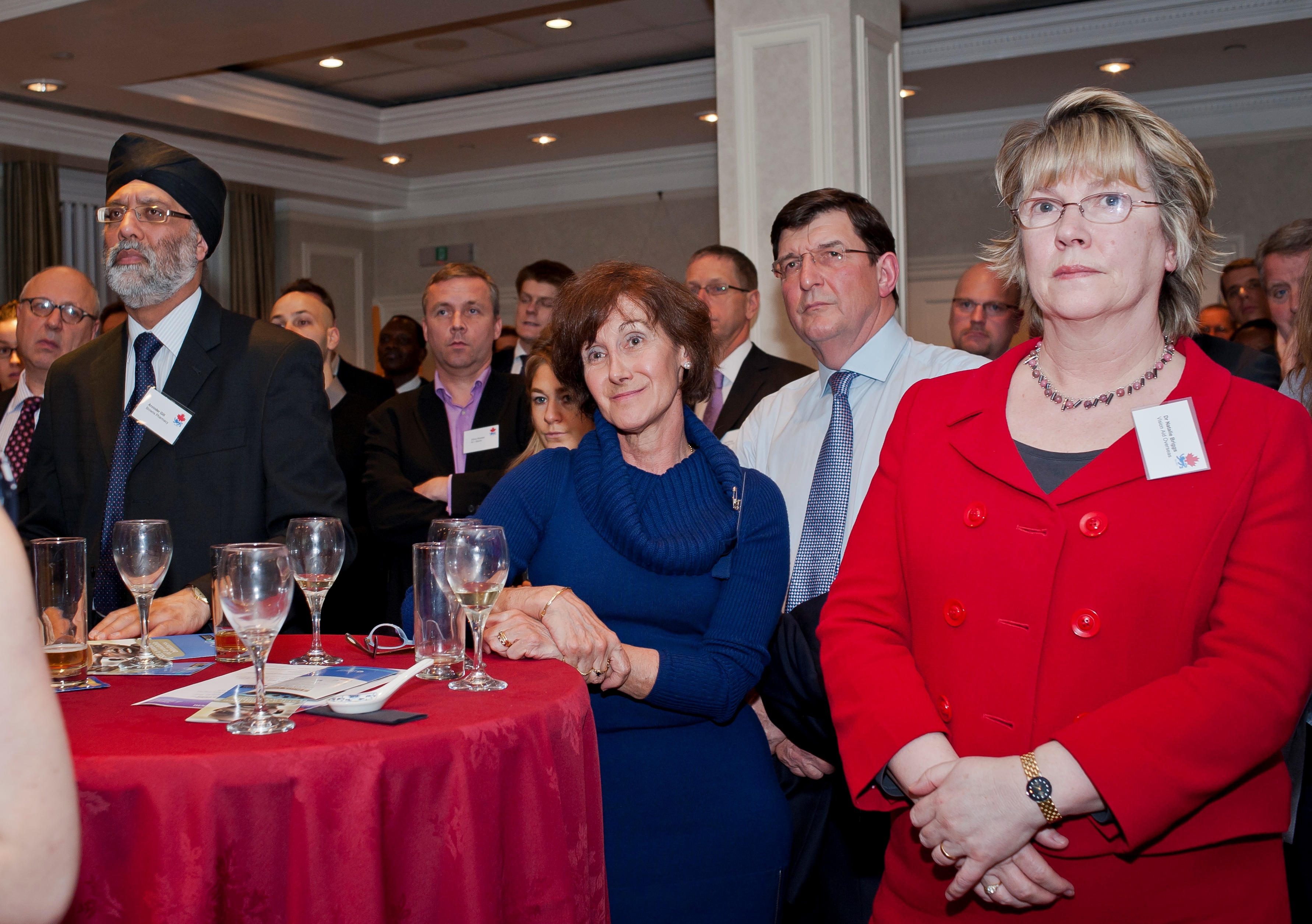
Operation Eyesight believes that partnerships between corporations and development organisations can pay higher dividends and help both entities achieve their ambitions.
You’ve probably seen negative headlines in the media about failed aid. However, they do not take into account the multiple intents behind the large pot of money referred to in these intimidating news reports.
Aid can refer to many different kinds of financial support and can include humanitarian assistance in the face of national disasters such as tsunamis, famines, or the effects of civil war. This type of aid is a critical response in times of need, and greatly appreciated by governments. But it is not development.
***
Where there is a real commitment to sustainable development, it becomes possible for organisations like Operation Eyesight to achieve measurable and lasting results with donor funds – especially if the scale of the project is manageable and the stakeholders represent key government representatives and community grassroots organisations. In fact, we can invest your development funds to play a catalytic role that will support change and progress, without undermining institutional development.
Operation Eyesight manages the risk in international development by using a number of criteria and strategies. For instance, we select countries that have relatively stable governments and are not involved in ongoing conflict. We require stability to engage the necessary stakeholders from government officials to community leaders; we need to plan collaboratively, implement, follow-up and make adjustments.
It is important to know that developing countries do understand their social and economic challenges and usually have the expertise to solve their own problems. But they may not have sufficient human and financial resources.
Operation Eyesight does not impose western solutions or use Canadian medical expertise or expatriate staff. We rely on in-country expertise like the world renowned LV Prasad Eye Institute in India as well as African authorities on development and eye care. We believe in capitalising on their knowledge of local issues and expertise in identifying solutions as well as their contacts in-country, from senior elected and government officials to community leaders.
***
Standard Chartered Bank is an example of a corporation that supports the development of eye care in low income countries where they have business interests.
Through its Seeing is Believing (SIB) global initiative, the bank engages its employees in fundraising and matches every gift. To date they have raised almost $40M and have a goal to reach $100M by 2020. You can see the value proposition to the corporation and the community in a number of projects.
***
In Kenya, the Area General Manager of Standard Chartered Bank supports an annual marathon where proceeds are donated to community initiatives including eye care. The marathon and its charitable objectives are well known in Kenya. Again, the good will generated by this social enterprise is considerable.
In India, Operation Eyesight partners with Standard Chartered Bank to promote eye health and provide eye care in slum communities. We are fortunate to have a number of bank staff with us this evening.
Here’s another example [of a corporation’s social responsibility]. In Zambia, Operation Eyesight is partnering with the Ministry of Health and a steel company from India to construct an eye clinic at the University Teaching Hospital, located in the capital city of Lusaka. This is a market entry strategy that will give the steel company solid public and government recognition in a country where unnecessary blindness and weak health care systems are barriers to social and economic development. The company has the priority naming opportunity on the new clinic.
From Australia, the foundation of the Lonely Planet Books is supporting the cost of water points or boreholes in the Maasai Mara in Kenya. PixiFoto, a photography corporation also out of Australia, is doing the same in Zambia. Both are having a dramatic impact on marginalised communities.
For more about the launch of Operation Eyesight UK, read last week’s post by Brian Foster.
Q: What does it take to launch a new organization?
A: A blizzard, a malfunctioning airplane, multiple cancellations and a surprise visit to Iceland.
You’ve heard the expression “no pain, no gain?” Well, getting the guest speaker from Calgary to London for the launch of Operation Eyesight UK last week was no easy task, but the outcome was well worth it.
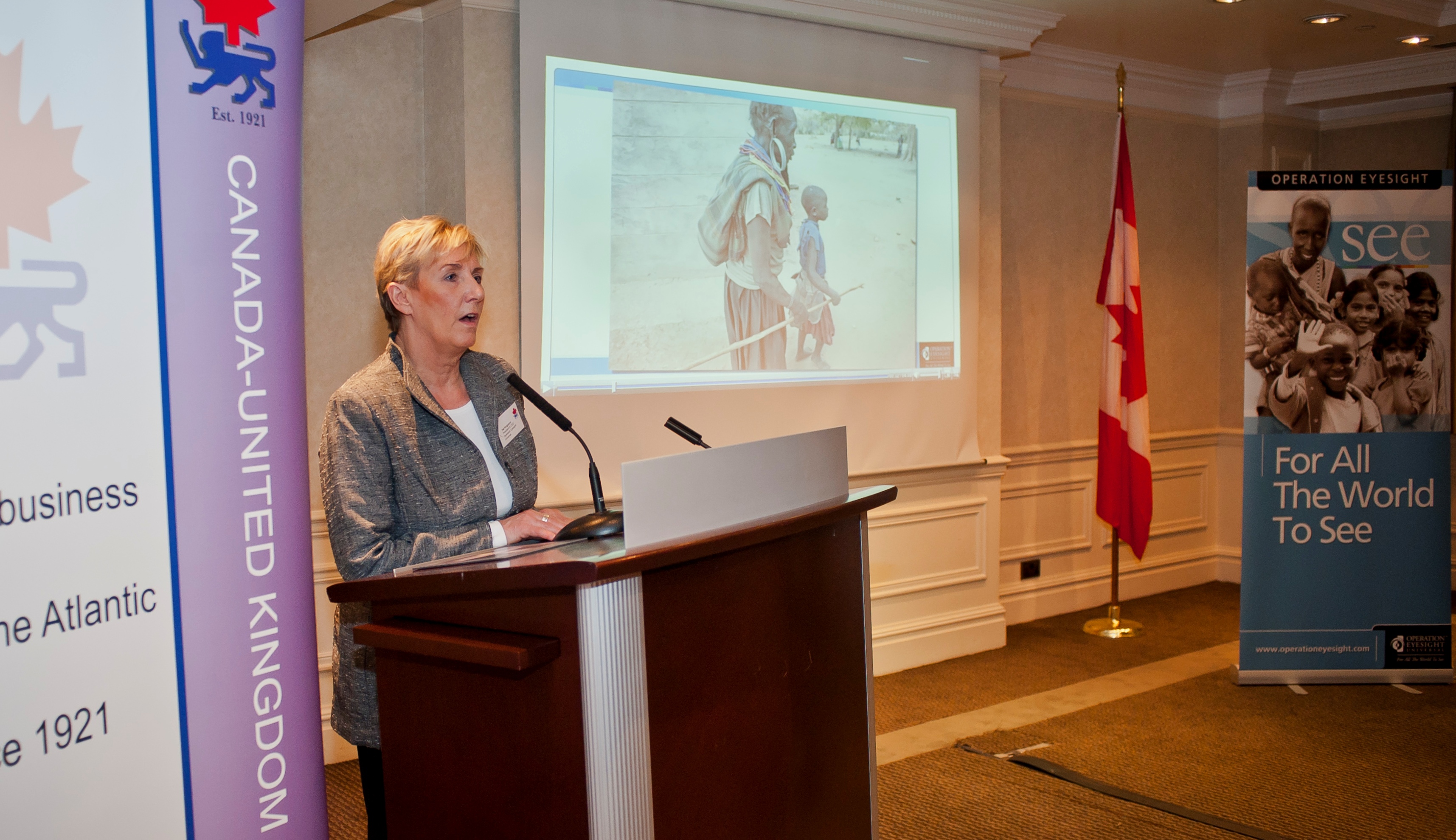
The guest speaker I refer to is Pat Ferguson, our president and CEO (Pat authors many of the blog posts you read here in Grey Mist Lifting). The trustees of Operation Eyesight UK had worked hard to bring their new organization to a point where it could be introduced to the world, and Pat was scheduled to give a speech entitled, “Partner for Development to Minimise Risk and Maximise Opportunity.” Hundreds of invitations had been sent, and all the preparations for the March 7 event were in place. We were all excited, knowing that this event signalled a huge step forward in building support for Operation Eyesight throughout the United Kingdom.
As the event’s lead organizer, I considered getting to London to be one of the easier jobs. We just had to get to the airport on time, and get on a plane; how hard could it be?
However, a blizzard arrived in Calgary the afternoon of our departure, and the flight was cancelled. Rebooked for another flight, that one was also cancelled due to mechanical problems. Using our mobile devices, Pat and I began briefing our colleagues in London on what to do if we didn’t arrive. We finally got on a flight that worked, but upon landing, we spent what seemed like an eternity in customs and on the “Tube” to downtown London. When we finally arrived at the event location, the Canadian-UK Chamber of Commerce, it was only with an hour or two to spare.

But the adventure was not over. Our flight home was diverted to Keflavik, Iceland due to a passenger who required medical attention – the airline had to make a difficult decision which we fully understood. There we had to stay overnight in what appeared to be a grey and rocky wasteland of a place. However, warm Icelandic hospitality made us feel at home.
Despite the surprises, none of these travel mishaps dulled our anticipation going to London, nor our elation upon leaving with our mission completed. The launch of Operation Eyesight UK was a great success with more than 100 guests representing the corporate and international development communities. Pat’s speech made a powerful impression and, even now, the trustees are contacting the guests and building relationships that will ultimately bring more awareness and support to bear on the challenge of avoidable blindness.
For Pat and me, the whole experience was a grand adventure that bodes well for the future.
Return next week when Pat Ferguson shares an excerpt from the speech she delivered in London on March 7.
A couple of weeks from now, on March 8, the world will focus on the accomplishments of women and the challenges they face – especially in low-income countries. International Women’s Day is observed by the United Nations and is designated as a national holiday in many countries. Daniel Franklin, Operation Eyesight’s Program Manager for Community Eye Health in India, has spent much of his career as a researcher and observer of human behaviour. His recent insights about the role of women in India are well timed. Here is the first of a two-part post that Daniel has prepared.

In India and most parts of the developing world, men are expected to play the role of bread winners, while women attend to household chores and raise children. I worked in northern India for more than 17 years where I found this mindset quite prevalent.
It was quite natural for the organizations where I worked to recruit only men for community eye health positions. These are considered to be tough, energy-sapping jobs that require long distances to be covered on foot or bicycle through mountainous or jungle terrain. Also, interacting successfully with village elders and local government officials was believed to be beyond what any woman could do. But I believed the contrary.
Yes, there are physical and political challenges, but I always believed that women could deliver the same results or even better. My observation is that women can be more focused, more vocal and better able to empathize with people suffering from visual impairment.
Many years passed by before I got an opportunity to put my theory into practice. I joined Operation Eyesight in 2009, when it was in the process of launching a hospital-based community eye health project in Tamil Nadu, one of the southern states of India. I convinced my colleagues and our hospital partner to recruit only women community health workers for the project. We needed 15 such workers who lived in the geographic area of the project. They would be responsible for conducting door-to-door survey, holding health awareness sessions and organizing screening programs, among other things.
I wondered, would it be an easy task to recruit health workers from remote tribal villages who would shoulder these responsibilities? However, recruitment activities and efforts made by the Project Coordinator who went from village to village did result in a very high number of women applying for the positions. I was surprised and also proud of the fact that we interviewed as many as 50 women for the 15 positions.
All of this was quite new. I was a bit nervous about the willingness of these new employees to leave their homes and attend training sessions over the course of 25 days. But not only did they attend the full training program, they also displayed understanding and commitment to the cause of avoidable blindness. Each one seemed to eagerly acquire knowledge and skills related to door-to-door surveys, visual acuity assessments, identification of blinding conditions and communication methods to build awareness about eye health. But what would happen when they found themselves on the job, interacting with their neighbours?
All was not hunky dory. After training, the community workers returned to their neighbourhoods and proceeded to survey the people. They faced many hardships when they knocked on the doors to interview the residents. Some female workers were turned away rudely by people fearing they could be tricksters or thieves. Some were treated as beggars and a few were chased away by barking dogs.
Return two weeks from now, March 9, the day after International Women’s Day, to learn how the low-income women of Tamil Nadu fared in their new jobs.
I met Sister Cecilia Chematia last year at Kenya’s Moi Teaching and Referral Hospital in the small city of Eldoret. (Read more about my visit to the hospital here.) Operation Eyesight and its donors have supported the hospital’s eye unit since 2005.
A 74-year old Roman Catholic nun from the Kaiboi convent, 50 km outside Eldoret, Sister Cecilia speaks English very well. She was booked into the hospital’s eye unit for bilateral cataract surgery on her left eye; and although she seemed very calm on the surface, she confided that she was worried about her upcoming surgery that morning. Her eyes, one with a misty blue-grey cataract clearly visible, were apprehensive.
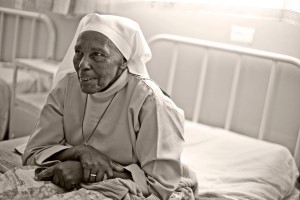
“I was a teacher at the convent for a long time. I taught religious instruction. I do pastoral work these days in my old age, because I can’t see even with my glasses now. I’m hoping for the best with this surgery.”
I saw Sister Cecilia later that day after her operation. Her eye was covered with a bandage and she said it felt sore and swollen, but Dr. Isaac Wanjala assured her that when he removed the coverings in the morning, she should be able to see. He said she should return to the eye unit for a check-up the following month.
The next day, I visited a bandage-free Sister Cecilia again. When I asked her how her vision was, she smiled warmly and shook my hand. “I can see many things now. Even my watch is clear!” she said, holding up her arm with a plain wristwatch on it. “I was afraid, but now I’m all right. I can see again – thank you!”
For only $30, you can give the gift of sight to someone like Sister Cecilia who needs cataract surgery. Visit our Gift Guide to learn how.
Next Tuesday is Valentine’s Day, a time to express our appreciation for the important people in our lives. It might be unusual to express appreciation to a group of people, but that’s what I’d like to do. And that group of people would be you – our donors.
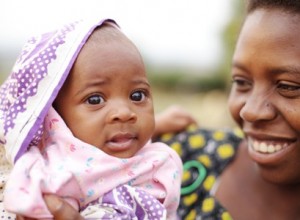
Seriously, here in our Calgary office we care a great deal for the people who support our work. Many of you have been dropping by the office or sending cheques for years. Some of you are like family.
Other times, we’ll get a big cheque in the mail or receive an encouraging phone call from far away, and the news will travel through the building like wildfire. Hearing about new donors is always a big thrill because that tells us our message is getting through.
Of course, none of Operation Eyesight’s work could happen without your generosity. And as a result, amazing things are happening. Big things – like new hospitals and blindness prevention programs and even entire health care systems. But also smaller things, like a man or woman leaving the eye clinic, squinting into the sunlight and saying something like: “Hey, it’s bright out here. I had forgotten how bright the sun could be.”
There are all kinds of good causes out there, all vying for your attention. Local causes have the best chance of raising money and profile because half the time, the cause is something that affects the donors personally.
Drawing attention to the plight of the blind of India and Africa can be a big challenge, I won’t deny it. But that’s another reason why we appreciate you so much. By supporting Operation Eyesight, you have extended your hearts and minds to people on the other side of the planet – people you care about, but will probably never meet. But I have met them, and here’s what I hear them say: “You have given me back my sight and now I can live again. Thank you, thank you!”
I may be the one who hears these words, but our patients understand that their eyesight was restored because someone far away sent a gift. When they say thank you, often with great emotion, they’re saying it to you.
Happy Valentine’s Day!
We’d love to hear from you. click the “Leave a comment” button below to comment on this post, or just to say hi.
Hello from India! As I write this, I’m here with our Operation Eyesight team in Hyderabad, where we’re meeting with eye care experts at the LV Prasad Eye Institute. You may know Hyderabad as the place where many Bollywood films are created. In fact, it was a wealthy filmmaker (LV Prasad) who supplied the land for the Institute, which is one of the best eye care research centres in the world.
Hyderabad is a huge city (compared with Calgary, where I live) with all the urban drama, extreme sights and sounds, and contrast between rich and poor that characterize most Indian cities. Leaving the city for the smaller centres can be a relief to the senses, but the contrasts and disparities are no less evident in the countryside.
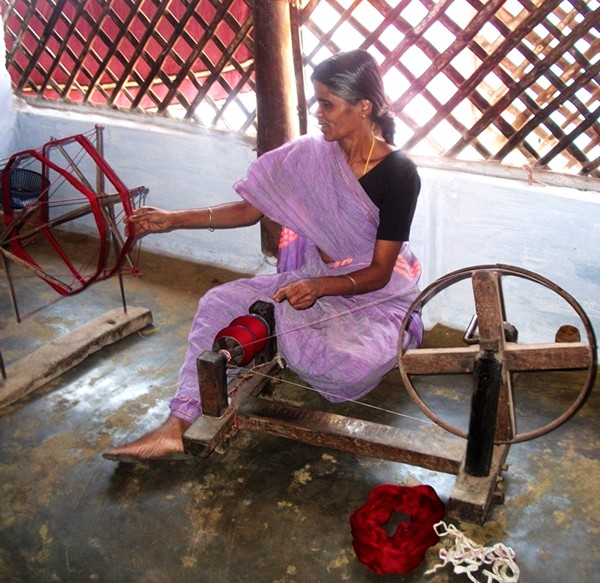
While in India and other developing countries, I’m often struck by the vulnerability of women, especially those who must fend for themselves. I note that women and children are the focus of this year’s International Development Week (February 5-11). It’s a good time, therefore, to remember that nearly two-thirds of blind people worldwide are women and girls, and in many places, men have twice the access to eye care as women.* In countries with significant poverty, like the places where Operation Eyesight is at work, equal access to eye care could substantially reduce blindness and the problems associated with low vision.
Operation Eyesight’s approach to development is based on the belief that all people, regardless of income, location or gender, should have access to information about eye health and to medical services when they need them. That, we believe, is the key to eliminating avoidable blindness.
I’m reminded of the story of Parvathy, a woman who benefited from the community outreach program of Garnett Memorial Hospital in southern India. Talk about vulnerable! Parvathy’s work as a weaver was her livelihood, but blindness from cataracts threatened her very life. You can read about her in the latest issue of SightLines newsletter on page one.
International Development Week is a time to learn more about life in developing countries and ways to contribute to positive change locally and globally. Speaking from here in Hyderabad, I see women struggling with poverty, but I also see a culture that is rich in ancient tradition as well as modern innovation. Take time next week, if you can, to learn about India and all it has to offer.
Also, stay tuned to Grey Mist Lifting in the weeks ahead for more stories about the ways that international development is changing the world, and how you can help.
* Source: Vision 2020: The Right to Sight
As a Canadian who is in constant touch with people in India and Africa, I frequently deal with differences. My friends and family often ask about my experiences of working with people who speak different languages, or who use the same language as I do, but often mean very different things. It is a challenge that I enjoy, and it’s fun to talk about it.
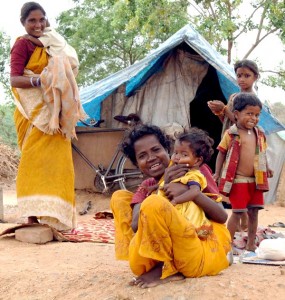
As Director of Policy and Planning for International Programs, most of my international relationships are maintained by phone or email. How did we ever manage without the internet? I have been to India and Africa, and I can confirm how rich and diverse these places are. Yes, there are language and culture gaps between my world and theirs, but the bigger gap is one of prosperity. Those with limited means, the poor of the tropical world, struggle with life-and-death issues that I can only imagine.
How do they manage? It’s all about family – the way that mothers, brothers, uncles and aunts all look out for one another, from the youngest to the oldest. For many, their social safety net is each other.
Someone once asked me if the poor of India are sad. I can’t answer that question, but I can say that many of the people I’ve seen on the streets of Mumbai or in the slums of Hyderabad are industrious and highly motivated, regardless of their station in life.
Imagine being really poor, living under a tarp by the side of the road and then one day, making enough money to move into a hut with a solid roof – that’s progress! Family forms the foundation of their lives and these people often make great sacrifices for one another – they take nothing for granted.
Yes, there are differences between Canada and the developing world, but family is important everywhere. Here in Alberta (and also in the provinces of Saskatchewan and Ontario), we even have a statutory holiday called Family Day, which occurs every year on the third Monday of February. If you’re celebrating it this weekend, we hope you enjoy the extra time with your family.
At Operation Eyesight, we’ve come to see that family and community – social interconnectedness – is the key to addressing the deep issues behind visual impairment and other health problems. Right now in India, we are hiring people of limited means, and training them to work alongside their neighbours in the poor sections of urban and rural India. Using their own social networks, these Community Health Workers are conveying the message that blindness is not inevitable, so that people get the help they need. In this way, entire families, neighbourhoods and villages are helped to grow in health and prosperity.
To learn more about the places where this is happening, visit the Programs and Projects section of our website.
This week marks the seventh anniversary of the passing of Art Jenkyns, the founder of Operation Eyesight. Those of you who know our history know that Art was the driving force behind the organization from the beginning. When he died in 2005, he left a tremendous legacy that continues to inspire our work to this day – and into the future, I have no doubt.
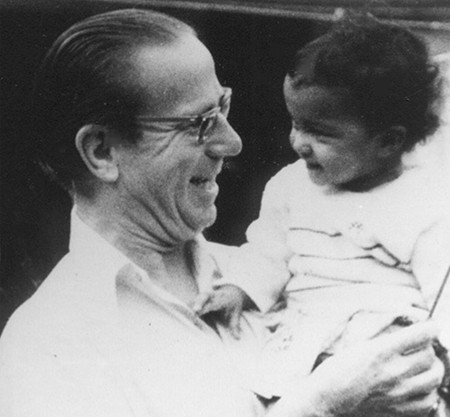
I feel it’s important to speak about Art’s legacy every chance we get, and the anniversary of his passing is such an opportunity. He is, for us, a touchstone of what our work is about.
Art was inspired by the work of Dr. Ben Gullison, a Canadian physician working in India. Ben wanted to provide “the best for the poorest” – an idea that continues to energize Operation Eyesight. It certainly energized Art.
Back in 1963, when Ben asked if anyone would help him raise money to restore sight to India’s blind, Art and his friends in Calgary eagerly stepped forward. Operation Eyesight was created, and over the years many people have come and gone. But it was Art who continued stepping forward, across Canada and then across the globe with a message of healing for the blind.
It was a simple yet powerful message that boiled down to this: “We have the means and responsibility to help these people. We know there is a simple procedure to correct cataract blindness and we have an obligation as human beings to help our fellow man. We need to do this!”
Art was a businessman, not an eye doctor, yet he spoke accurately about the conditions that cause blindness and the means to cure or prevent it. But his gift was his passion – he was deeply moved by the plight of people already struggling with poverty who would then become blind. He was able to share his passion, and he was eager to speak to any person or group willing to hear him.
As a result, millions of dollars have come from generous donors over the years, and millions of people (yes, millions) have received treatment who would not have otherwise. It is a remarkable accomplishment, and so much of the credit goes to Art and his simple message.
Today, millions more need the same kind of help. However, these people are especially hard to reach; either due to geography or due to understanding. In the spirit of Art Jenkyns, Operation Eyesight continues to step forward in our efforts to reach everyone in danger of blindness and low vision. If this inspires you, please act on it without delay.
Art says thanks.
Imagine losing your sight. It’s a highly emotional experience, even if the blindness is not trauma-related. With your vision gradually declining due to cataracts or other eye conditions, you’d feel sorrow, uncertainty and anxiety about the future. You’d naturally be apprehensive about eye surgery, yet eager for the possibility to be able to see again.
Now you can join one woman as she follows this same emotional journey. Watch the following video photo essay to see a Kenyan grandmother as she travels from the security of her family farm to a local hospital for cataract surgery.
Was her surgery a success? Check out Jerita’s joyous smile as she is reunited with her family and judge for yourself!
http://youtu.be/1d9eTsLTuiQ