


ANSWER: This is a terrible combination, like a perfect storm of misfortune. Imagine struggling to survive, which is hard enough, and then losing your sight.
The poor of India and Africa are practical people. When resources are limited, those resources go to the ones with the best chance of surviving and contributing. In India, only five percent of blind boys go to school – for girls, it’s 2.5 percent. The rate of unemployment for the urban blind is 90 percent and 100 percent in rural areas. For many, if you don’t work, you don’t eat. Life becomes short.
Blind women are discriminated against – for them it is very hard. In the slums of India and remote parts of Africa, young children with serious eye problems often die before the age of five. Operation Eyesight knows that blindness is a disease of poverty, and it also contributes to poverty. Most of the world’s blindness happens to poor people, and most of it can be prevented or successfully treated – 80 percent! This is what we seek to address.
QUESTION FROM A STAFF MEMBER: In the regions where Operation Eyesight works you talk about people having poor eye health-seeking behaviour. Can you explain what that is?ANSWER: We’ve found poor eye health-seeking behaviour in both India and Africa. It refers to people who are experiencing problems with their eyesight but are not taking care of their vision or seeking medical attention when needed. We’ve learned there are many good reasons for this, such as simple lack of awareness that help is available, superstitions or myths about eyes, a bad experience receiving treatment in the past, inability to pay for services or not being able to travel to a clinic or hospital. Our experience shows us that grassroots education and awareness campaigns go a long way to addressing many of these barriers.
In addition, Operation Eyesight takes eye care directly to communities and offers it free of charge when necessary. If a community is to be free of avoidable blindness, there must be general understanding and acceptance of basic eye health – people must desire good eyesight and they must seek it.
QUESTION FROM A DONOR: I can understand how people can be reluctant to travel to a clinic for fear of something happening to their homes and families. Do your programs offer any care for families when a patient leaves home to seek treatment?ANSWER: No. One of our goals is self-reliance – this is one of the key differences between an “aid” approach which can lead to unhealthy dependence, and “development” which is all about local empowerment.
First, we try to dispel any misunderstandings or superstitions about eye care, explaining that it is okay to seek out treatment for the greater good. Then we encourage people to work within their community to find friends or neighbours to look after whatever they leave behind when they go to the hospital for one or two days. Operation Eyesight encourages people to find their own solutions to their problems.
If you have any questions or comments about us, our work, or any eye care related issues, feel free to leave a comment below and we’ll definitely get back to you. Have a great weekend!“Promoting sustainability” and “developing capacity” are common terms these days. But what do they mean in terms of international development?
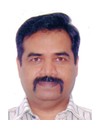
Kashinath Bhoosnurmath can tell you. He joined Operation Eyesight in 2009 as senior director for Operation Eyesight in India, bringing many years of practical experience in community and international development. Both Kashinath and Dr. Bo Wiafe, our regional director in Africa, are strong advocates for, and practical implementers of, community-based services that will endure long after Operation Eyesight has moved to other regions. Both have a well-informed perspective on what sustainability and capacity building mean to this organization. In Part 1 of this three-part series, Kashinath zeros in on the issues facing the most humble, but perhaps the most important link in Operation Eyesight’s work in India – the community worker.
Often I have wondered about the impact of the work that I am engaged in doing. I ask myself, “Does it really matter to have a well-formulated strategic plan and a good implementation plan? Do such plans make any difference in the lives of the poor?”
I have come to realize they do, provided they are delivered properly or implemented effectively. Direct implementation is not something I do – it is the community-based workers who implement the planned activities. If they are good at their work, they do make a difference in the lives of target groups.
When I joined this organization about two years ago, I was pleasantly surprised to find that in all the Operation Eyesight-supported community eye health projects there are community workers who are not only recruited from among the target communities but are also paid salaries for the work they do.
However, several organizations that I have known over the last two decades have had community workers who are only paid very small honorariums for their voluntary work. Every time I interacted with them during my field visits, these voluntary workers invariably advocated for a move from honorariums to salaries. So I always came back from the field with some unanswered questions: “Why do they refer to their honorariums as salaries and are they really volunteering to work? What is volunteerism and is it really an option for these individuals?”
With more grey hairs showing up on my head, I have found some satisfactory answers. There was a time, not so long ago, when non-governmental organizations (NGOs) were referred to as voluntary organizations. In many of these voluntary organizations, one could find well-compensated leaders and management staff along with very meagrely paid voluntary workers at the implementation level. I felt it was as if the degree of volunteerism was highest at the lowest level and tapered significantly as one went up the hierarchy in these organizations.
And who were these “voluntary” workers anyway? They were often from the same target communities or from the neighbouring towns and villages – people searching for opportunities to improve their own lot.
Return next week for Part 2, when Kashinath describes one of the major issues facing the "poor who help the poor."
Next Thursday, on October 13, I suggest we all take a moment to look in the mirror and focus on the things staring back at us. Eyes are amazing, complex things, and remarkable in how they work. Even more remarkable is the way we rely on them completely without even thinking about it most of the time. Eyes are also fragile. I know this from experience when I had some serious eye problems a few years ago. I found it ironic that I – the president of an eye care organization – should be in danger of losing my sight. For that moment in time, I wasn’t a lot different from the millions of people who are threatened by vision loss. I suddenly knew exactly how they must feel.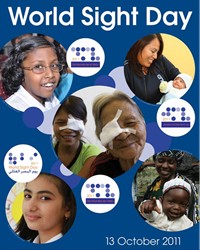
In anticipation of Grandparents Day – September 11 in Canada and the US – I’d like to draw attention to vision issues that may affect seniors.
If you’re a senior reading this or a grandparent (like I am), you probably already know how important it is to safeguard your vision. If you’re a younger person, take note.
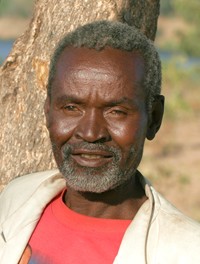
Statistics show that the world's population is aging, and as the number of older people grows, eye health issues like low vision and blindness become acute. Visual impairment often contributes to injuries and death in older people, but timely intervention can delay the effects of age-related blinding conditions.
For those of us living in wealthy nations like Canada, our health care systems include eye care as part of the package. For you and me, the major threat as we grow older is cataract (clouding of the lens), followed by age-related macular degeneration (loss of central vision), which is a growing problem. For these and other vision threats, help is available to us as long as we’re paying attention to our health.
But that isn’t the case in many counties, especially throughout Africa where primary eye care just isn’t a priority. This is one of the areas where Operation Eyesight is at work, encouraging national governments in Africa to include plans for eye care in their national health strategies.
Globally, blindness among seniors is a major health issue. The World Health Organization estimates that the number of people in the world who are blind or visually impaired is 285 million.
Of those, 65 percent are over the age of 50. Imagine how tragic it must be like to be blind and poor – and old!
The risk of vision-impairing conditions like cataract grows exponentially with increasing age. Because the majority of cataract blindness is in people ages 45 and up, there are many grandparents in developing countries who have never even seen their grandchildren. Children are often affected because they get pulled out of school to serve as the “eyes” for a blind grandparent.
I know for a fact that part of the joy of growing older is seeing your grandchildren. We have a new video I’d like you to see, about a man who hadn’t seen his kids and grandchildren for 10 years. Watch for the part where he returns to his family with his eyes healed, and his wife gets him to prove he can see by picking up a water tub on the other side of the yard. I guarantee it will make you smile.
For more success stories like this, visit our website. Thanks for reading ... and remember not to take your eyesight for granted!
By now, most people have heard about the drought and famine in East Africa. The stories and images from the region are disturbing and hard to fathom. Since we hadn’t heard much about it from our partners, Lynda Cherry, our vice-president of International Programs, sent an email inquiring, “How are you doing? What’s going on?” The response was heartbreaking.
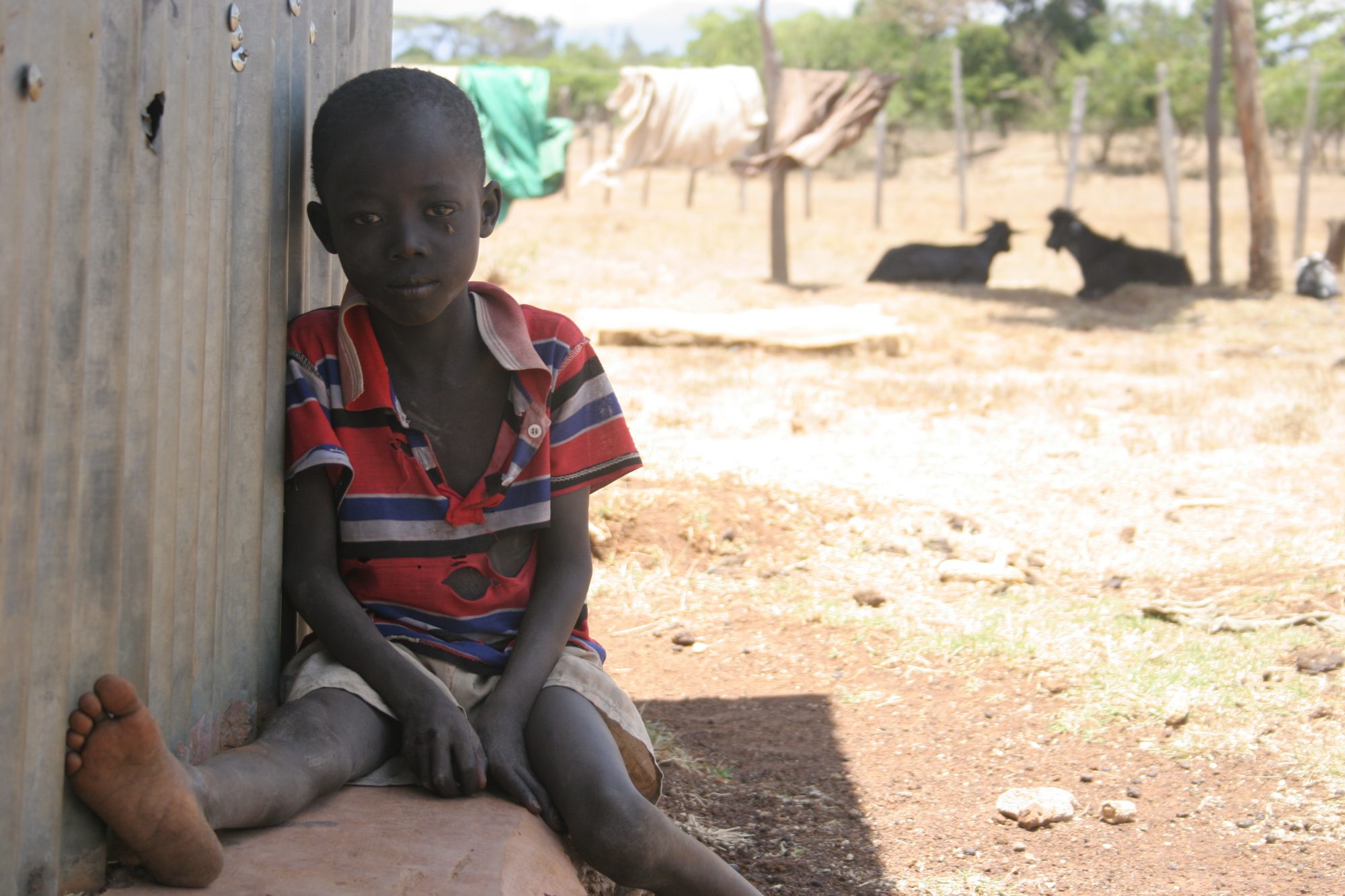
Our hospital partners in Kenya are experiencing the devastating effects of the worst drought in 60 years. Crops have failed. Livestock are dying. Food prices are skyrocketing. Water sources are drying up. Dr. Hillary Rono of the Kitale District Hospital reports that the number of patients seeking eye care has dropped by up to 35 percent from the last year’s number. People are too weak to make the journey or simply focused on surviving. Patients arriving for appointments are so severely malnourished that they must be fed before receiving treatment. When we asked our partners what they need most, they were very clear: help us feed our communities.
I want to reiterate: disaster relief is not Operation Eyesight’s mission or what we normally do. However, while we are fully committed to sustainable development, we couldn’t stand by and do nothing. We launched a fundraising appeal last Wednesday with a goal of raising $60,000 for our three Kenyan hospital partners: Kitale District Hospital, Narok District Hospital and Moi Teaching and Referral Hospital.
We are incredibly grateful for the positive feedback and donations that came in as soon as we sent out the online appeal through our e-newsletter and social media platforms. However, we still need your help to achieve our goal.
The direct mail version of our Kenya drought appeal was mailed this week. You can also donate online or by calling toll-free 1-800-585-8265. Your support today will help us raise the money urgently needed to provide food for the starving people our hospital partners reach in Kenya.
A disaster of this scale requires comprehensive solutions from local and international communities. When INGOs, not just disaster relief organizations, work together, we can save the lives of the most vulnerable in our world. Please give today. Thank you.
Earlier this year, I visited Kenya’s Narok District, a dry, dusty region where the sunlight is blinding, the Maasai population is sparse and water is scarce.
Trachoma, an excruciatingly painful disease and one of the world’s leading causes of unnecessary blindness, used to be widespread in this area. Trachoma is caused by bacterial infection and spreads easily through contact with eye discharge from infected people on hands, towels and clothing and through direct transmission by flies.
Fortunately, Operation Eyesight launched a highly successful trachoma control project in Narok in 2007, based on the World Health Organization’s SAFE strategy. The project included drilling a borehole 270 metres deep to bring clean fresh water to this parched community.
Used not only for drinking, washing faces and preventing trachoma, the water has also had another significant community benefit: it has more than doubled the local student population.
Before the borehole became operational, most girls were unable to attend classes because they had to walk many kilometers each day to fetch water for their families. When we visited Ongata Boarding Primary School, for instance, I was told that in 2006, there were only 270 students, 100 of whom were girls.
Since the centrally-positioned borehole has made long treks for water unnecessary, the school now has an enrolment of 690 students, 300 of whom are girls. The head teacher told me they expect to grow to 1,400 students within the next two years.
While at the school, we were treated to a presentation of the following poem, written in honour of Operation Eyesight by teacher Susan Maranta.
Recited in English by a class of girls, probably between 12 and 14 years old, the poem illustrates the importance of Operation Eyesight’s investment in this community, and its ongoing commitment to addressing the root causes of poverty and blindness.
As you’ll see, the last verse asks for financial support for other community needs. Operation Eyesight works to build the community’s capacity and independence by helping them identify other sources for funding, including community grants available from the government, other NGOs who support education or even their own financial resources through the sale of cattle.
Canaan

This is the day,
The day has come for us to rejoice.
The day of joy and happiness,
The day of expressing our gratitude.
The day is today.
Take me to Canaan,
Mama! Take me to Canaan.
Canaan full of honey and milk
Canaan is where I belong to
Ongata is Canaan.
Papa! Take me to Ongata.
Ongata has become a Canaan
Canaan of books and conducive environment,
Canaan of our nice driver Mr. Naikuni
Canaan of academics by our capable teachers
Canaan of support from our parents
Support from all other well wishers
And above all, our very able water donors.
Our water donors, thank you for giving our school water,
Our donors, thank you for your strong support
Our very able water donors, we still request for more,
Our boys need a dormitory,
We need more water pumped to our dormitory yard kitchen.
We know you can, our donors
We promise to work hard
Never to let your effort down.
Thank you.
Read more about Narok in my earlier blog post, “Water is life in Narok.”
Last week I wrote about the amazing efficiency of India’s Little Flower Hospital. Our hospitals may be busy, but they don’t come close to the sheer number of people treated daily by Indian hospitals. Here in Canada, we could learn a lot about patient flow from them.
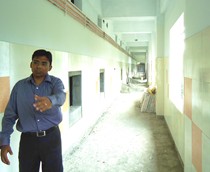
For instance, in North American hospitals, the operating rooms have one door for everything and everyone that comes and goes – limited access is key to sanitation.
One distinctly Indian innovation is to include another door in the operating room – a smaller, stainless steel door with a double barrier that leads to a service corridor. It is through this door that all the supplies, instruments and linens pass through (like a dumb waiter) which reduces the number of people who have to enter the room. Only medical personnel use the main door. Ingenious!
I came to India knowing that most Indians are very hard working, industrious people. What I had not experienced was their ongoing ability to reflect on their lives, their actions and how that impacts them, their families and their immediate life path. Through these reflections they see promise and potential, and they know that it may take a bit of time and a lot of work before they see success.
This resonates well with the way that Operation Eyesight understands sustainability and quality outcomes. Our leaders, past and present, see the potential that exists in India and Africa. We remain hopeful and forward-thinking in the way we work, while striving to listen carefully to our partners and adopting their vision for their own people.
In India, we work to build the capacity of our partners to craft Indian solutions, not North American solutions that may or may not work. This is the nature of true partnership – value the invaluable assets that the Indian people bring to the table.
One last story... on the walls throughout Little Flower Hospital are metal plaques with the names of organizations that have donated rooms or equipment. Some of the plaques look new and some look old and worn – especially the ones that commemorate a gift from Operation Eyesight.
Father Sebastian, Little Flower’s director and chief administrator, says the plaques that look old aren’t necessarily old. They look that way because people touch them. He says patients recognize Operation Eyesight, and they touch the plaques and perhaps say a word of thanks.
That is evidence of relationship. That’s partnership.
Lorie Friesen, director of Policy and Planning, International Programs, joined Operation Eyesight this spring, bringing a wealth of experience in not-for-profit management focused on community investment and development initiatives. Her current work requires close relationships with Operation Eyesight’s overseas staff and program partners, leading to her first trip to India last May.
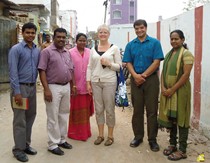
To a first-time visitor, India seems overwhelming – the masses of people, the riot of colour. To a Canadian like me, it seemed like chaos, but the truth is there is a practical and deep order to things. I went to India with an open heart and mind, and was rewarded with an overwhelming appreciation of this ancient land.
I visited several of Operation Eyesight’s partner hospital programs over the course of two weeks, but the one that keeps coming to mind is Little Flower Hospital in Kerala on the southern tip of India.
An amazing facility in many ways, I instantly took note of its forest location – the recently built tower is fronted by an urban street, but a vast, undeveloped forest stretches out at the back. It reminded me of the Jungle Book! I was struck by the way in which Indians live in the modern world, but also in the natural world – they try to embrace the best of both.
Similarly, the people of India seem comfortable acknowledging the past while also moving into the future. What I observed in the people I met at the hospital and in the community was a sense of hopefulness and progress. But they measure that progress over generations, not just over a lifetime.
Little Flower hospital itself is an amazing model of efficiency, but again, it’s different from North America. Picture hundreds of people in the hallways, all of them moving purposefully. I later learned that great thought had been put into the design of the facility, allowing an easy flow through the diagnosis and treatment process.
Despite the number of patients and staff, there was no apparent chaos. Except for us – as visitors, we were swimming upstream. Our guide was giggling because we were the ones creating havoc!
There’s more to the story. Next week, in part 2, I’ll talk about how the Indian view of progress connects with Operation Eyesight’s values.
Last month, just before leaving town for some international meetings, I had a message on my phone reminding me it was time for my annual eye exam. After making a note to book an appointment upon my return, I left home confident that I would be able to get the eye care I needed.
I live in Canada where health care is good, but I know that many who live in developing nations are not as fortunate. For example, in the African country of Ghana, there are districts where only 10 to 30 percent of the population has access to reliable eye care of any kind. Imagine having an eye injury and not being able to do anything about it!
This is a huge problem in sub-Saharan Africa and the reasons are many. They include poorly equipped facilities, physicians who are not fully trained in eye health and lack of understanding among the people.
For years, Operation Eyesight has been working hard to help correct these problems, but we can’t do it alone. Thankfully, we found a good friend in Standard Chartered Bank.
The leaders of this company are deeply concerned about health issues, including eye health, and they created a funding program called Seeing is Believing. Money from this program is currently supporting Operation Eyesight’s work in 20 districts throughout Ghana focused on medical training, equipment and general awareness of eye health.
The Standard Chartered Bank team in Ghana along with the Operation Eyesight staff came up with the term RB2QE which means “reducing barriers to quality eye care” – this is the key to eliminating avoidable blindness.
RB2QE drives the latest phase of the Seeing is Believing project which was launched this past June in Accra, Ghana. The Ghana Ministry of Health is another vital partner, and the government officials I met are enthusiastic about the potential to save the sight of thousands of their most vulnerable people.
Once back home in Calgary I phoned to book that eye appointment – no problem. And this week I will take the short ride to the optometrist and be assured of a comprehensive, high quality exam. This is exactly what everyone should have, no matter where they live. This is the kind of future that Operation Eyesight envisions, and working with groups like Standard Chartered Bank, national governments and supporters like you, it will happen.
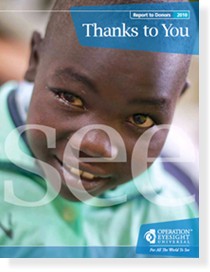
Last week was a really good week for Operation Eyesight. We released our 2010 Report to Donors and shared the impact of the past year with our guests at Operation Eyesight’s 48th Annual General Meeting.
This year, we found it particularly inspirational to look back at a highly successful year, and also to look forward at the emerging opportunities on the horizon. Daniel Etya’ale, MD, executive director of the International Agency for the Prevention of Blindness’s African region, was in Calgary to speak at our AGM. He confirmed that Operation Eyesight is on the right track, and that our hard work is paying off.
Of course, at the very heart of our successful work is the generosity of our supporters around the world – people like you. Because of your gifts, millions of people have been spared the tragedy of needless blindness. They are able to carry on with their lives and provide for their families.
In addition, thousands of lives have been transformed and even saved from death as Operation Eyesight works to eliminate the root cause of blinding diseases like trachoma, and to provide basic sanitation and clean water. These are key components that open up the door to sustainable socioeconomic development – this is how avoidable blindness will be beaten.
Imagine a day when people no longer fear for their eyesight. Dr. Etya’ale believes that day is coming sooner than later – amazing!
Operation Eyesight is at the forefront of these efforts, and you are helping make it possible. Thanks to your generous support, we’re working to address the factors that are causing people to lose their sight. I invite you to read the facts about our successes in our new Report to Donors, and also watch the video of Dr. Etya’ale in last week’s blog.
Thanks again; your support is valued! We look forward to working with you in the year ahead. Together, we are building sustainable eye care services that will prevent unnecessary blindness from happening in poor countries.