Trachoma is a blinding eye disease that is prevalent in Kenya’s Narok District. Caused by bacterial infection, it spreads easily through contact with eye discharge from infected people on hands, towels and clothing, and also through direct transmission by flies.
But trachoma can be prevented with proper sanitation – and Sarah Kiruri, a teacher at Kishermoruak Primary School, is dedicated to preventing the spread of this painful eye disease by encouraging her students to wash their hands and faces.
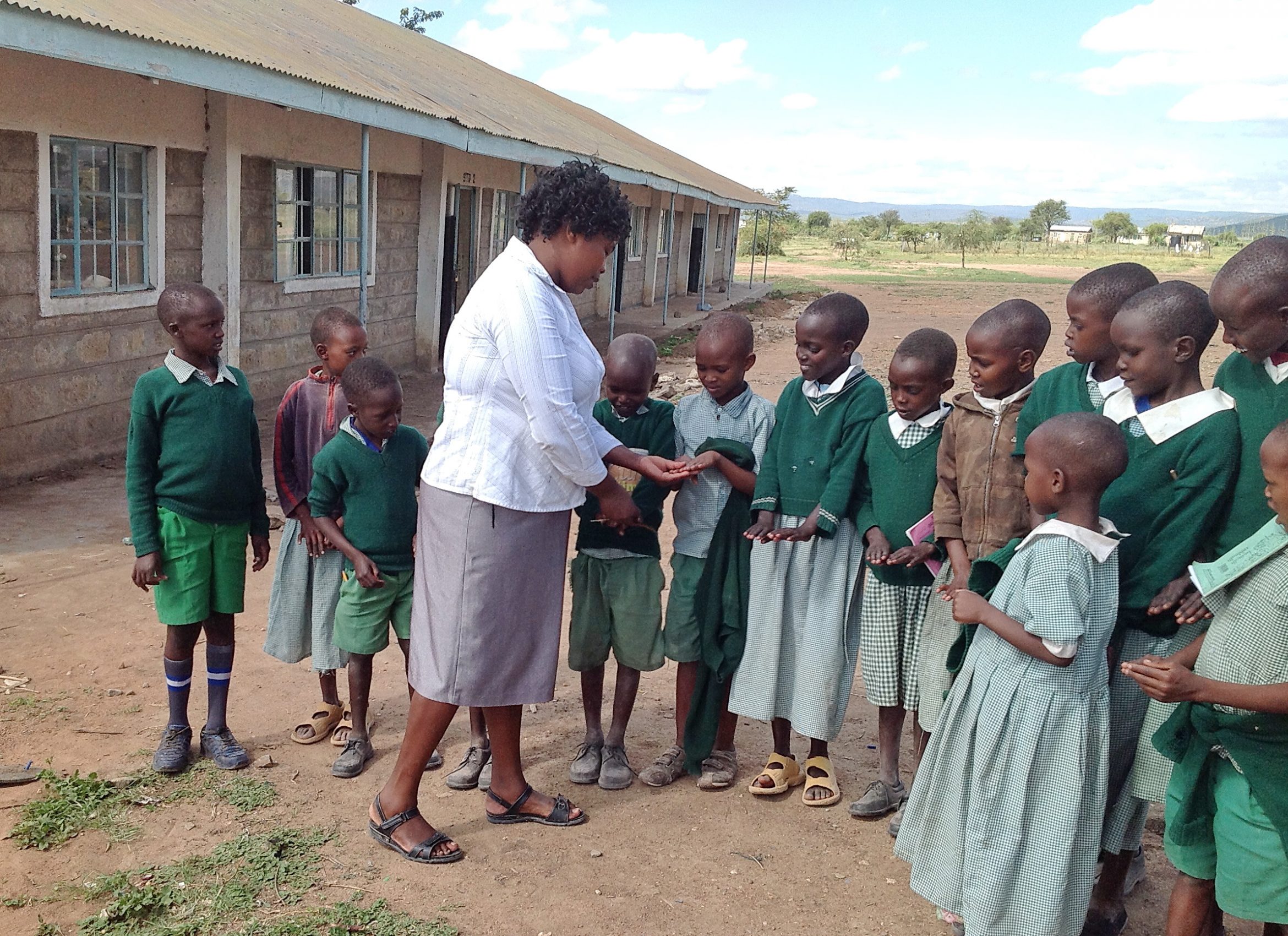
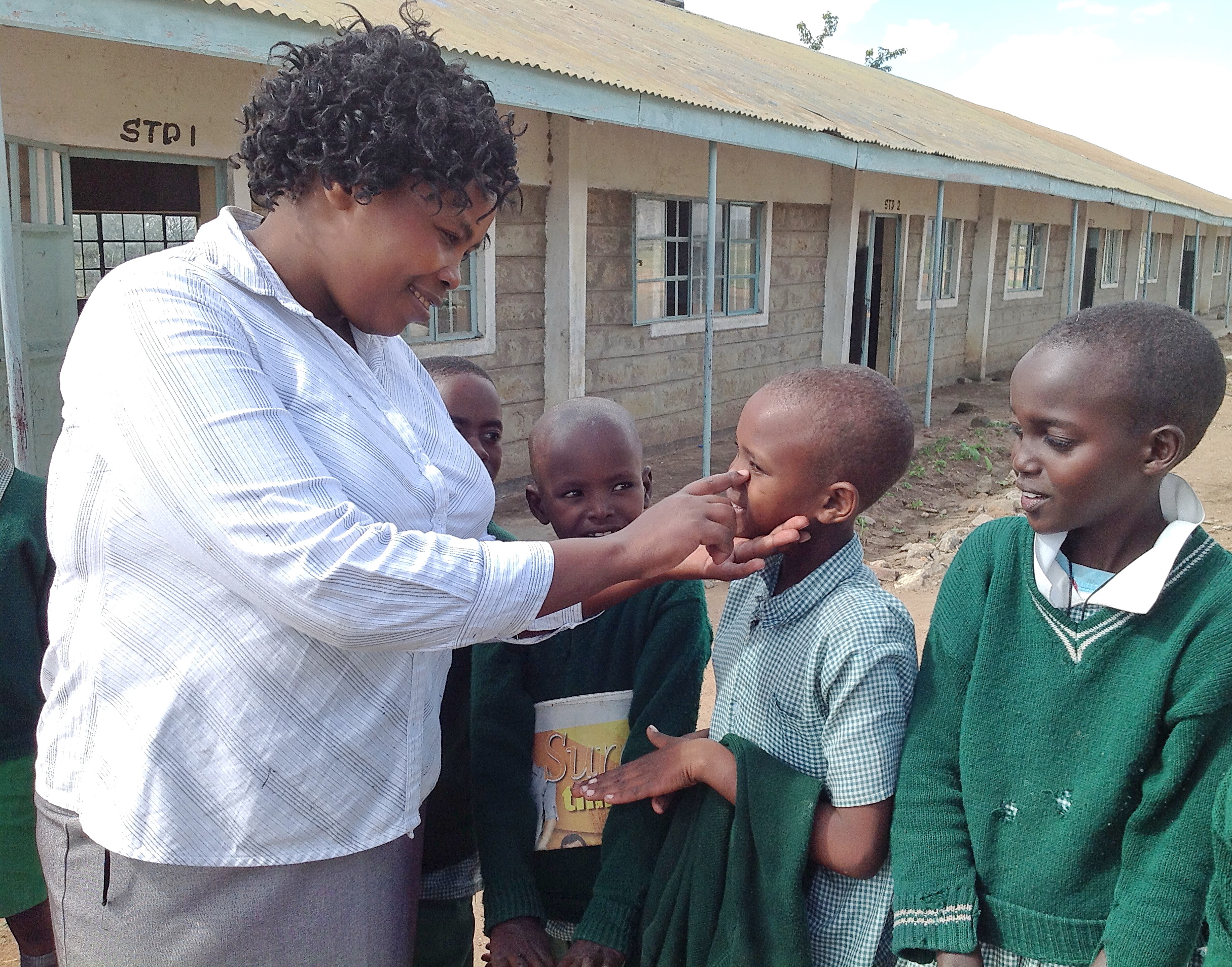
After receiving training from Operation Eyesight on the importance of personal hygiene, Sarah has taken up the fight against trachoma with a passion. Each morning, she inspects every student in her school to ensure their faces, hands and fingernails are clean before they go to class. The students have given her the nickname “Mama Safi,” which means “mother of cleanliness.”
Sarah joined the school in 2008. At that time, teachers would spend long hours looking for water – the nearest source a dirty pond seven kilometres away. Personal hygiene in the school was poor since the little water available was used for cooking and essential tasks only.
Thanks to our generous donors, Operation Eyesight developed a borehole at the school to provide clean water and help stop the spread of trachoma in the village.
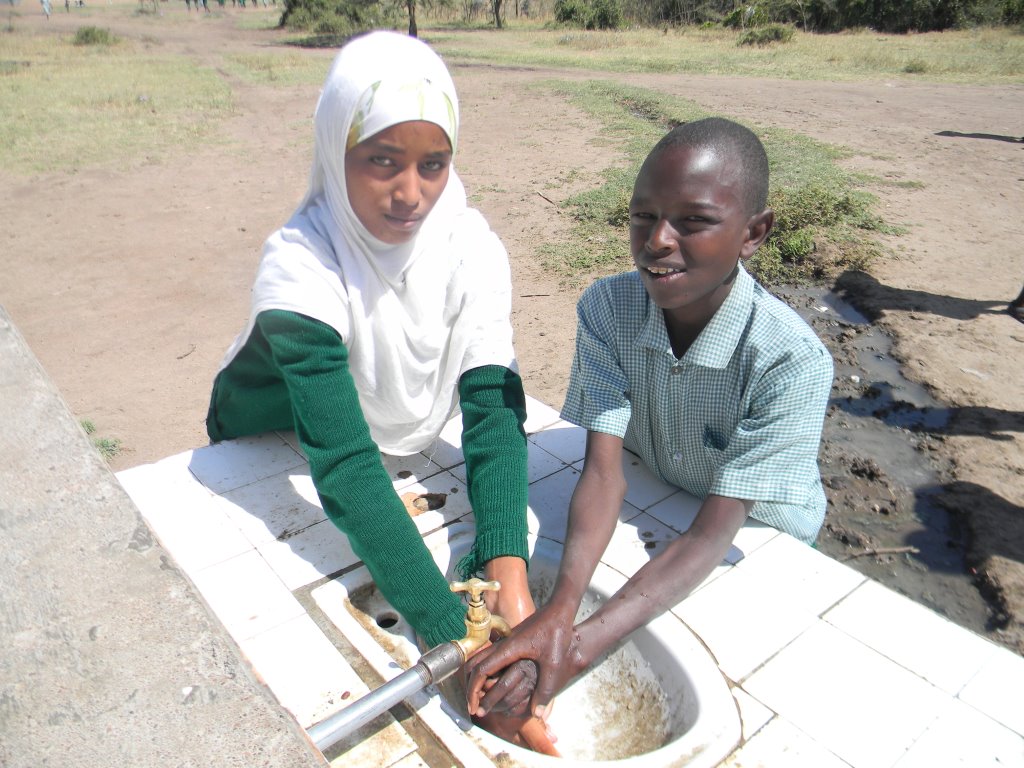
“We appreciate the project,” says Sarah. “We no longer have to walk long distances to look for water. I now have enough time to relax and plan for tomorrow’s lessons.”
Now that the teachers have convenient access to water, they are able to spend more time coaching their students. As a result, the school’s performance has improved dramatically, and the student population has almost doubled! In addition, the students are cleaner and healthier.
“We used to suffer from waterborne diseases, but now we are healthy,” explains Sarah. Sarah arrives at the school at 7 a.m. every day and inspects 380 students during the morning assembly. If a student does not meet the cleanliness standards, they are enlisted to sweep classrooms or clean the washing bay.
On weekends, she visits neighbouring homesteads and talks to women about the importance of facial cleanliness and the use of latrines. Her mission to eliminate trachoma makes her stand out in the community. The villages have a long history of living with little water and have never placed importance on facial hygiene. Changing their attitudes can be challenging.
But the plight of many people in the community suffering from an eye ailment that can easily be prevented through simple acts, captures Sarah’s heart. While she searches for a way to reach out to the people in the village, they teach her to become a wiser, stronger person.
Sarah says she is grateful to Operation Eyesight for helping her discover her hidden passion of working with communities. And we are grateful to Sarah for her dedication. Together, we are working to eliminate trachoma and prevent blindness – for all the world to see!
You can read about our other trachoma projects in the Narok District here.
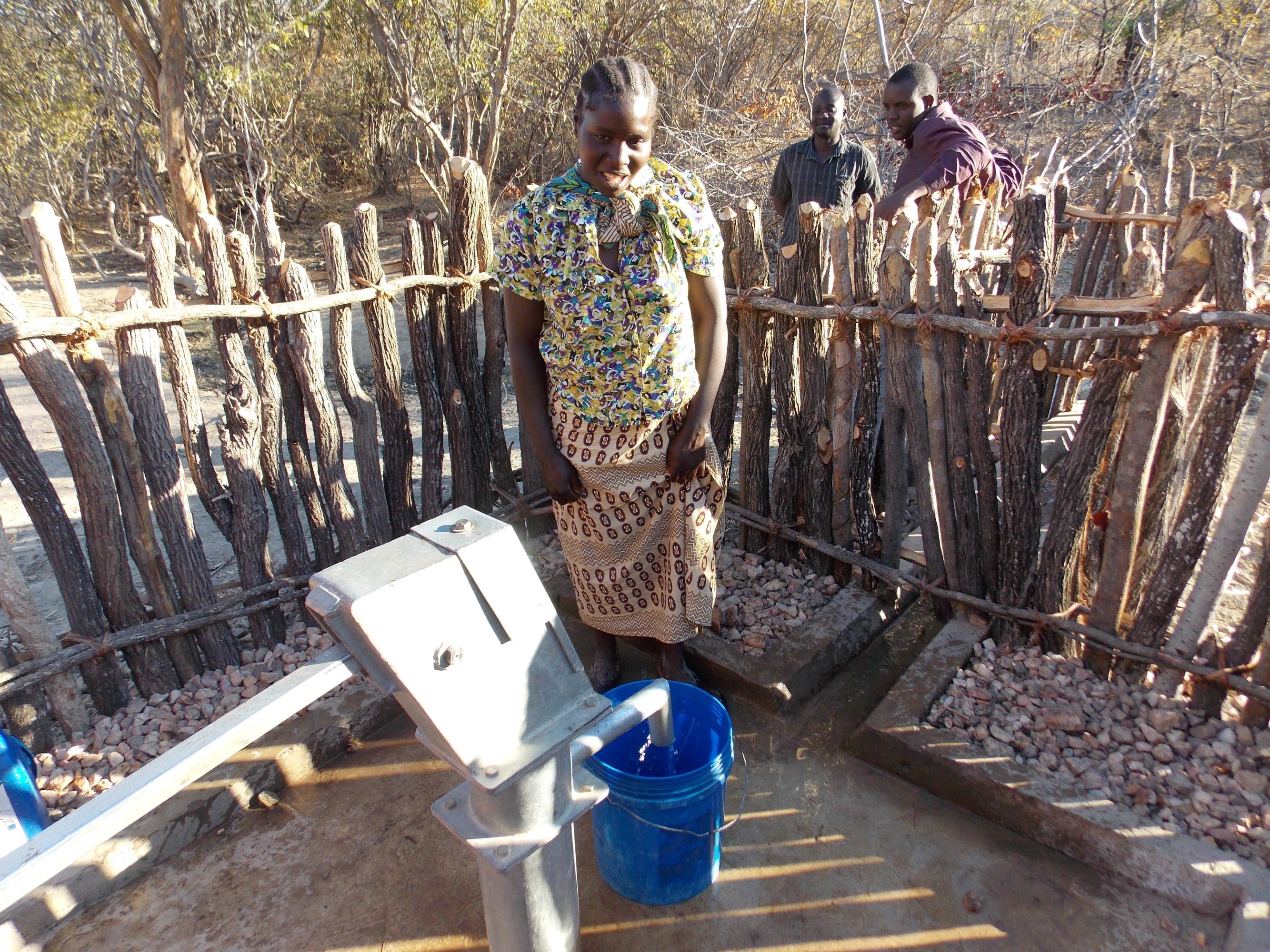
Evalina Kalata is a child of displacement.
Before she was born, Evalina’s parents, along with 57,000 other poor tribespeople who lived along the banks of Zambia’s Zambezi River, were forced out of their homes to allow for construction of the gigantic Kariba Dam.
Evalina grew up in a re-settled and remote village called Nang’amba, where life was hard and water was scarce. As a result of poor sanitation, blindness from the agonizing eye disease known as trachoma was common.
Evalina’s mother and grandparents tell stories of their late relatives who suffered from irreversible blindness due to trachoma. In those days, there were no eye health programs to help the tribespeople understand what was happening to their eyes; they thought they were bewitched and didn’t know to seek medical help.
Today Evalina is 27 years old, and a parent of three children herself. Fortunately, she is aware of trachoma and understands the importance of eye health, thanks to educational sessions that are now held in the village. When two of her children contracted trachoma a year ago, she and her husband knew to seek help for them at the local health clinic. The children were given medicine to treat the infection, and they are both doing well today.
In 2013, Operation Eyesight drilled a borehole in Nang’amba as part of the SAFE strategy to improve environmental hygiene and help prevent the spread of trachoma. The community now has clean, safe water for drinking and washing.
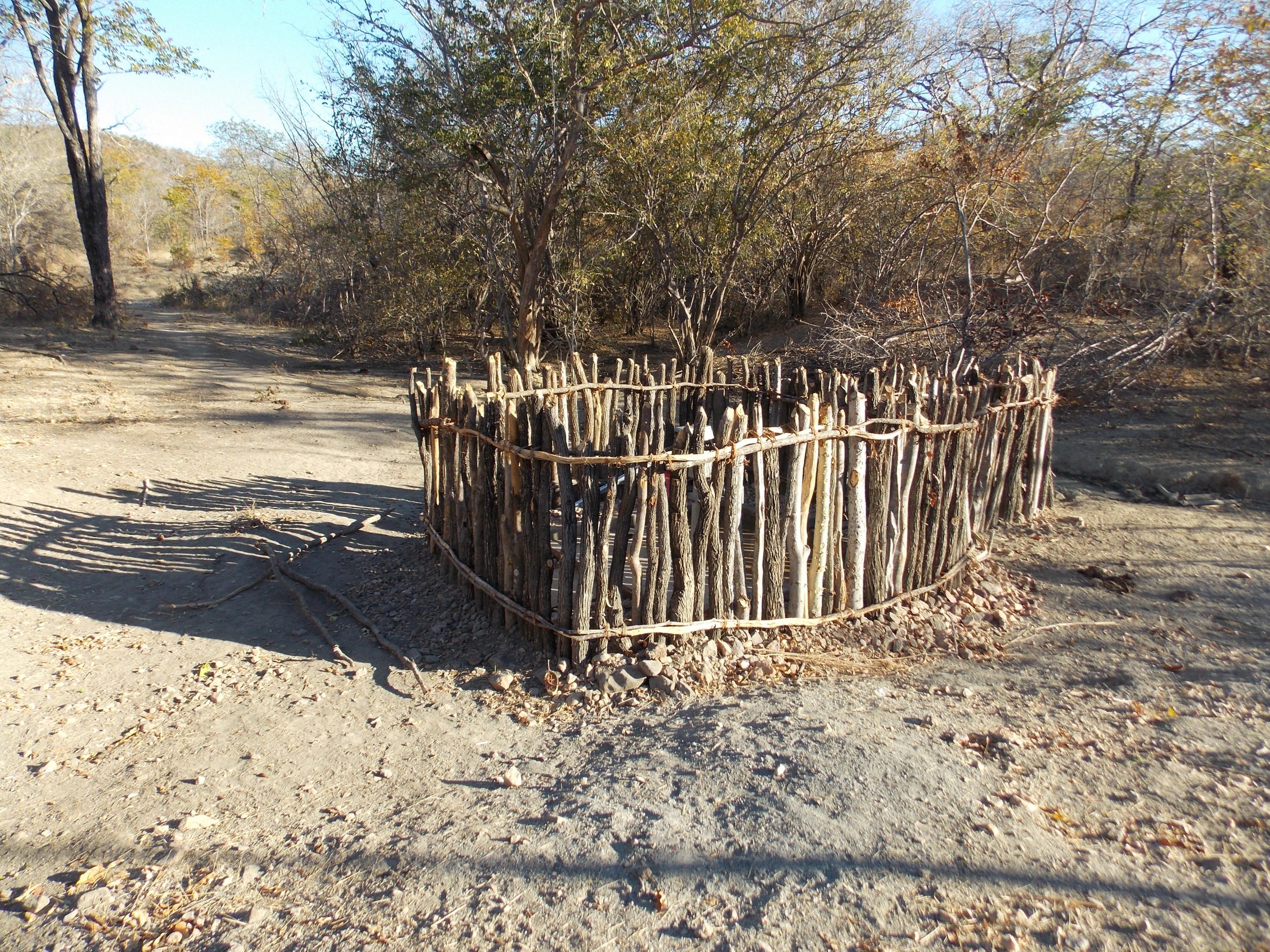
The village has also implemented a community-led sanitation program. Community members are encouraged to wash their hands and faces as frequently as possible. In addition, families like Evalina’s have constructed latrine pits to improve sanitation.
Community-led sanitation along with the provision of the borehole has improved the livelihood of the tribespeople, and they are proud of the work they have done to prevent avoidable blindness.
“There will be no more blindness for my family or for my children,” explains Evalina. “I make sure that my children wash their faces as many times as possible so they will not suffer from this disabling disease.”
Evalina and the entire village are grateful for the borehole that has brought such joy to the community.
“We thank Operation Eyesight and its donors for remembering us,” says Evalina. “May the good Lord bless them.”
To learn more about our trachoma projects in Zambia click here.
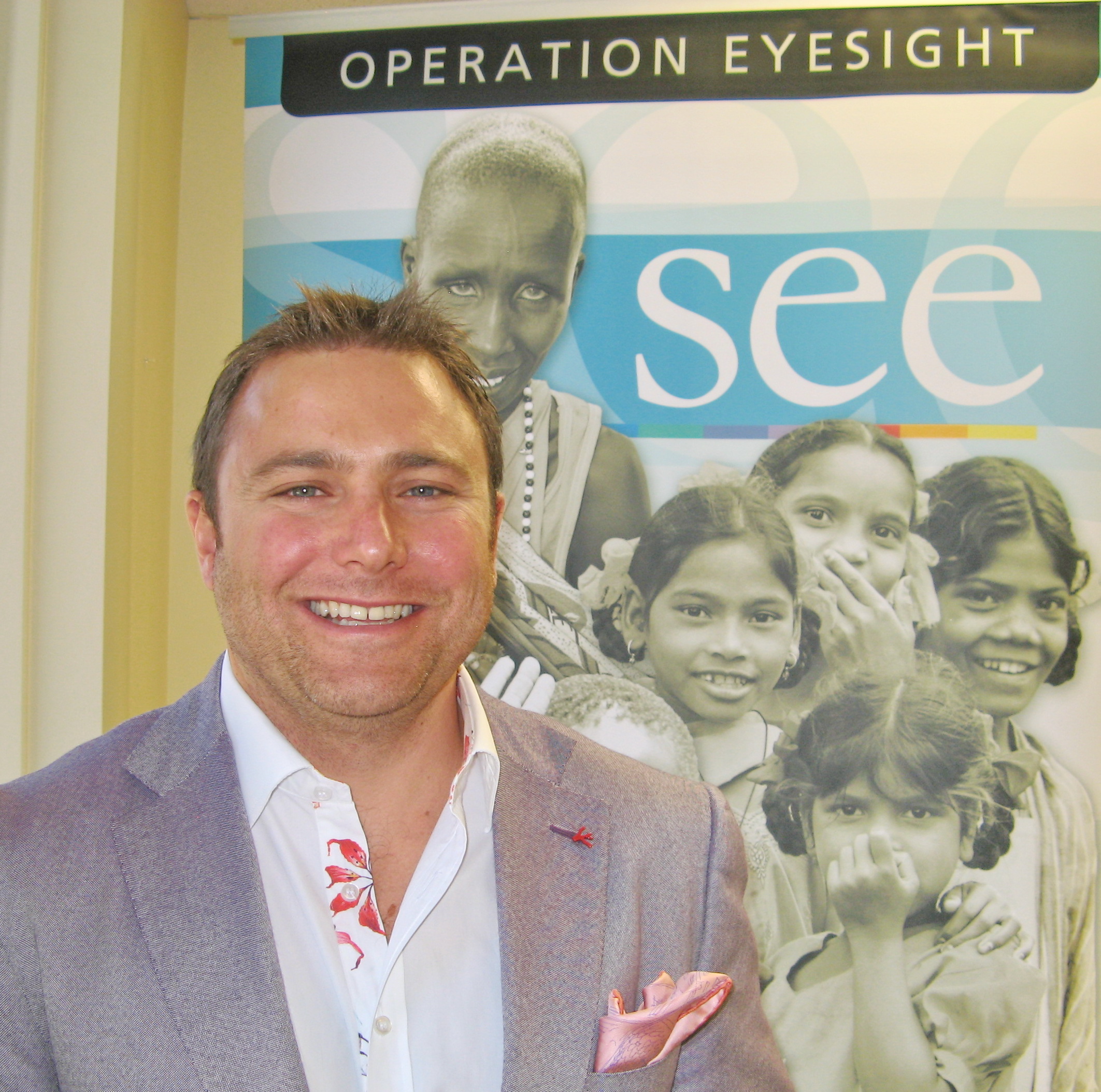
In June 2014, Rob Ohlson was announced as new Chair of the Operation Eyesight Canada Board of Directors. We are delighted to have Rob, our former Vice Chair, lead our volunteer directors as they provide strategic direction to assist us in fulfilling our mission to eliminate avoidable blindness.
We checked in with Rob to get the scoop on why he became involved with Operation Eyesight and what he’s looking forward to in his new role as Board Chair.
Q. What inspired you to join the Board of Directors?
A. I’ve been a supporter of Operation Eyesight since 2005, and I’ve made one trip to India and three trips to Africa. So when I was asked to be part of the Board, I was thrilled to be able to work more closely with the organization. I’ve always been very impressed at how far Operation Eyesight can stretch a dollar and the massive effect we are able to achieve with the resources we have.
Q. What is one of the most important things you have learned through your involvement with Operation Eyesight?
A. The most important, and really amazing, thing I’ve learned while being involved with Operation Eyesight is how much a relatively small group of people can achieve with a simple vision and an enormous amount of hard work. It’s been a significant inspiration in all areas of my life.
Q. What are some of the challenges Operation Eyesight will face in the next two years? How will these challenges be overcome?
A. We’re challenged with promoting the organization to a wider demographic and sharing our story with a larger audience. This is currently being addressed with the addition of fresh, young team members with great ideas.
Q. What are you most looking forward to as the new Chair of the Board?
A. I look forward to promoting the organization to a wider demographic and sharing our story with more people. I’m also excited to have the opportunity to work closely with such great individuals, both on the Board and within the organization.
Rob is the director and president of Maillot Homes, a Calgary-based custom home builder and land development company. He also worked in the oil and gas services industry for four years.
He grew up in Tripoli, Libya; Calgary, Canada; and Kuala Lumpur, Malaysia, which helped enhance his understanding of cultural and development issues. Rob founded the Bob Ohlson Centre for Sight in Visakhapatnam, India and spent three months visiting projects in Africa. He has a bachelor of science in chemical engineering from the University of Calgary.
It’s back-to-school time here in Canada. Parents are running around this week, stocking up on supplies and picking out new outfits for their children to wear this fall.
We all want to send our kids back to school feeling good about themselves; we want to do everything in our power to help them succeed, both academically and socially. What if I told you that, for just $20, you could help three other children, too? Children like Mercy Jerotich...
Mercy wants to be a teacher. It’s a big ambition for a girl from a small village in Kenya — a place where common vision disorders can stop someone in their tracks, and end any prospects for a happy, healthy future. That’s because in places like Africa, low vision or blindness can be more than just a physical challenge; it can be an insurmountable barrier that often relegates someone to a life of poverty and despair.
In Mercy’s case, her sight started to deteriorate when she was just six years old. As the daughter of humble peasant farmers, she had no access to eye care. Instead, she was forced to put up with impaired vision.
As time went on, however, her school work started to suffer. She even had to repeat some classes in an effort to bring up her grades. But with her condition worsening and her performance sliding, she was losing hope. “I feel frustrated,” she said at one point. “I think I am going to stop going to school.”
Imagine going through life, feeling your vision slip away from you, unable to do anything about it. That’s how Mercy felt, until the day her life was turned around by a simple eye exam.
You see, Mercy’s vision problem was perfectly treatable. When she was examined by a cataract surgeon at Kapsabet Eye Unit — supported by Operation Eyesight — the surgeon diagnosed Mercy’s condition as refractive error. In other words, she said Mercy needed eyeglasses.
Thankfully, Mercy received a pair of custom-fitted, prescription eyeglasses — paid for by our kind-hearted donors.

Today, wearing her eyeglasses, Mercy can read with ease. Her grades are improving, and her future is bright. Now 14, she is set on becoming a teacher. “I am going to work hard to achieve my dreams in life,” she says.
Mercy is very grateful to the Canadian donors who made it all possible. “If it were not for your support,” she says, “I don’t know how my life would be.”
For $20, you can provide three people like Mercy with custom-fitted, prescription eyeglasses. Visit our website to learn more. Thank you for helping these children succeed and achieve their dreams!
Operation Eyesight is very lucky to have dedicated donors who are preventing avoidable blindness. But we also couldn’t do our work without the help of those who donate their time! Although the days of Operation Eyesight being an all-volunteer organization are long past, we always appreciate those who want to help out, which is why we’re thankful for people like Murray Soupcoff.
Murray, now retired, worked as a producer for CBC Radio in Toronto. A long-time member of our Canadian Board of Directors recruited him to help write news releases and make media contacts when Operation Eyesight had an office in Toronto. Murray recalls being very impressed with the organization.
“With some charities, you can doubt that people are being helped, but not with Operation Eyesight,” Murray says. “It’s always nice to do good and give back, and it’s very gratifying to realize that your money has that kind of impact.”
Although our Toronto office closed some time ago and Murray no longer volunteers for Operation Eyesight, he became a monthly donor some years ago, and tries to give a little more each year. He enjoys reading about the people he’s helped in the patient stories in our SightLines newsletter, and is still impressed by our staff. “Everyone I’ve met has had huge enthusiasm for the projects,” he says.
We thank Murray for his unselfish giving! Operation Eyesight relies on our donors and our volunteers. Art Jenkyns spent 15 years giving his time to the organization he founded before becoming the organization’s first paid employee in 1978, and we’re so happy our volunteers are following in his giving footsteps (although we understand if they don’t offer up their basements to house the organization, like Art did!).
We hope that everyone who’s given to Operation Eyesight knows just how much we treasure their sight-saving contributions. We can’t say thank you often enough!
Operation Eyesight was recently approached by blogger Grant Wish to do a Q&A for CauseArtist. We turned to our expert in the field, Kashinath Bhoosnurmath, Senior Director of International Programs, for the answers. The discussion captures Operation Eyesight's approach to sustainable development and demonstrates how we are finding solutions to eye health issues. You can read highlights from the Q&A below or view the full discussion here.
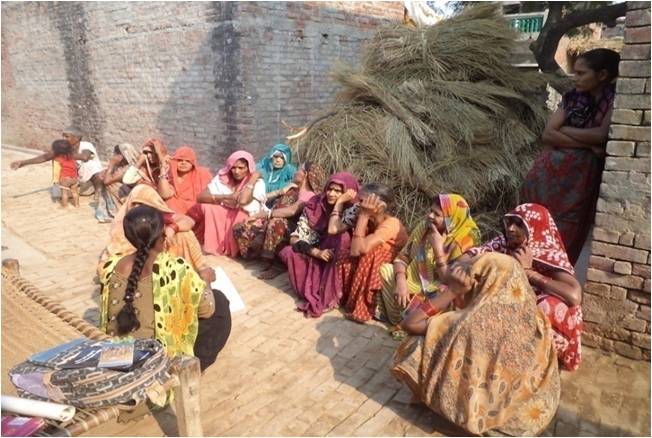
Q. Since the 1960s, Operation Eyesight has been evolving its approach to eye care. Can you tell us what the main difference in approach is when tackling the problem from a charity perspective and now from a development perspective?
A. In the early 1960s, the emphasis of all eyesight-related international non-governmental organizations (INGOs) was on the large backlog of cataract cases in India and other developing nations. We began by funding screening camps, cataract surgeries and training aimed at reducing the backlog. Over time, we transitioned from a charity or aid model to a development model.
Rather than simply finding Band-Aid® solutions to temporarily alleviate health issues, we invest in sustainable treatment, prevention and community development activities to address specific eye health problems, as well as the root causes of blindness. Not only do we restore eyesight, but we work to prevent people from going blind in the first place – and we do this by working collaboratively with our local partners.
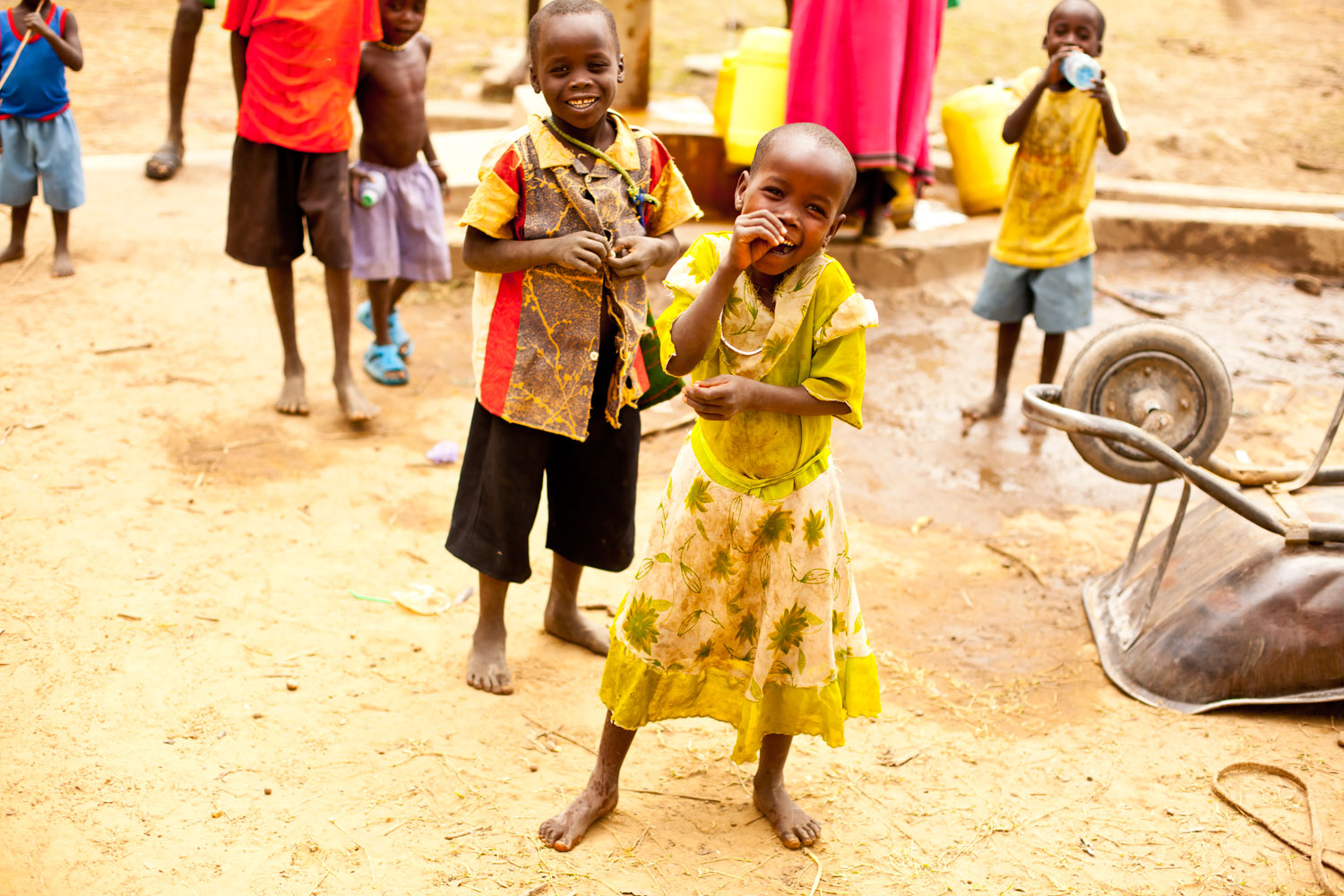
Q. Most of the organization’s work is occurring in India and Africa. Have you seen that blindness is occurring in the same fashion in both regions, or are the causes and cases you see based on geographical location?
A. The common causes of avoidable blindness, such as cataract, refractive error, glaucoma and diabetic retinopathy, occur in all the countries in which we work: India, Ghana, Kenya and Zambia. However, we are also working to eliminate trachoma, a blinding eye disease, in Kenya and Zambia. Trachoma is no longer a problem in India and Ghana.
If you look at the root causes of avoidable blindness – poverty, illiteracy, lack of eye health knowledge and inadequate eye care facilities – there isn’t much difference between India and countries in Africa. The major difference that we see between the two is that in Africa it is the public health systems that deliver the majority of the eye care services, whereas in India the eye health sector is dominated by INGOs embedded in an overall supportive public health policy framework.
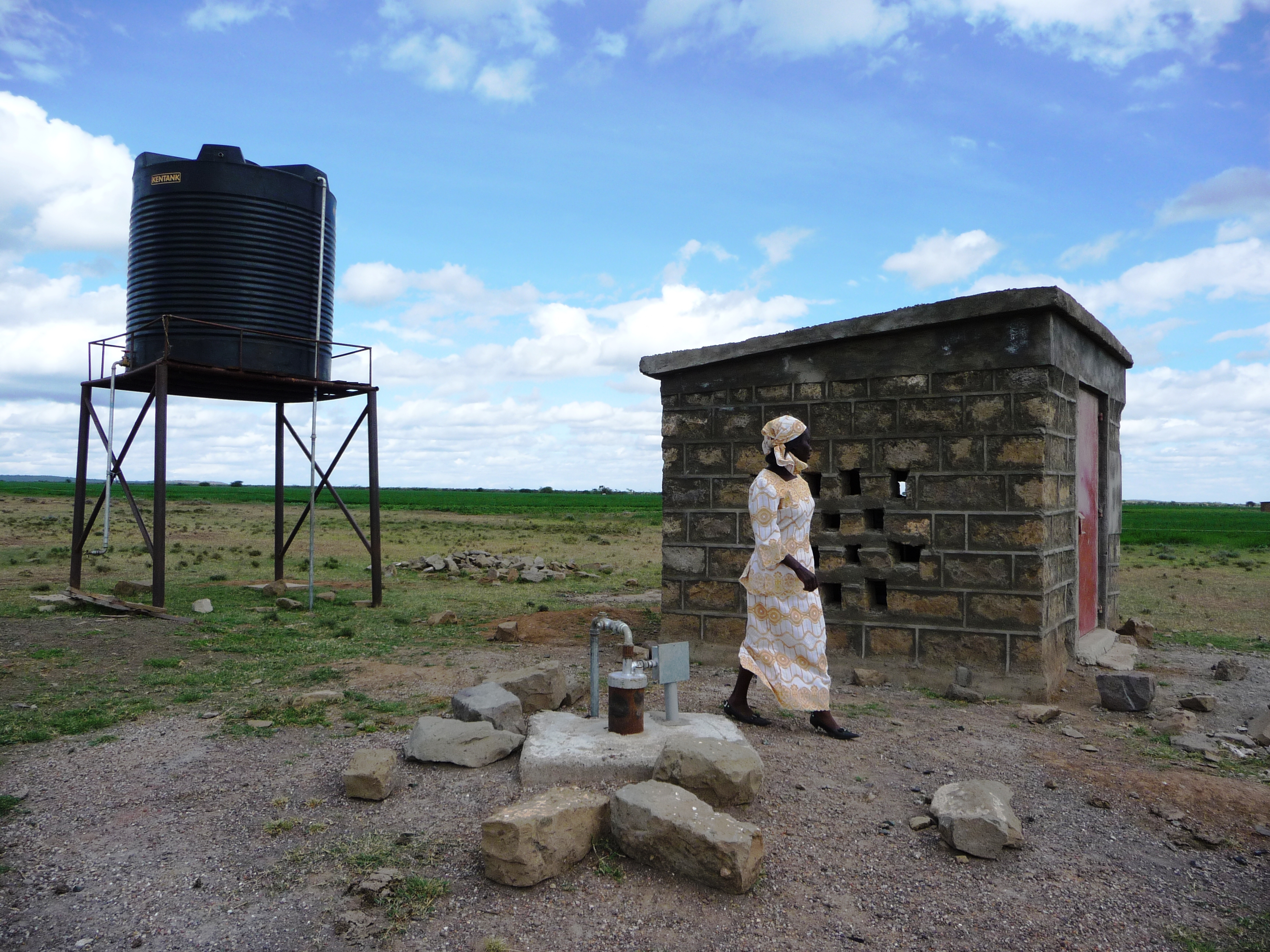
Q. What does development mean to Operation Eyesight? How does the organization’s model promote a sustainable approach to ending avoidable blindness?
A. To us, development means empowering our target communities and our local hospital partners so that ownership of the problem of avoidable blindness and the solutions to the problem lie with them. It is they who eliminate avoidable blindness on a sustainable basis with Operation Eyesight’s support for capacity-building and infrastructure development. We support local solutions by local people. We work collaboratively with each of our partners to set objectives and develop a practical plan that will ultimately achieve quality, sustainable eye care services.
On the other hand, the goal of eliminating avoidable blindness isn’t going to happen until every country has a health care system that includes eye care – a system they can sustain without foreign support. And that is exactly what our organization is working toward through our policy research and advocacy efforts.
Our vision is, “For all the world to see.” We recognize that isn’t going to happen overnight, but through the implementation of our quality, sustainable community development model, we are demonstrating that we have solutions to eye health problems. We have the answers. The elimination of avoidable blindness is possible!
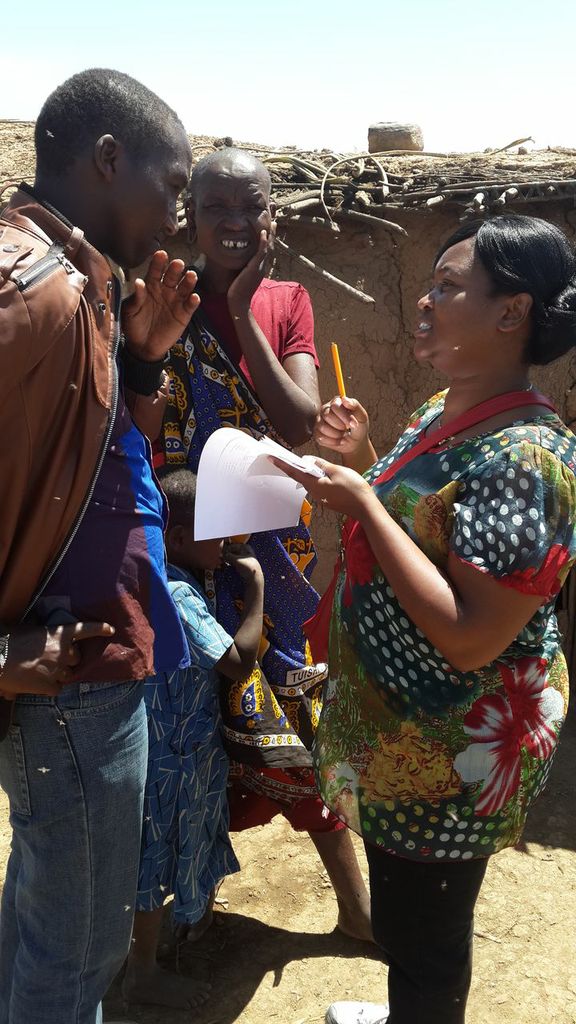
Thirty kilometres may not seem like a big distance to us, but it was a huge barrier for Norkitoip, a 45-year-old Kenyan mother of eight.
Norkitoip was afflicted with trichiasis, a condition whereby repeated trachoma infections turned her eyelashes inward to rub her cornea. Although she described it as “painful and uncomfortable,” she and her husband could not afford for her to travel from her village of Erupata to reach medical help that might save her eyesight.
Instead, Norkitoip and other Maasai community members who suffered from the same condition resorted to dealing with it as best they could. That meant a painful yet temporary solution – pulling out their eyelashes with tweezers made by a local blacksmith! Worse, all 12 of the children tested in the village had active trachoma infections, ensuring that they would suffer the same fate.
Maasai tribes are vulnerable to trachoma because they often live in close proximity to their cattle, whose dung provides a perfect breeding ground for the flies that spread trachoma. The communities are also hampered by the scarcity of water for personal hygiene. Without face and hand washing, infection is spread readily.
Thanks to support from Operation Eyesight’s generous donors, Norkitoip and other village women received free transportation to Narok District Hospital for surgery to fix their in-turned eyelids. The children were given antibiotics to clear their infections.
These treatments are part of the World Health Organization-endorsed SAFE strategy, which Operation Eyesight implemented in Narok District in 2007. SAFE stands for Surgery, Antibiotics, Face-washing and Environmental change to combat trachoma.
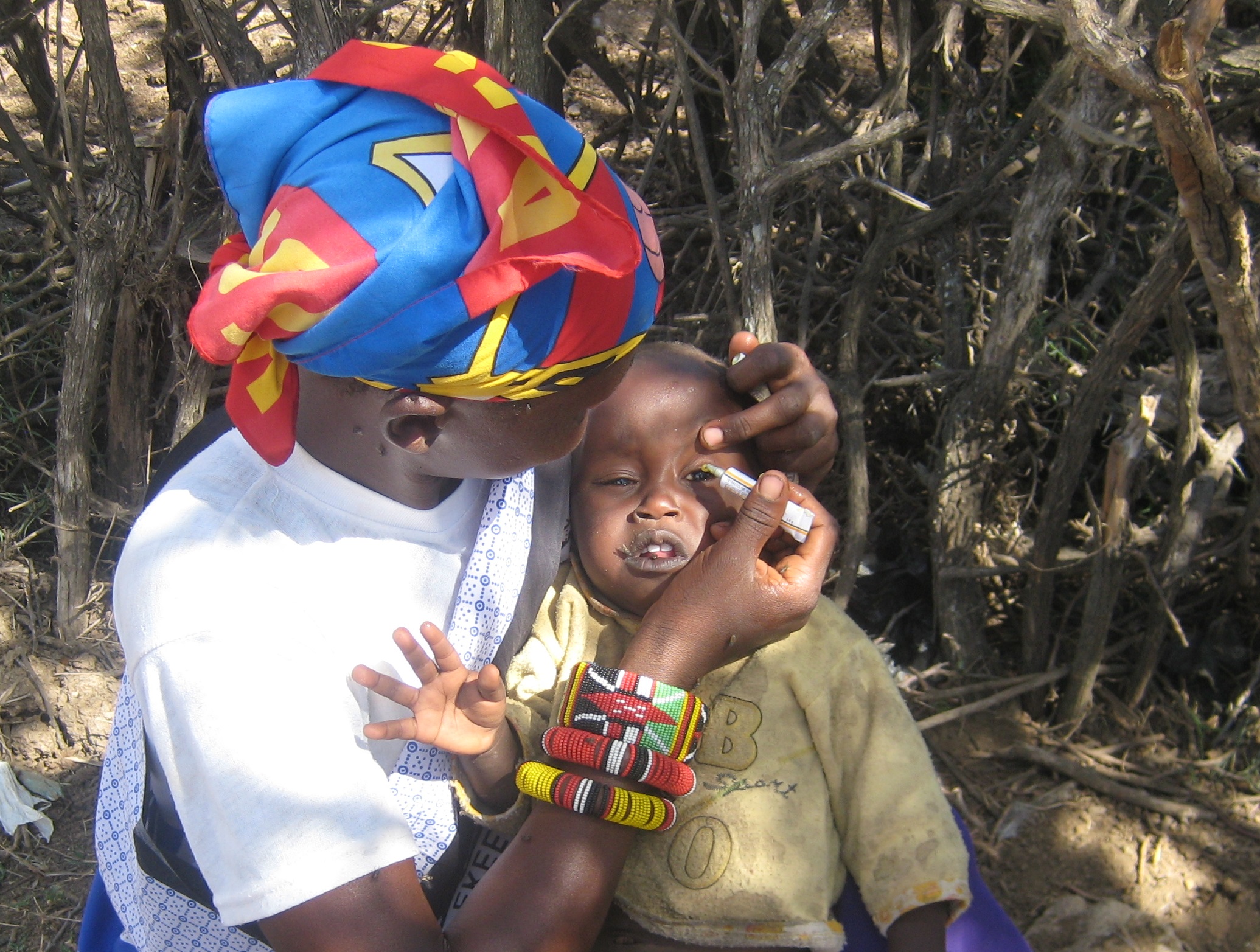
According to an impact assessment conducted by our staff in 2010, the SAFE strategy has been effective in reducing Narok District’s prevalence of active trachoma from 30.5 percent to 11 percent. Our kind-hearted donors make it possible to bring clean water for sanitation to villages like Erupata. Because of them, people like Norkitoip will no longer suffer this awful disease. Thank you!
You can read about our trachoma projects here.
Operation Eyesight has been part of many dramatic changes in India since we started working in the country in 1963. Over the past decade, in particular, India has experienced strong economic growth, and has become a force in the global economy.
Yet despite a remarkable increase in wealthy individuals, life for the vast majority of Indians has not improved. A large proportion of the population still lacks access to quality health care; and while the country has 17.5 percent of the world’s population, it has 20.5 percent of the world’s blind. Another 54 million people struggle with low vision, much of it untreated. There is still much work for us to do in India!
That’s why we are proud to offer our own solution: an innovative program that, when widely implemented, has the potential to actually eliminate avoidable blindness from the service areas of eye hospitals. Our Hospital-Based Community Eye Health Program is designed to provide comprehensive eye care and blindness prevention to India’s poorest people.
Developed by our India staff and piloted in 2010, this program has been implemented by 25 of our Indian hospital partners and has already made a considerable impact in the fight against avoidable blindness.
In 2013, our model was enthusiastically endorsed by Vision 2020 India, a national eye health advocacy group. The group is encouraging all Indian hospitals to adopt Operation Eyesight’s model, regardless of whether they are in direct financial partnership with us.
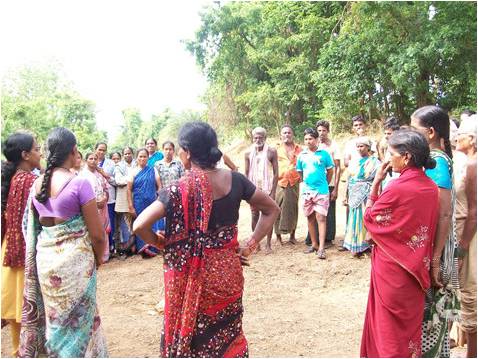
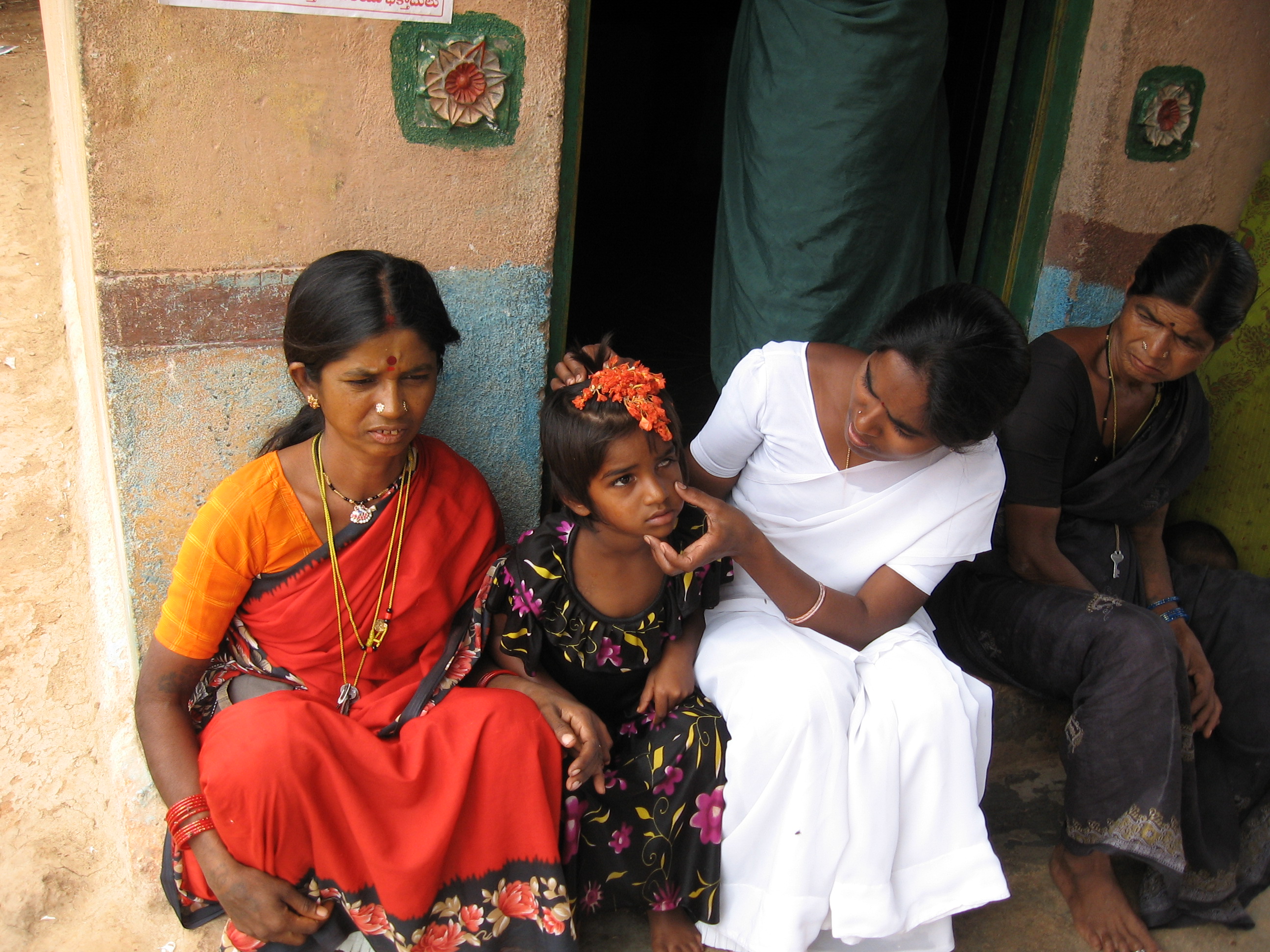
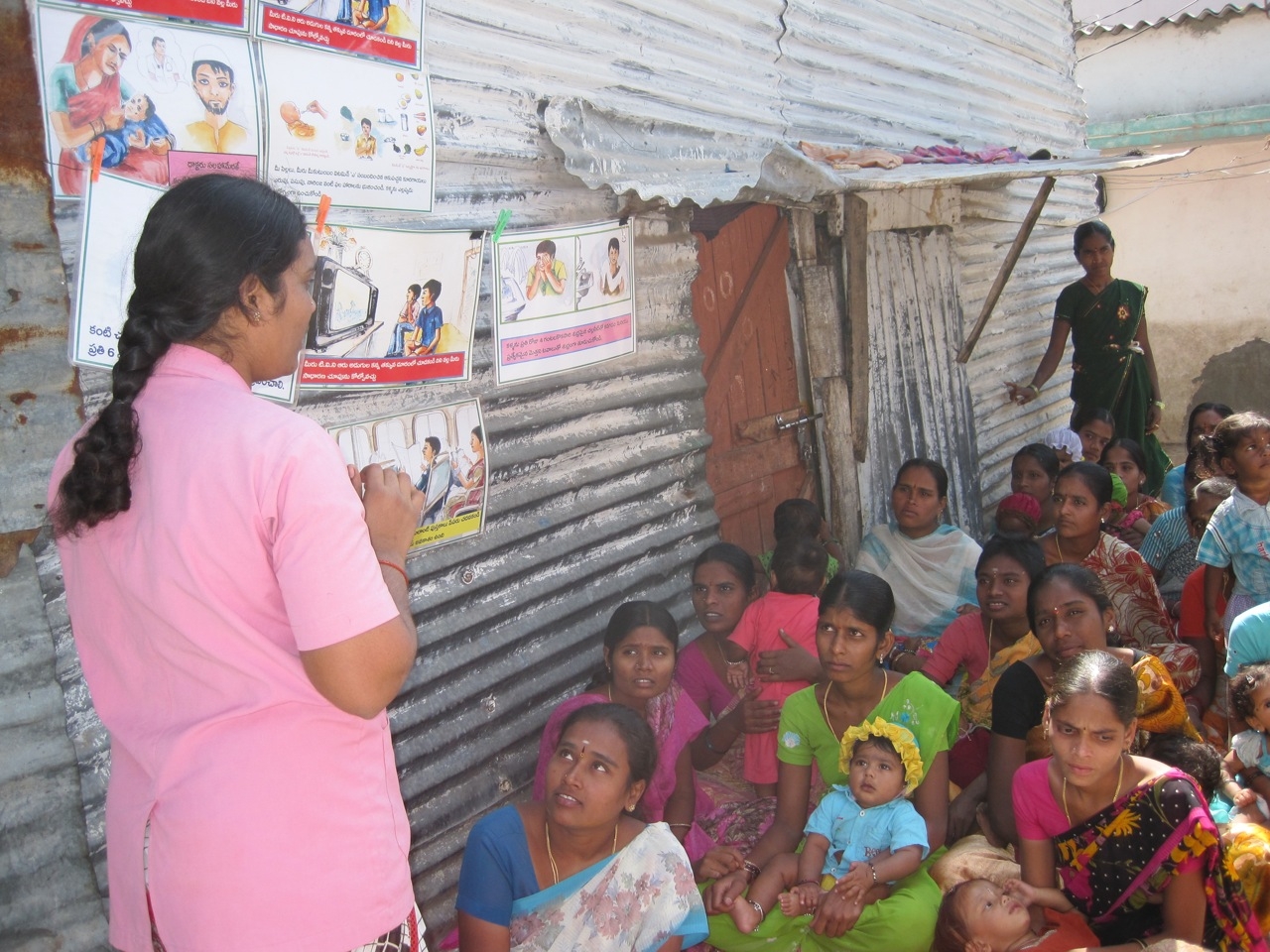
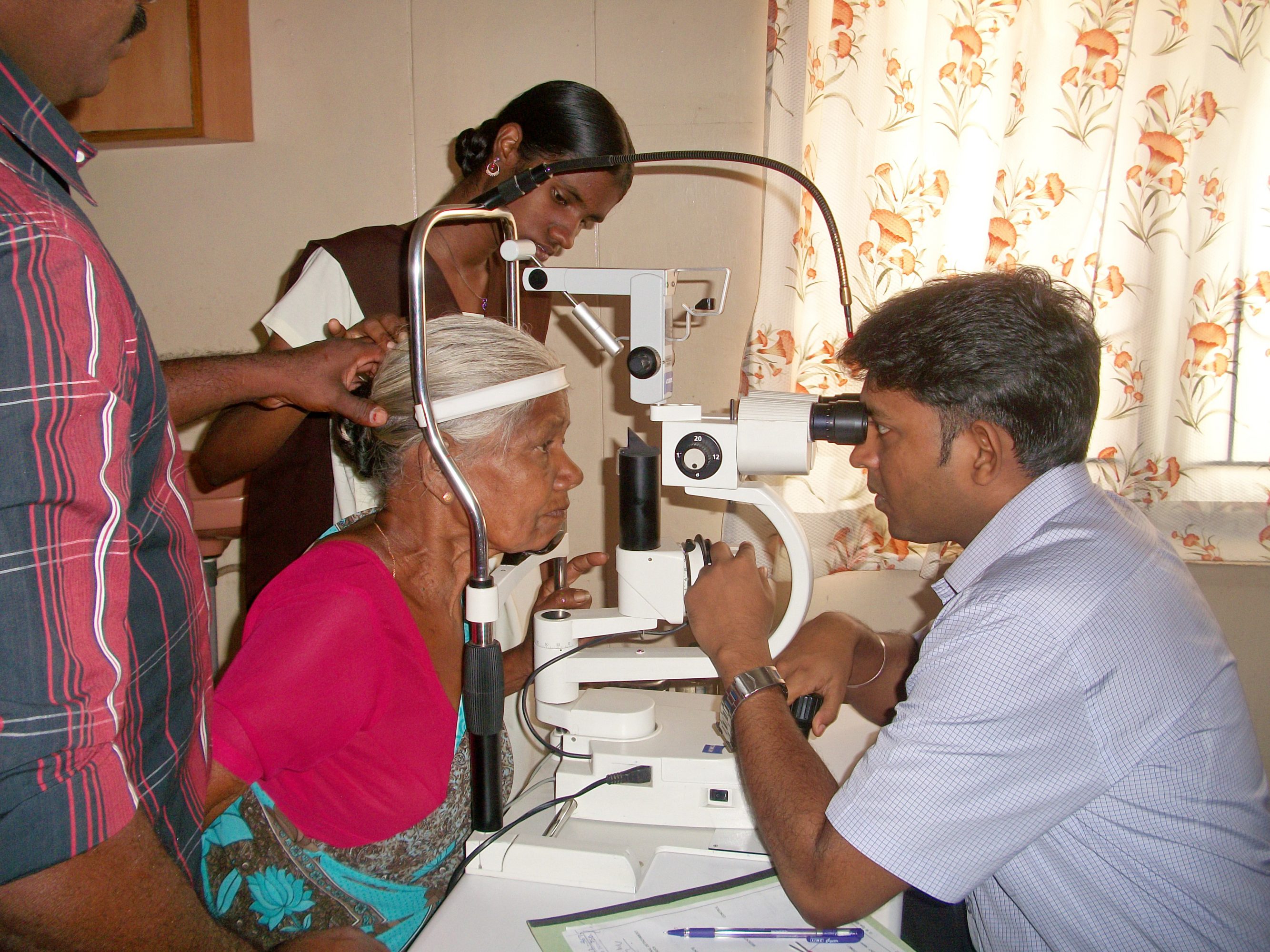

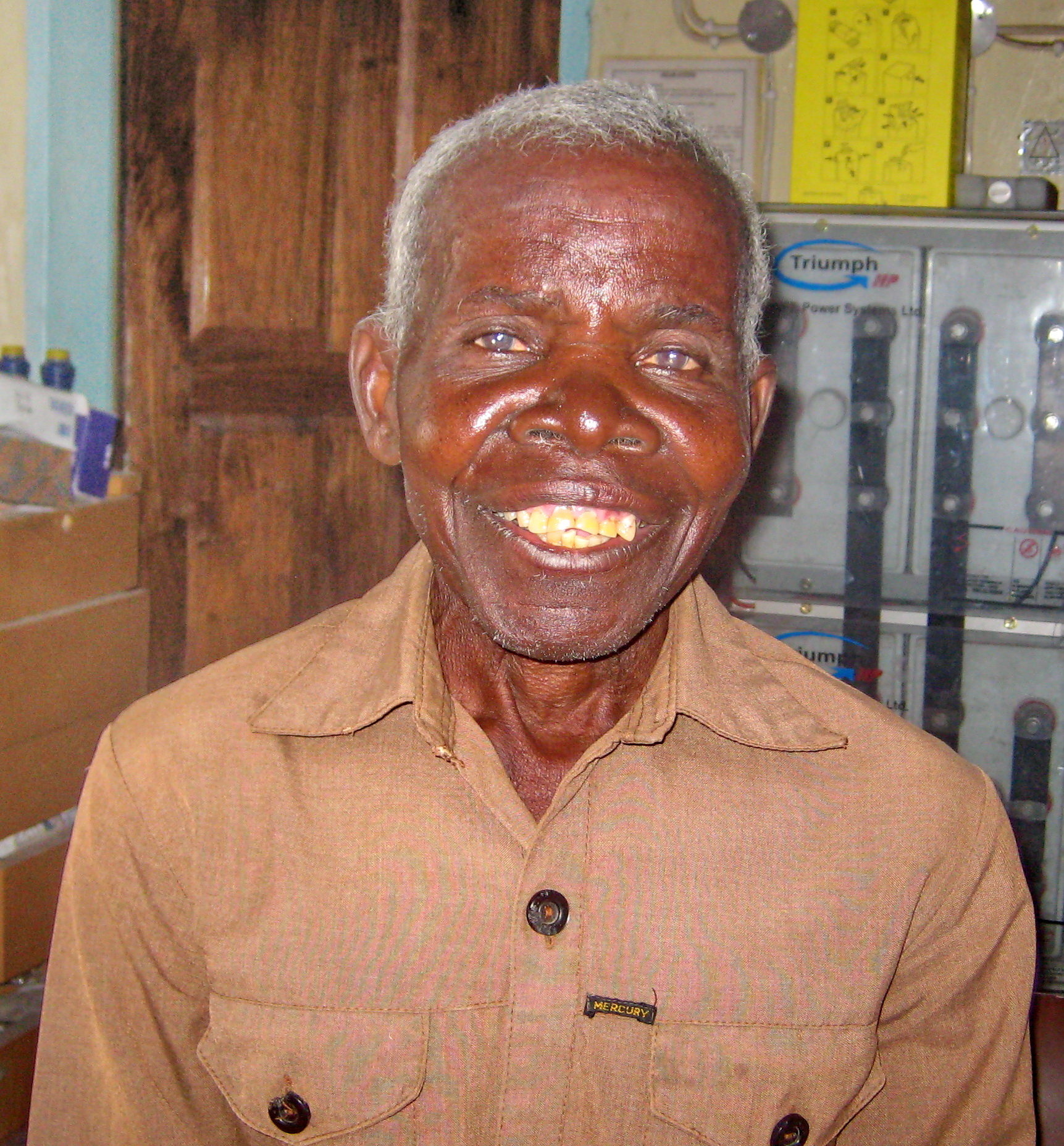
With the support of our donors and the successful implementation of our Hospital-Based Community Eye Health Program, we are demonstrating that the elimination of avoidable blindness is possible!
You can read more about our Programs and Projects on our website.
April 26 was a sad, but special day for Clarice and Al Bloomenthal. It would have been their daughter’s 48th birthday.
Forty years ago, their world was turned upside down when a reckless driver stole the life of their eight-year-old girl, Risa.
In the weeks that followed, the Bloomenthal family received many flowers and cards from those offering their condolences. But one card stood out: a dear friend had made a donation to Operation Eyesight in Risa’s name.
“It touched me in a special place and I’ve never forgotten it,” says Clarice.
Clarice and Al, who live on Pender Island, BC, have supported Operation Eyesight ever since, making donations for cataract surgeries in lieu of sending gifts when they’ve had the opportunity.
Through their involvement with Operation Eyesight, they’ve learned more about avoidable blindness.
“What blew me away was that operations were being done on children,” explains Clarice. “I didn’t realize disease and malnutrition caused children to require eye surgery, too.”

By Clarice Bloomenthal
Risa, can you see me?
Risa, are you there?
Fields and fields of tulips,
Rainbows everywhere.
Caress the gentle flowers,
Petals dipped in dew.
Kiss their silken petals
And wish that they were you.
Happy Birthday, dear child.
We’ve seen so much today:
Butterflies and puppets,
Kids at bubble play.
Risa, can you see me?
Risa, are you there?
Our love lasts forever,
Never goes away.
A few years ago, Clarice’s doctor informed her she needed cataract surgery. “There was no question about whether or not I would have the operation,” she says. “I was fortunate that I could have my sight restored. But for many people, a lack of surgery means they’re blind.”
The Bloomenthals are glad they’re able to help restore other people’s sight, too.
“Anytime we make a donation, someone else can see,” says Clarice. “That’s very special to us.”
Two days after what would have been Risa’s 48th birthday, they received a card from Operation Eyesight, thanking them for their recent donation. Enclosed was a note about an eight-year-old girl whose sight had been restored, thanks to their support. The unexpected card brought a flood of emotions.
“Operation Eyesight didn’t know that it was Risa’s birthday,” Clarice explains. “But it’s interesting how these serendipitous things happen.”
Risa was particularly on Clarice’s mind that week; the Bloomenthals had just made a trip to the annual Tulip Festival in La Conner, Washington in honour of Risa’s birthday. “The whole time I was thinking about how much she would have liked it,” remembers Clarice.
Each year, on Risa’s birthday, Clarice writes a poem for her. “It’s so special for those who still remember,” she says. “It was a tough time, but it was a long time ago.”
Despite suffering a tragic loss themselves, the Bloomenthals are able to see the goodness in life and help others do the same.
“I hope our story inspire others, whether they’ve had a loss or not,” says Clarice. “I hope they can look for the good in the sad, and be as generous as they can be to help someone else.”
Thank you for sharing your heartwarming story with us, Clarice. And thank you for your support over the last 40 years!
If you would like to make a tribute gift in honour of Risa or another loved one, please visit our website.
Anil, an eight-month-old toddler, is the youngest among the three children of Ravi and Laxmi. Hailing from a very poor socio-economic background, they live in a small room in Ravi’s sister’s house in a remote village in the state of Telangana, India. Ravi makes his living by selling old clothes on the roadside in the nearby town or by doing daily wage jobs. Laxmi takes care of their three young children at home. Their challenging life became a living nightmare when they realized their son Anil could not see! Ravi and Laxmi didn’t know where to go or what to do to improve Anil’s eyesight. They believed it was the will of God and decided to leave it to fate.