

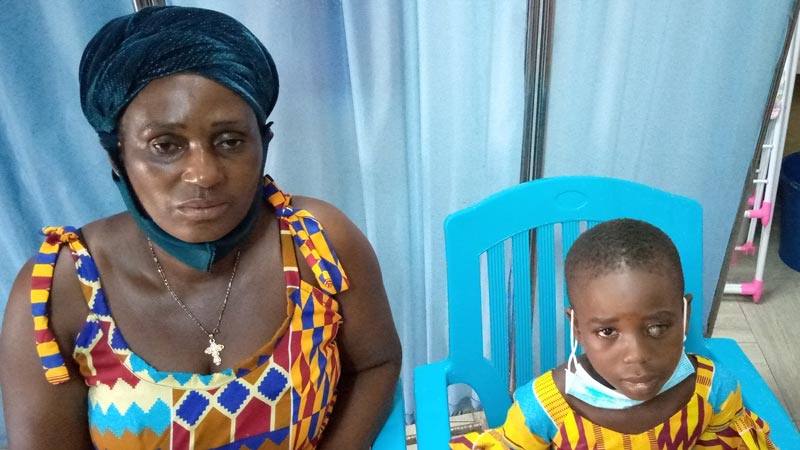
Seven-year-old Deborah lives in a small farming community in Ghana. After school and on weekends, she and her seven siblings help their parents on their cocoa farm.
When Deborah was four years old, she suffered an eye injury when she was hit in her left eye with a stick. The injury didn’t seem to affect her daily activities, until she developed a protrusion through a weak point in her eye and a corneal ulcer. As a result, Deborah suffered from severe pain in her left eye, and regular headaches and fever. This illness kept her from attending school regularly.
Deborah’s mother, Rebecca, felt completely helpless. She hated seeing her young daughter in constant pain. They travelled to different hospitals to try to get help for Deborah, but they couldn’t afford the treatment, and Rebecca wasn’t able to end her daughter’s suffering.
Rebecca was given hope for her daughter when a midwife visiting their village recommended they visit the Essikado Government Hospital, a surgical outreach post for Watborg Eye Services, an Operation Eyesight partner.
Through the generosity of our donors, Deborah was given the surgery she needed and is doing very well. Rebecca is very relieved that her daughter’s pain has subsided, and that she will be able to return to school on a regular basis as soon as she has healed from the surgery.
This Mother’s Day, you can bring hope to a mother like Rebecca by helping her get the medical care her child needs. Please donate to Operation Eyesight to help prevent blindness and restore sight for women and girls. Every dollar will be used to ensure they get the quality eye health care they need right now, and well into the future. You can choose to make a donation in the name of your own grandmother or mother or another important woman in your life.
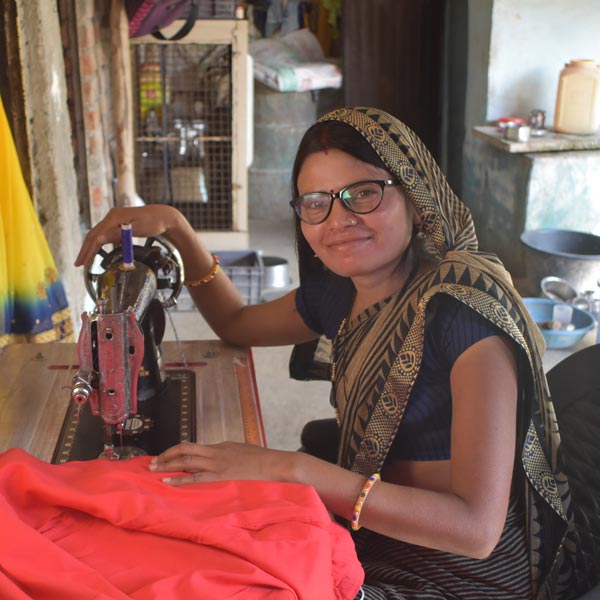
With four young children, 28-year-old Varsha’s household is very busy. In addition to looking after the children, Varsha also kept busy as a tailor. She enjoyed sewing clothes, and the money she earned was an important contribution to her family’s income.
Varsha started to experience problems with her vision, along with severe headaches. These problems came about suddenly and became worse over the following months. There were days when she had to stay in bed due to the pain, and she became very concerned about her family’s finances, as it was getting to the point where she could no longer work to support her family.
Things turned around for Varsha when she was visited by Hemlata, an Operation Eyesight-trained community health worker. Hemlata referred her to the Ahmedpur Vision Centre for a comprehensive eye exam. Vision centres are permanent facilities staffed by trained eye health personnel that act as a link between communities and staffed by trained eye health personnel. Located in areas where the need for quality eye health care is high, they provide eye exams, dispense prescription eyeglasses and refer patients to the hospital when necessary. Vision centres provide a way to reach people who have previously been unreached.
At the vision centre, Varsha was diagnosed with refractive error, and she was given a pair of custom prescription eyeglasses that corrected her vision, thanks to our donors. This simple and inexpensive tool instantly restored her vision, and with her vision corrected, her headaches also went away.
Varsha is so happy that she no longer has to worry about having enough money to support her children. She looks forward to a happy and healthy future for them, and she now knows where to go for help if one of them should suffer from a health condition.
This Mother’s Day, you can bring relief to a mother like Varsha by restoring her sight. Please donate to Operation Eyesight to help prevent blindness and restore sight for women and girls. Every dollar will be used to ensure they get the quality eye health care they need right now, and well into the future. You can choose to make a donation in the name of your own grandmother or mother or another important woman in your life.
Kashi is a mother of two and a grandmother of four who lives in the village of Rasulpura in India. She looked after her family by taking care of domestic work, and her greatest joy in life is spending time with her grandchildren.
When her vision started to deteriorate, she thought it was due to aging. But as it became worse, it made her anxious. She became less able to contribute to her household chores, especially after sunset. She worried that she would become a financial burden to her family, knowing that they couldn’t afford medical care. Worst of all, every day she became less able to see the faces of her beautiful grandchildren, and she couldn’t see well enough to be left alone with them to care for them.
Kashi’s hope was restored when Sarika, an Operation Eyesight-trained community health worker, visited her home during a door-to-door survey. After examining Kashi’s eyes, Sarika referred her to a nearby vision centre, which was established in partnership with Sewa Sadan Eye Hospital to bring eye care services closer to people like Sarika. At the vision centre, Sarika was given a comprehensive eye exam, diagnosed with bilateral cataracts and referred for surgery at our partner hospital in Bhopal.
Thanks to support from our donors, Kashi was given surgery free of charge. Her sight has been restored, and she is thrilled to be able to see the smiles on her grandchildren’s faces again.

This Mother’s Day, you can bring joy to a grandmother like Kashi by restoring her sight. Please donate to Operation Eyesight to help prevent blindness and restore sight for women and girls. Every dollar will be used to ensure they get the quality eye health care they need right now, and well into the future. You can choose to make a donation in the name of your own grandmother or mother or another important woman in your life.
Last month we announced that Kashinath Bhoosnurmath would be transitioning from overseeing our international programs to leading Operation Eyesight as president and CEO. We wanted to give our supporters a chance to learn more about him and our plans for 2021.
Having just stepped into your new role as CEO, what are you looking forward to most?
When I first joined Operation Eyesight 11 years ago, I was overcome with inspiration to pursue our mission to prevent blindness and restore sight. Operation Eyesight soon became an important part of my identity. This strong inspiration continues to drive me today, and I’m very excited to lead this team as we continue to pursue our vision of the elimination of avoidable blindness.
With my impending move to Calgary, I’m very excited to be able to meet and work with our donors. Operation Eyesight has had longstanding donors that span decades of giving – that kind of passion and belief in our cause is commendable. We also have many donors who have recently discovered our work and are equally committed to it. I am excited to meet our donors and hear from them directly, especially as I’ve been fortunate to see and meet our beneficiaries in the field. I hope I can share these stories on what has inspired me to take on this new role.
What motivates you about your new role?
With my own home country of India known as the “blind capital of the world”, I have seen firsthand the suffering of children, men and women. I have also seen the incredible impact Operation Eyesight has made among vulnerable populations. I have seen entire villages declared free of avoidable blindness, thanks to our donors and the diligent efforts of our passionate employees and partners. As president and CEO, I’m excited to have the opportunity to build on our past success and expand our work to help even more people.
True inspiration comes with challenges. As I look to the future of Operation Eyesight, I am motivated to continue to deliver our important work to those who are needlessly suffering. That motivation comes from the latest IAPB Vision Atlas report stating that over 1 billion people are living with vision loss because they do not have access to basic eye care services, yet a staggering 90 percent of all vision loss is preventable or treatable.
What is your vision for Operation Eyesight as you take on this role?
I believe, because of all that we have been doing collectively, Operation Eyesight has become a key player in the global eye health sector. We have a very strong team of dedicated employees who have worked together to make this happen. After decades of success using our community eye health model, we have been invited by ministries of health to present it as a proven way to address gaps in current eye health offerings. We provide input on governments’ national eye health strategies, advocating for them to include eye health as part of universal health coverage. A healthy, resilient population is a productive and vibrant population. We are showing governments and ministries of health that investing in eye health creates sustainable change in communities. Our model is designed to create change that will last, by incorporating health education and empowering communities to take control over their own eye health.
As we move into the future of Operation Eyesight, we will continue to focus on creating access to eye health care for marginalized populations. We will be bringing eye health care directly to the people who need it the most – through building and strengthening vision centres right in the communities where they’re needed; through technological solutions to bring screening and diagnosis capabilities directly to people where they live; and through other ways of reaching people where they are, such as mobile eye units. I’m very excited to see the change that will happen in people’s lives as a result of these new projects.
I’m eager for us to identify new growth opportunities and build on our successes to deepen and expand the impact of what we have already been doing successfully, so we can help even more people. We have a great opportunity to expand to new markets and contribute to the global achievement of the UN’s Sustainable Development Goals.
Throughout our history as an organization, collaborations have been vital to our continued success, and I am looking at new initiatives and partnerships with new governments and international organizations.
Can you share a story that has had a great impact on you in your time with Operation Eyesight?
Our community health workers show incredible dedication to helping people who have lived helplessly with blindness, feeling like there is no solution. They often live in the communities where they work, and they become trusted and respected members of their communities. It can be hard work, but they consistently go above and beyond, knowing the profound difference they can make in the lives of the people who need their help the most.
I once spoke with a community health worker who knocked on a door during a routine door-to-door survey and no one answered. She thought she heard something inside and she carefully walked in, not wanting to invade anyone’s privacy, but she had a gut feeling that someone in the shelter needed her help. She found an elderly woman who was blind from cataracts; she had been left alone and was completely helpless. The woman had been alone in the dingy hut for days, completely starved and too weak to move. The community health worker helped the woman bathe, fed her and she knew the woman was sick enough that she needed medical attention to survive. Without any mode of transportation, the community health worker carried the woman many kilometres to the nearest health facility. The exceptional compassion demonstrated by this community health worker and the impact it had on the life of the woman she saved is something I will never forget. She saved this woman’s sight and her life.
While our sight-saving programs have been ramping up, COVID-19 still presents challenges. What are you looking forward to in a world where life is more normal?
I have had the privilege to live in one of the countries where we work (India), and make many visits to our other countries of operation. I have seen an elderly woman walk into our clinic in the morning completely unable to see due to untreated cataracts, and by the next morning, she can walk home and see her grandchild’s face for the very first time. Meeting the people who have been helped by our programs and seeing this transformation take place in their lives firsthand is incredibly moving and has had a profound effect on my life.
Knowing that our donors are equally passionate and committed to the work we do, I am looking forward to the opportunity to bring some of our donors to our countries of operation so they can see our programs at work and meet some of the people whose lives have been transformed by their generosity.
What would you like to say to Operation Eyesight supporters?
I can never thank you enough for being part of the Operation Eyesight family, and for your continued support. With your dedication to our mission, I am confident that we will continue the success of our programs and continue to make a difference in the lives of people who desperately need it. I look forward to seeing where our journey takes us together.
Through your generosity, we are able to strengthen the capacity of our partner hospitals and empower our target communities, leading to the elimination of avoidable blindness in these communities for years to come. You should be incredibly proud of the impact you are making. Thank you for your passion and commitment to our cause.
Now that you’ve shared with us your experiences and vision for the organization, we’d like to get to know you a little better.
Can you tell us more about your family?
I have been married to my wife, Sujata, for 35 years, and we have two sons. Sujata is a talented artist. Hemant, our oldest son, is an aeronautical engineer and lives in France. Rajat, our younger son, is pursuing a bachelor’s degree in program management in Hong Kong. I am grateful to all of them, as they had to make several adjustments and sacrifices to support the nature of my work, which involved a huge amount of travel.
Growing up, how did your family shape the person you are today?
My parents, both no longer with us, have shaped my values, personality and behaviour. My father was a professor of physics and a well-known writer. He was considered the “father of science fiction” in Kannada (my mother tongue). My mother was a writer, too. Her best story that I read when I was 10 or 11 years old was titled, “First win your family and then the society”. I am proud of my parents and grateful that I am their child.
It sounds like you have had the opportunity to travel a lot. How many countries have you visited?
I am basically a wanderer. I must have visited over 40 countries so far. I regret that I have done very little sightseeing in these countries. I have worked on three different continents (Asia, Africa and Europe) and in locations where temperatures ranged between +50 degrees Celsius and -40 degrees Celsius.
What do you like to do in your leisure time?
I read books. Philosophy, history and spirituality interest me the most. I also love travelling with family and friends.
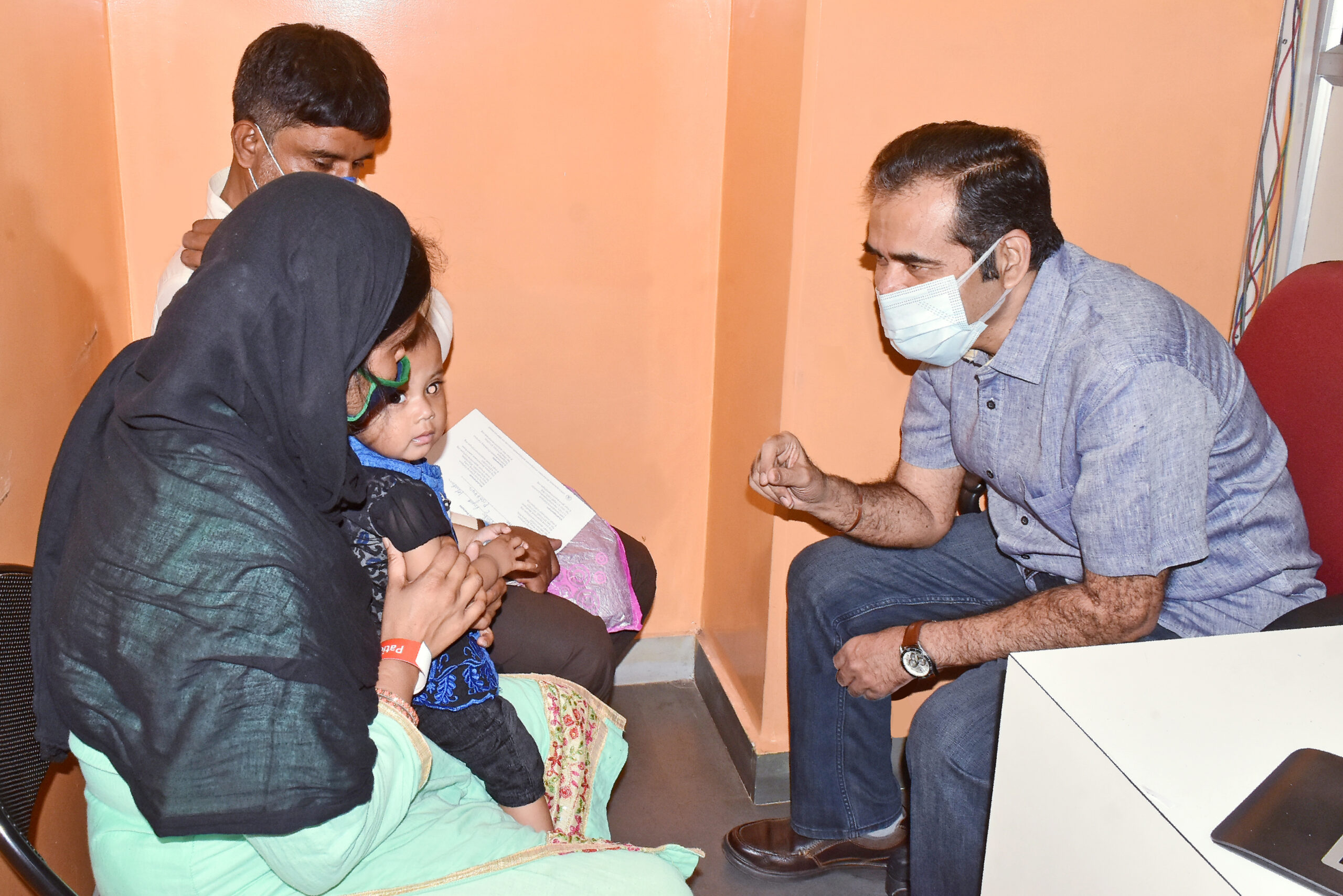
What would you do if you didn’t have access to health care you urgently needed? I’ve never faced that question until recently.
I’ve always suffered from impaired vision. I am extremely near-sighted, and I’ve always needed glasses or contact lenses to do anything. But I’ve never gone without. When I was seven years old, I was given my first pair of prescription glasses when I couldn’t see the chalkboard at school, and I’ve always had vision correction easily available. I understand what it’s like to not be able to see, but I don’t understand what it’s like to not have a solution to it.
Recently, strange things began to happen with my vision. I started seeing shadowy images in my peripheral vision, and one night I saw flashes of light in the dark. I felt no pain, but these new symptoms were unusual enough that I knew I had to seek medical attention immediately.
My first thought was, “Are eye doctors even seeing patients right now?” We’re in the middle of a viral pandemic, and I’m working from home, physically distancing from other people, and living my life in quarantine to keep from being exposed to COVID-19. When I called the optometrist’s office in my neighbourhood and described my symptoms, the receptionist told me that due to the potential urgency of my problem, the doctor would come in to see me.
Working for Operation Eyesight, I thought about beneficiaries who have waited years for eye care. I can’t imagine what it’s like for them right now with our eye screening community outreach programs on hold.
I love working for an international development organization because I know the work I do saves lives. With the support of our donors, together we bring quality eye health care to people in remote communities who otherwise might not have had any options. I’ve urged people to help these individuals, their families and their communities. Many times I’ve written about beneficiaries with conditions that could lead to blindness if they weren’t treated. But it wasn’t until this moment that I got a taste of their fear. Despite the fact that I’ve suffered from poor vision my whole life, I’ve never confronted the thought of completely losing my vision, and what that would mean to the way I live my life.
In the end, a retinal tear was quickly diagnosed by the optometrist, who referred me to an ophthalmologist for an appointment the next day. The following week, I went to the hospital for a laser treatment that eliminated any risk of the tear causing a blinding retinal detachment.
That moment of fear really stuck with me. In the end, I had access to medical professionals and state-of-the-art treatment with no barriers to information or care. So many people in the world live in remote communities and don’t have access to these resources, and they often have no hope for a solution. They accept that they will have to live a life where their independence and future opportunities are compromised. Thanks to our donors, this doesn’t have to be the case.
You can end someone’s fear and give them hope. During these uncertain times where we are all facing a global pandemic, they need it more than ever. To learn more about Operation Eyesight's response to COVID-19, click here.

Tina had very little hope in her life. Her mother died when she was a child, and she had a huge burden on her shoulders from a very young age. As the only female member of her household, Tina was expected to do all the household chores.
That burden became worse as her vision began to suffer. She started to have severe headaches and eye pain, and she was no longer able to see to study. She had to stop her beloved hobby of applying henna, a temporary form of body art that’s common in India, and it was the one thing that brought her joy in a difficult life. At such a young age, Tina was ready to give up on her future. She felt completely hopeless.
But thanks to your support, Tina’s despair turned into hope!

During a door-to-door survey, an Operation Eyesight-trained community health worker named Anjana screened Tina for vision problems and saw that she needed help. Tina had been struggling with pain and poor vision, but she had no idea that there was a solution to her problem until Anjana showed up at her door.
Anjana referred Tina to our partner Kurawar Vision Centre, and she was given custom prescription eyeglasses. Being able to see again transformed Tina’s life!
Tina now lives pain-free. Now that she can see to read and write again, she has a brighter future ahead of her. And she’s so much happier now that she’s rediscovered her artistic side through applying henna again. Her life has been completely changed, and it’s all thanks to someone like you!
There are so many people like Tina, who can’t see but have no idea that they can change that. They accept a life of limited options and shattered dreams. You can bring hope to these people. Please give the Gift of Sight today and see a life transformed because of your generosity!
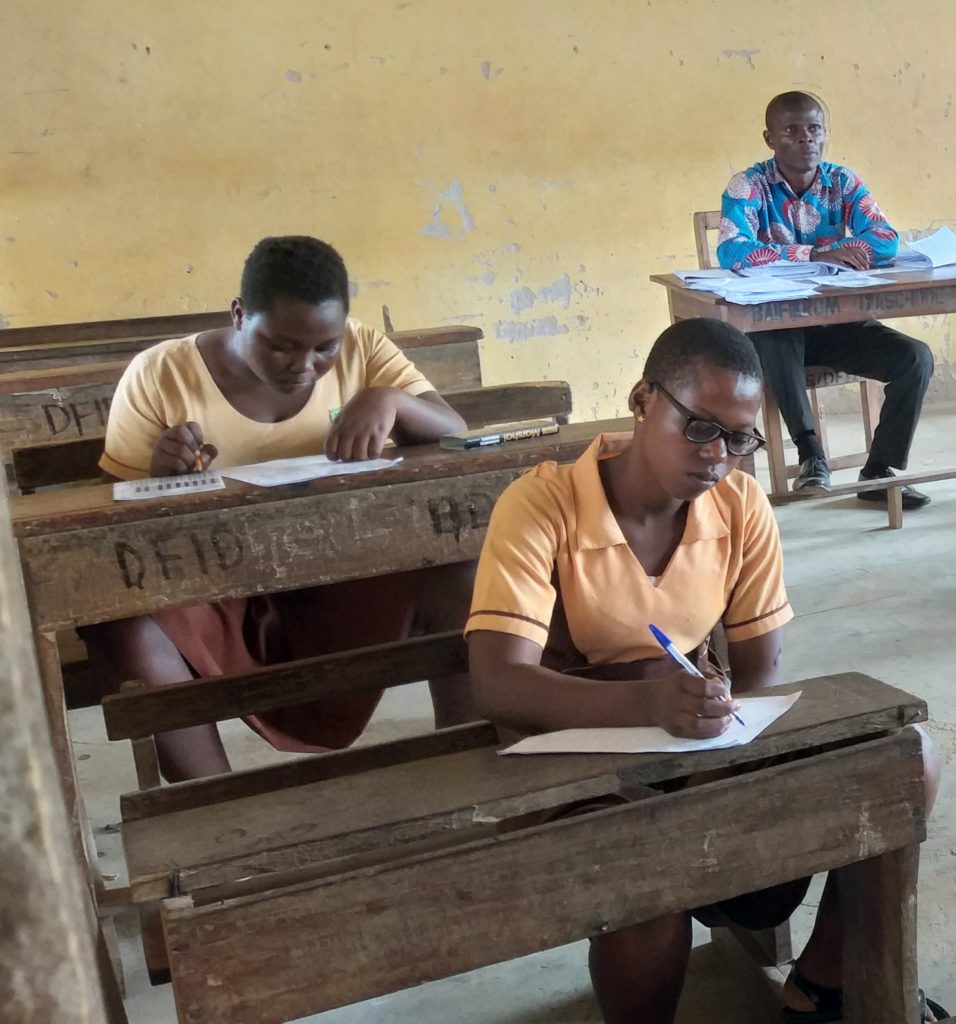
When Jennifer was in her teens, her parents noticed that her grades started declining. She was a bright girl, and even the teachers at her school in the Central region of Ghana couldn’t explain why this was happening.
Little did they know that Jennifer was suffering from vision loss. She first noticed at age 14 that she couldn’t see objects clearly from a distance. She developed strategies to deal with the problem.
“At first I would sit in the front row of the classroom, where I was close enough to see what the teachers wrote on the board,” she says. “But over time, I struggled to see even from the front row.”
Jennifer did her best to keep up with her work, relying on her friends to tell her what was written on the board. She never complained about her problem, feeling that nothing could be done about it. But her vision loss took its toll, and she struggled to keep her grades up.
Because of generous donors like YOU, there was hope for her future!
When Jennifer was 17 years old, Operation Eyesight sponsored a vision screening event at her school. An optometrist from our partner Saltpond Government Hospital diagnosed her with myopia, or near-sightedness. She was provided with prescription eyeglasses, and now she can see clearly, even from the back of the classroom!
Jennifer’s teachers report that she is much more active in school, and her grades have significantly improved. Thanks to her newly restored vision, she will be able to graduate from high school and find a fulfilling job!
You made it possible for Jennifer to see again, but there are so many others who needlessly suffer the way she did for years. Please give the Gift of Sight today and transform a life for someone like Jennifer!

Amita lived the typical life of a young woman in Tokha Saraswati village in Nepal. Married at the age of 19, she kept busy taking care of her family. She had dreams of a rewarding career serving her community as a nurse, but her family couldn’t afford for her to go to school.
The opportunity to become a community health worker gave Amita the fulfillment she always wanted. She is so happy that it allows her to help people in her community. She’s educated people to understand that superstitions do not affect health issues.
Also, she’s helped them learn what they need to do to look after their own eye health. She has become a respected expert in the area where she lives.
“Now whenever people have problems with their eyes, they come to me for a solution,” she says proudly.
Your generous support provides training and fulfilling opportunities for women to make a huge difference in their communities! Thank you!
World Water Day is coming up on March 22, and we’re overflowing with reasons to celebrate! Together, we’re saving sight and lives by providing clean water and eye health education to communities in Zambia.
In Canada, it can be easy to take for granted that our families have fresh, safe water for drinking, cooking and bathing. In developing countries, safe water often isn’t easily available. You probably can imagine that drinking contaminated water can lead to sickness and death, but did you know that a lack of clean water can also lead to blinding diseases such as trachoma?
The task of hauling fresh water for long distances most commonly falls to women and girls. This time-consuming activity takes away from other important tasks, such as education, employment and spending time with family. Depending on the area, the journey can also be dangerous, and the water from unprotected sources may not be safe.

Thanks to our generous donors, we’ve drilled and installed 126 new boreholes in Zambia in areas where clean water was desperately needed. Donors like you made it possible to train and empower people in these communities to maintain the boreholes and improve sanitation habits, reducing the occurrence of serious illness and trachoma over time.
We’re also working on restoring dysfunctional boreholes. Towards the end of 2018, 19 boreholes were rehabilitated in Zambia’s Sinazongwe District, with plans for more to come. Women and girls, who no longer need to spend hours hauling water, are given greater opportunities to learn, earn money and spend time with family and friends. Thanks to YOU, the people in these villages have access to safe water! They can wash their hands and faces and prevent the spread of trachoma.

Children in Mukka village, Zambia were very excited to feel water coming out of a borehole that had been dry for years!
Thank you for support, and happy (early) Water Day!
Help transform the future of more communities in need with the gift of sight by making a donation today!