Look at those big, beautiful eyes! This is baby Aarsh, from a small village just outside Moradabad city, in Uttar Pradesh, India. At seven months old, he weighs about seven pounds – what many babies weigh at birth.
Aarsh’s mother, Shabana, was only seven months pregnant when she delivered him prematurely. Little Aarsh had been in an incubator in the neonatal intensive care unit (NICU) at their nearby hospital for 15 days when his parents learned that he needed to have his eyes screened for Retinopathy of Prematurity, or ROP.
ROP is one of the leading causes of vision loss in children, and preterm infants are at high risk of developing this blinding condition. ROP occurs when abnormal blood vessels grow and spread throughout the retina, the tissue that lines the back of the eye. These abnormal blood vessels are fragile and can leak, which can scar the retina and pull it out of position. This causes a retinal detachment and visual impairment.
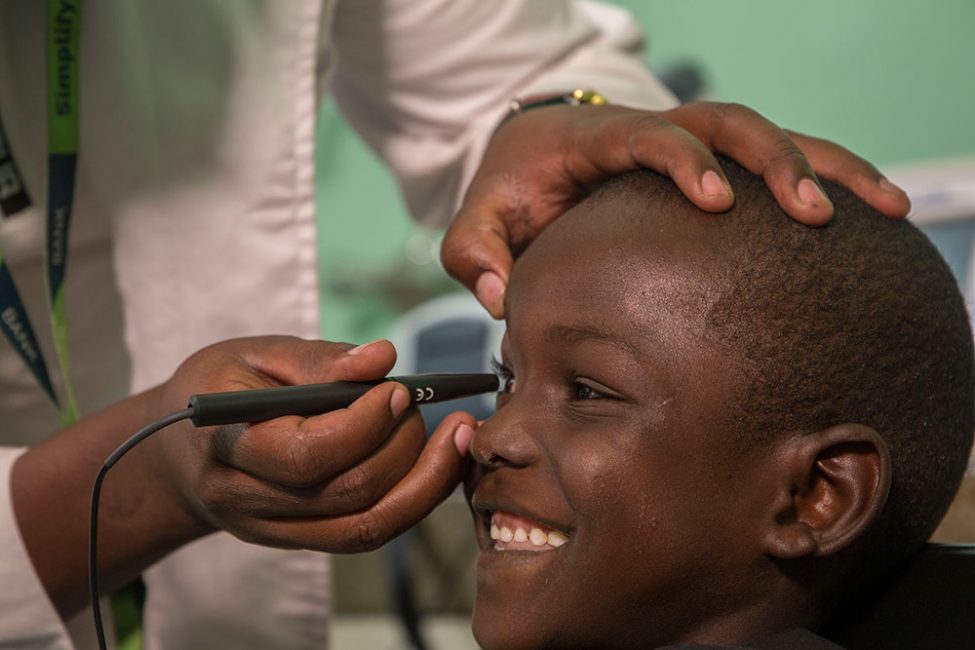
To save a child’s sight, early detection and treatment of ROP are critical. Unfortunately, many infants go undiagnosed due to the lack of awareness of ROP and the lack of screening services available outside of tertiary-level hospitals. That’s why we are working with partners like C.L. Gupta Eye Institute (CLGEI), located in Moradabad city, to provide remote diagnosis and referral services for at-risk infants and their families. With a case of specialized teleophthalmology equipment and pediatric supplies in hand, optometrists from CLGEI regularly visit 40 NICUs and maternity centres across the Moradabad District, where they capture retinal images of premature infants with assistance from nursing staff who help keep the wriggly babies calm and still.
Tasleem Qamar, an optometrist from C.L. Gupta Eye Institute specializing in ROP, shows the imaging equipment and tiny instruments he uses to screen premature babies. Tasleem himself screened baby Aarsh.
When Aarsh’s parents first learned their baby could have ROP, they were fearful of the treatment process, and they refused to have Aarsh screened in the NICU. Fortunately, the team at CLGEI are known for their compassion and persistence. After continuous follow-up phone calls and messages from the ROP Coordinator, Aarsh’s parents agreed to bring the little boy, then six weeks old, to CLGEI for screening.
Aarsh’s retinal images revealed that he had ROP in both eyes and required urgent treatment to prevent blindness. First, his eyes would be injected with a drug that inhibits abnormal blood vessel growth, then, at a later appointment, he would receive laser treatment.
Baby Aarsh with his parents, Ajmat (father) and Shabana (mother), and siblings in their home in a small village in Moradabad District.
Shabana couldn’t help but get emotional she when she heard Aarsh’s little cries from the next room as the doctor did the injections. She knew that timely treatment was necessary to save her son’s sight, but still the tears streamed down her face. Her little one wasn’t even two months old, and he’d already been through so much.
Following the injections, Aarsh’s eyes were covered with bandages, and they were sent home that same day with eye drops and a list of post-procedure instructions. No doubt, the experience was a lot for Aarsh’s parents to take in, worrying about their newborn baby who required special care while also tending to their other children; but they took comfort in knowing that the pediatric staff at CLGEI were available to help them every step of the way.
While being photographed, Aarsh’s sister (right) was always near, keeping a watchful eye over her baby brother and occasionally resting her hand on him.
Later that week, Aarsh received laser treatment. The procedure, which is done with local anesthetic, uses a beam of light to create scar tissue on the outer edges of the baby’s retina, which prevents abnormal blood vessels from forming.
Aarsh’s family went for several follow-up visits. His parents were diligent about making and keeping their appointments, even though it meant that his father, Ajmat, had to close his shop so they could travel to the hospital, which meant a loss of income. They were thankful that Aarsh’s treatment was provided free of charge. They were also grateful to the CLGEI staff who checked in with them and sent them reminders.
Dr. Pradeep Agarwal, Director – C. L. Gupta Eye Institute (CLGEI) and Head of Pediatric Ophthalmology, and team in the pediatric ward at CLGEI, Moradabad.
Today, Aarsh is doing great, and his vision is good. His mother, who is also happy and in good health, says that Aarsh even watches cartoons on the television like his big brother and sister.
“Little Aarsh's journey is a testament to the transformative power of our ROP screening program. Through the dedication of our team and the support of generous donors, we're not just preventing blindness; we're nurturing futures," says Lokesh Chauhan, Deputy General Manager at CLGEI.
“Aarsh's bright eyes now reflect a world of possibilities, and his story motivates us to continue our mission of bringing vision and hope to every child in need."
Aarsh will require lifelong follow-up visits. Doctors have stressed to his parents the importance of regular eye exams, as infants with ROP are at higher risk for developing other eye problems later in life, such as myopia (nearsightedness), strabismus (crossed eyes), amblyopia (lazy eye) and glaucoma. In many cases, these eye problems can be treated or controlled.
Dr. Troy Cunningham, our Country Director for India (far left), meets with Dr. Ashi Khurana, Vice Chairman, CLGEI (far right); Dr. Pradeep Agarwal, Director, CLGEI (centre); and Lokesh Chauhan, Deputy General Manager, CLGEI (second from the left) and their ROP team including Chanchal Bharbwaj, ROP Coordinator (third from the right); Tasleem Qamar, Optometrist (second from the right); and Samir Sutar, Head Optometry Services, CLGEI (third from the left).
Thanks to the generosity of our donors, the diligence of Aarsh’s parents, and the expertise of the staff at CLGEI, little Aarsh has a big future ahead of him.
Please donate today to help more infants like Aarsh.
There are valuable lessons the global eye health sector can learn from the corporate world, and Dr. Caroline Harper is proof.
Dr. Harper joined Sightsavers as CEO in 2005, following a career in the oil and gas sector, bringing with her fresh perspectives on leadership, partnership and innovation.
Over the past two decades, she has helped grow the already-successful organization to be synonymous with eye health across the development sector. Her career is a testament to how courageous leadership transcends industries and can elevate an organization to tackle big challenges.
With a PhD in energy studies from the University of Cambridge, her approach to leadership centres on leveraging local strengths and partnerships.
Operation Eyesight is proud to partner with Sightsavers on projects in Africa, and together with others we have helped pioneer the SAFE strategy to eliminate blinding trachoma, which is a leading cause of vision loss and blindness in the region.
I caught up with Dr. Harper in Mexico City in June 2024, at the International Agency for the Prevention of Blindness’ 2030 IN SIGHT LIVE event, where she offered valuable insights on women leaders and the future of leadership in the global eye health space.
In my experience, particularly in the global eye health sector, there are quite a lot of people at the senior levels who are women, and it’s pretty good in terms of gender balance. Many leaders of some of the big International NGOs, such as Helen Keller International and the Cure Blindness Project, have been women.
What I have found more interesting are some of the challenges women face at the country level.
In meeting with women’s networks, we’ve realized that a lot of the challenges have not been in the actual workplace itself; but women trying to be leaders have faced pressures due to cultural expectations. In Asia, some women I spoke with have family who say to them, “How can you travel? How can you go on your own to a hotel? You know, that's not decent.” Or, they may be expected to look after the home rather than pursue a career.
Women have shared with me that this is a big challenge; whereas at the global level, I think the gender mix of leaders is pretty equal.
Having worked across industries, have you ever found that as a woman you had to work harder or speak louder in order to be heard?
Well, I’ve always felt very loud, so I think that’s just kind of me anyway.
When I was getting my job with Sightsavers, I was coming from the private sector of oil and gas, and I thought, “Why are they going to want me? I haven’t got eye health experience. I haven’t got development or even charity experience.” So, I needed to stand out.
And so, I was very loud – I wore a bright blue silk jacket with huge earrings, and I was, in England you call them “Marmite candidates.” Half the trustees loved me, and half the trustees thought, “My, she’s loud.”
That was more about trying to be convincing in an environment where I thought I wasn’t the natural player, more than because I was a woman.
Coming from an oil and gas background, are there skills or experiences that have served you well in your role leading Sightsavers?
I think everybody assumes it’s hugely different, but it’s stunningly similar. You're running an organization, so that means that it’s all about managing people. And people are people, you know. They have similar motivations – they want to do a really good job, they want intellectual stimulation, they want to feel they matter – and so, that was the same.
Actually, when you look at project management, there are a lot of similar skills in managing a project in oil and gas and managing an INGO program. Fundraising is basically sales and marketing, building relations and making people feel good that they’ve done something. It’s like selling anything; it’s very similar skills. Then of course, you’ve got financial management, IT and so on; it’s the same.
For me, the skills that I learned running an organization, working with people, were very translatable across industries. There are a few differences; people care more about salaries, or money, in the corporate world, while I found that in INGOs, people care more about status, or job titles. You still have all kinds of interesting challenges.
What do you think the development sector could learn from the private sector?
The biggest contrast I found between the two sectors was the speed of action. When I came to Sightsavers, I found the NGO sector was very slow and very consensus-driven, so they wouldn’t make decisions until they had consulted with everyone and had everyone in agreement. Sometimes that led to a solution that was perhaps not as bold as it could be, to avoid controversy.
Whereas the corporate sector often has a decisive, get-things-done, move-ahead approach. Sometimes, of course, that means the corporate sector does leave people behind, because that approach doesn’t depend on building consensus.
This is the difference that really struck me when I came into the sector, and this is where the two sectors can learn from each other.
What role do you think the private sector can play in achieving 2030 IN SIGHT?
The private sector has a huge role to play in 2030 IN SIGHT, particularly in the refractive error side, where the private sector’s the big player in the provision of eyeglasses. There is a lot of potential for growth in this area in middle-income countries. For me, this is the area where they probably will make the single biggest contribution.
In your 2018 TED Talk, you noted that, when it comes to the focus on trachoma, we don’t compete, we collaborate. Do you find that sometimes we do get a bit competitive in the eye health sector, and is there room for more collaboration?
Trachoma is the biggest example of collaboration. Both Sightsavers and Operation Eyesight are members of the International Coalition for Trachoma Control, which received funding from The Queen Elizabeth Diamond Jubilee Trust and the British government. This has been shared and is one of the best examples of collaboration in the international eye health sector.
But we [INGOs] also compete, and because of the way that funding mechanisms are set up, I think it's inevitable. There are not enough resources for all the people who want them. So by definition, we are competing, not just within the eye health sector but across the development sector.
Sometimes we pitch projects together. For example, we have collaborated with the Fred Hollows Foundation, CBM and Orbis, and pitched jointly for funding. Sometimes we’re successful, and sometimes we’re not.
Different organizations from different parts of the world work in different regions globally. Even though Sightsavers has often been the grant maker and the leader, we make sure to bring in all the other organizations, because they may be better placed than us in some countries. For example, we’re working with Operation Eyesight in Narok, Kenya, along with other NGOs.
What does partnership with organizations like Operation Eyesight mean to Sightavers?
At Sightsavers, partnership is absolutely at the heart of everything.
The most important partnerships are with governments in the countries because governments are the duty bearers. Whether it’s health, education or another government ministry, they’re the ones that have to lead. And for us, that’s the most important partnership. We never work in a country unless we are partnered with the government, because they have to want us there.
You also have to include players that bring different skills to the table, so we have partnerships with other NGOs that might have a different geographic footprint, skill or specialty. And then there are other partners like researchers. For example, we’re close with the London School of Hygiene & Tropical Medicine, and also with universities in countries where we work, particularly in Nigeria, where we have strong partnerships.
Sightsavers has specific skills, but we can’t possibly do everything. Partners bring different things to a coalition or bilateral arrangements.
Then of course there are donors, particularly donors who have been working with us for many years, whose relationship with us is genuinely about partnership rather than simply contributing funds.
At Operation Eyesight, we have put ourselves on the path to growth through our Global Strategic Plan. As a growing organization, what is it that we should never lose sight of?
At Sightsavers, we grew quite quickly; we took on a lot of additional funds about 10 years ago. One of the most important things we learned is that, if you’re on a growth trajectory, as you grow your money, you must ensure you grow your implementation capacity at least as fast.
Your board of directors plays a critical role in supporting your ambitions. The board needs to remain at a high level and think about the overall strategy and how it’s going to hold management to account. They should ask, what are the key measures we’re going to use to see whether management is delivering? It’s also about having the right board members and encouraging them to work as a team.
___
Thank you, Dr. Harper, for taking the time to chat, so we can all learn from your wealth of experience. We look forward to continuing to work with Sightsavers and other partners to eliminate avoidable vision loss. Together, we are empowering communities, strengthening health systems and addressing the root causes of avoidable vision loss, such as poverty, poor sanitation and gender inequality – For All The World To See.
Imagine preparing a meal for family and friends, and nobody eats it because they don’t trust your cooking skills due to your failing eyesight.
Or picture yourself shopping at the local marketplace and wondering if you’re being shortchanged by the vendor because you can’t see the numbers on the coins.
That’s what Sharda, who lives in a village in Uttar Pradesh, India, experienced during her 35 years of near-blindness.
Until recently, Sharda had never seen her grandchildren’s faces.
The grandmother started losing her eyesight after being bitten by a snake – an injury that affected both eyes. During a hospital visit, a health worker told her that they couldn’t do anything to help her, even though Sharda was in a position to pay for eye health services. She travelled all the way to Punjab, where her sister lives, to see if she could get help there, but once again, she was turned away without treatment.
One day, Sharda met a community health volunteer who was going from house to house as part of our project with the C. L. Gupta Eye Institute (CLGEI) in nearby Moradabad. The volunteer quickly assessed Sharda’s eyes and concluded that she had cataracts, and gave her a referral to CLGEI, where she got a formal diagnosis and an appointment for surgery.
After getting both cataracts removed, Sharda was amazed at the dramatic recovery of her vision. She could finally see her grandchildren clearly.
Today, Sharda is back to cooking and shopping, and once again feels loved and valued by her family. With a new lease on life, she tells everyone she knows about the CLGEI vision centre and how staff there helped her regain her sight.
This now-tireless eye health ambassador has her sights set on her next project: her husband. Sharda says she’s taking him to the hospital soon to get his cataracts removed as well.
You too can be an eye health ambassador – please share our website with others or make a donation.
Back in 2013, Dan Pallotta’s TED Talk, The Way We Think About Charities is Dead Wrong, created a ripple effect in the non-profit sector, advocating for the investment in non-profits and a change in the way the sector and the public at large think about overhead. I first had the chance to hear Pallotta speak live in 2019, when Operation Eyesight and other partners brought him to Calgary as part of an educational series focused on maximizing philanthropic impact. I was in awe of Pallotta’s clear passion and his knack for delivering the key messages in such a simple yet inspiring way.
Of course, I jumped at the opportunity to catch his new film, “UnCharitable,” thanks to a screening organized by the Canadian Partnership for Women and Children’s Health. While the documentary, which is based on Pallotta’s book of the same name, had several powerful moments, there was one idea presented in particular that I’ve been reflecting on: Ask organizations about the size of their dreams, not the size of their overhead.
The size of our dreams?
At Operation Eyesight, our vision is the elimination of avoidable vision loss. Our dreams span the globe. Our dreams transcend borders.
Our biggest dream is a world where universal health care, including eye care, is the reality.
Today, 1.1 billion people live with vision loss. Although 90 per cent of vision loss is treatable or preventable, many people worldwide still don’t have access to eye health care.
"Uncharitable" author Dan Pallotta speaks to a group of Calgarians about maximizing charitable impact in 2019.
Eye health care is a critical part of good health and well-being. For a child, good eyesight means the ability to go to school, learn and build friendships. For a parent, healthy vision means being able to care for their children or work to provide for their family. For a senior, access to eye care services means the ability to live with dignity and watch their grandchildren grow up. For adults and children alike, healthy vision means a chance to pursue their dreams.
We believe everyone has the right to healthy eyes; however, many countries globally do not have national eye health policies and strategies that meet the needs of patients and families. This leaves quality, affordable eye health care out of reach for many people. As a result, millions are living with vision loss and blindness that is completely curable, or that could have been prevented from happening in the first place.
It’s time to create a world where avoidable vision loss is a thing of the past, not the thing holding people back from the futures they’ve dreamed about.
At Operation Eyesight, we are currently working with local partners across 10 countries to prevent blindness and restore sight, and we have plans to expand to five more countries over the next five years. As part of our 2024-2028 Global Strategy, we will:
Expand our service reach to include more communities and more determinants of health related to eye health, so that we can improve quality of life for more individuals;
Strengthen the capacity of our partners and staff to ensure organizational excellence, efficiency and accountability;
Increase awareness of Operation Eyesight, our programs and our impact;
Disseminate eye health knowledge;
Influence key state and non-state actors; and
Ultimately, increase the size of our global community.
To achieve this, we will generate more awareness of, and support for, our mission, making strategic investments in all aspects of our organization along the way, just as Pallotta encourages. We have already started laying the foundation, investing in areas such as infrastructure and technology, recruitment and team capacity-building, and digital marketing.
We will also create new partnerships – with international NGOs, grant funders, corporations, institutions and other supporters – while strengthening our existing partnerships.
We will continue to join hands with the International Agency for the Prevention of Blindness and our eye health peers around the world to advocate for the integration of eye health care into primary health care systems, with the goal that someday, everyone, everywhere will have access to affordable eye health care.
Through our collective action and the support of our global community, we hope to transform national eye health policies and realize our shared vision of the elimination of avoidable blindness – For All The World To See.
So, ask us about the size of our dreams. And ask us how you can help make these dreams a reality.
Our eldest starts kindergarten this year. And boy, is she ready. She’s been telling us so since her fourth birthday, thinking that the moment she turned five she’d get to hop on the bus to school.
Amidst the back-to-school shopping and birthday party planning, I’ve been reflecting on the journey that brought us to this point – from figuring out the whole new parents thing, to seeing her take her first steps, to watching her blossom from baby to preschooler and now kindergartener.
While this journey certainly has had its challenges, especially now that we have two lively little girls, I can’t help but think of how privileged we are to have access to a wealth of knowledge and resources to help set our children up for success.
Every parent wants their child to excel in school. We do whatever we can to ensure they have the tools they need to learn and thrive. In these young formative years, one of the most important tools a child needs is good eyesight.
Did you know that 80 percent of learning is visual?
Last night’s bedtime reading saw us continuing the adventures of Biscuit the Dog. After learning the words “woof” and “and” the evening before, my eldest learned to spot the word “we”, proudly saying it aloud when I pointed my finger to it.
Learning is about so much more than reading books. I’ve been thinking about all the times I’ll point things out while we’re walking to the playground or strolling through the grocery store, using it as a learning opportunity the way those parenting books tell you to.
“Look, I see a garbage truck. How many dogs do you see? What colour is this apple?Can you help me find the cereal you like?” Kids soak this up like sponges.
I recently took my eldest to her first ballet performance. She watched in awe, wide-eyed, while I spent most of my time watching her reactions to this new experience.
I also think of my two-year-old, carefully observing her big sister, modelling after her, although I wish she wouldn’t copy everything her sister does.
So much of their worlds are taken in by sight, and so many aspects of their future will be shaped by the learning they’re doing now.
I’m grateful that my kids have access to eye health care services and that they’re always excited to visit the eye doctor. It might have something to do with the silly bunny they get to watch jump around on the exam screen or the special prize they get at the end, but I’ll take it!
We’ll soon be booking their annual eye exams, and we’ll continue to teach them healthy eye habits, like spending time outdoors, wearing their sunglasses and taking screen breaks. If the day comes when they need eyeglasses or other eye health treatment, we’ll follow the doctor’s advice and remember how fortunate we are to have these services close to home.
So, on the first day of kindergarten, when I give my daughter a big hug outside her classroom and fight back the proud-yet-kind-of-sad mommy tears, I’ll rest assured knowing that she’s ready, and that she has one of the most important learning tools: healthy vision.
My work with Operation Eyesight reminds me on a daily basis that there are so many moms, just like me, wanting the best for their children. Only for many parents, eye health care – whether it’s an eye exam, a pair of glasses or other eye treatment – is not an option.
The barriers to eye health care are many, especially for families living in low- and middle-income countries. In my time with Operation Eyesight, I’ve seen how local partnerships and a focus on communities are helping other parents give their kids the best possible start. A big part of that is simply getting connected with the right health resources and the knowledge of how to overcome these barriers.
Find out more about our approach and how we’re setting kids up for success this school year.
My colleague Vikas Gora and I had the privilege of interviewing Dr. Babar Qureshi, a wise man and wearer of many hats. In addition to being Director of Inclusive Eye Health and Neglected Tropical Diseases at CBM, Dr. Qureshi is also Vice President of the International Agency for the Prevention of Blindness (IAPB) and Chairman of the International Trachoma Initiative’s Trachoma Expert Committee. Before joining CBM in 1997, Dr. Qureshi spent three decades working as an ophthalmologist, first in Nigeria and then in Pakistan, before making his way to the UK.
In partnership with Operation Eyesight and others, CBM has just launched the “Vision Impact Project Kenya,” with the goal of reducing the presence of visual impairment and avoidable blindness in five counties.
We sat down with Dr. Qureshi to learn more about his career and CBM’s approach to providing inclusive eye care.
We know that vision isn’t just about sight; it has a much bigger impact on health care, education, development and more. Looking at your career so far, is there a project or program that stands out for you in terms of its impact?
One program, which started as a project, that stands out for me is the Pakistan National Eye Care Program, a major success story in terms of scalability, applicability and government ownership. It started as a simple yet complex question: how do we ensure people all over the country get eye care?
Through a small situation analysis, we learned that there were good tertiary eye care centres that had been developed and that the primary (community) eye care was there, albeit patchy. But there were either no secondary units available, or where there were secondary units present, secondary eye health services (medical, surgical and optical services) weren’t available. This was because the unit didn’t have enough equipment or human resources, or it didn’t have the proper infrastructure. People from the communities would go to a secondary centre only to discover that they couldn’t get the service they needed and had to travel hours to a tertiary centre instead.
We started with one public secondary centre in a small district of a million people. We made a capital investment into equipment, infrastructure and training, with everything else being run by the government. After two years, the centre had gone from doing about 150 surgeries per year to now providing over 1,200. Seeing this success, we then scaled the program to 10 districts, then to 24 districts with a public-private partnership, and now essentially every district in Pakistan has a good health program with good primary and secondary eye care.
This has reduced the load placed on tertiary centres, allowing them to focus on research and specialized care. A national survey in 2004 found that the prevalence of blindness was 1 per cent, down from 1.8 per cent in 1989.
CBM’s work ranges from preventive care, to the treatment and care of people with disabilities, to the inclusion of those affected into society. How can more organizations take an inclusive development approach, especially at the community level?
We look at eye health from the perspective of, ‘how can we make all of our services and all of our programs inclusive?’ We need to ensure that it is comprehensive and that we address all persons with disabilities and make the environment so user-friendly that it is no more an obstacle for people to come for services.
We proactively work with organizations of persons with disabilities and communities because they know exactly what is needed, and they guide us sincerely and straightforwardly. For example, the first thing that was brought to our attention was the simple thing that we were communicating through: our Information Communication Education materials. These materials had to be inclusive and therefore, we made them inclusive.
Then we were again guided by the fact that, after communicating with people in the community and referring them, they would then be visiting hospitals or eye units that also needed to be accessible.
Then we learned more; it wasn’t just about accessible materials or ramps, it was also about addressing all persons with disabilities, such as those who are deaf or hard of hearing. We needed to ensure that our staff learned sign language, so at least one person in a facility would be available to communicate that way.
While we focused on inclusion at the community level, we also advocated with the International Council of Ophthalmology to include a piece of curriculum on inclusion into the ophthalmology residency program and to provide training on inclusion in eye health.
We also advocated with national governments and are continuing to do so as we speak. We’re asking governments to make a task force on inclusion for eye health under their national committees, so that their national programs become inclusive. Together – CBM partners and all eye health organizations – we need to advocate for inclusive national eye care programs and for this inclusiveness to get taken through the different service delivery levels.
The United Nations eye health resolution set the target for eye care for all by 2030. How can countries make eye care part of their nation’s journey to achieving the Sustainable Development Goals, while also ensuring that this journey takes an inclusive approach? What role do you see partnerships playing here?
The UN resolution was a milestone in the history of eye care. The critical piece is that it takes you from eye health into a whole development agenda; it’s not just all about eye health, but it is actually contributing to the development agenda and translating this international priority into national governance. I think it will take a huge amount of advocacy because when you get to a national level, you find out that the priorities are many and the resources are limited.
I see the role of civil society as coming together and advocating with the national government – to provide that space, to provide the resources, to provide that position of eye health within their health systems – and then going wider into the development framework.
The clearest things coming out of the UN resolution are the two indicators that are now there: one is the effective cataract surgical coverage, and the other is the effective refractive error coverage. These are the targets and what we need to achieve. Now, we need to do even more work at the country level, so that countries can actually adopt it and implement it. This is where NGOs and public-private partnerships would work brilliantly, working together to ensure the resolution is implemented.
Of course, eye care for all by 2030 means just that, eye care for all. How can we ensure that no one is left behind?
What 2030 looks like for me is comprehensive eye health care being provided in all districts, integrated into the national health systems at the minimum, with the eye health service reaching everyone. And then, that it is specifically including persons with disabilities and all the vulnerable groups. As for the ‘how’, that would need to be contextualized in every country, because each country’s needs would be different, and their structures would be different.
The COVID-19 pandemic showed us all that diseases are not limited by borders and that global health is truly a global responsibility. How do you recommend we, as a global community, move forward from here?
The whole COVID era, which still continues, was quite a setback for everyone – organizations, governments and communities. But at the same time, it provided us with an opportunity to reflect and to see how we can still operate in an environment that can suddenly become so difficult that everything actually shuts down. That led us to two major outcomes: patient safety and patient protection.
We put a lot of work and thinking behind the safety of communities and the safety and protection of patients – not only from the virus, but then going beyond it as well, using the opportunity to ensure a whole comprehensive safe environment for the person. Then, considering the safety on the other side as well, making it safe for the providers and those on the frontlines; they need to be safe and secure as well so that they can treat people on a regular basis.
Despite having the initial setback, I think today we have reached an advanced place. We are in a position where I would say we are back 90 per cent and providing services to communities in a safe and secure environment.
Speaking from a public health perspective, I come from a very simple and straightforward background that, when it comes to global health, nobody is safe until everyone is safe – so we just have to make everybody safe.
That’s my message to everyone: let's put in all our efforts and ensure that everybody that we come in contact with and everybody that we can influence, is safe.
Dr. Qureshi examines a patient. Photo courtesy of CBM.
You’ve been Vice President of IAPB for nearly a year now. Has IAPB made changes to its strategic approach? What were they?
IAPB has been working very closely, first with Vision 2020, which was launched by IAPB, the World Health Organization (WHO), Ministries of Health and NGOs together; it comes with a lot of history of members that have a very strong insight into the prevention of blindness, into eye health and into the sector.
Then we were also part of the 2019 World Report on Vision, which would set out a strategic road map by the WHO on what different milestones look like, going forward. This was certainly complemented by the Lancet Global Health Commission on Global Eye Health, which came out in February 2021 and actually gave us the burden of disease. It also pointed to the fact that, apart from other things, we should not forget things like uncorrected refractive error. Yes, there are about 1.1 billion people who are visually impaired, but in addition to that, we've got to ensure that we are addressing preventable sight loss, which is 90 per cent in low- and middle-income countries.
With that context in mind, in consultation with its members and partners, IAPB came up with its “2030 in Sight” strategic plan. If I were to summarize it, there were three main elements to it:
1) Elevating vision as a fundamental economic, social and development issue; embracing the Sustainable Development Goals framework and setting new targets; and unlocking political will and financing.
2) Integrating eye health into wider health care systems by taking a people-centred approach; looking at inclusive universal health coverage and the different technological solutions.
3) Activating or driving patient, consumer and market change, which is where we are looking at building more public-private partnerships and creating the right regulatory model; ensuring that we actually get into the space of public health with a slightly different model; and looking to the private sector to also play its role within the whole framework of development.
When you look back at the goals set out, what would you say is the key differentiating factor between Vision 2020 and “2030 in Sight”?
Simply put, I think the biggest shift is that we've moved from just being focused on eye health to now focusing on a systems change process with an integrated, development approach.
For Vision 2020, we were very focused on disease control and management, which is what we knew best. For example, we knew cataract, so we focused on cataract management and did that well. We also focused on trachoma and are reaching the point where we can eliminate it.
The change we see now is that we’ve realized that we cannot work in silos; we need to look at systems change. It’s going to be a much slower development, as system change will take time, but then it’s there to stay. What we have provided with the 2030 strategy is the road map for the coming decade.
When you look at the initiatives you’ve led, they have been tremendous in both scale and impact. What do you think has made you capable of being a leader of such tremendous change?
There are a few factors that influenced my growth to where I am today. One is being a good student. I believe that learning is a lifelong process. I have been very fortunate to have mentors and people who I could look up to, and that’s a big piece in my life that makes the difference.
Also, my family – my parents for providing me with a secure environment, and my wife and children for being patient with me as I travel away from home and sit in endless meetings at odd hours of the day.
I also think it has been working as a team player, which counts for a lot. If you are able to work as a good team person, only then can you become a good leader as well.
Thank you, Dr. Qureshi, for sharing your words of wisdom and supporting us all with our own life-long learning. When it comes to providing access to quality, inclusive eye health services, we are fortunate to have a clear roadmap before us – and to be working with dedicated, forward-thinking partners such as yourself and CBM.
Chiri lives in Thankot, Nepal where she loves helping on the family farm and looking after her grandchildren. About a year ago, her vision began to get cloudy. Gradually, it became difficult for her to go about her daily tasks unassisted. Not wanting to lose her independence, Chiri continued to try to do things on her own, until she injured her head during a bad fall. Her family didn’t know what to do. They feared her vision – and her independence – would be gone permanently.
Fortunately, an Operation Eyesight-trained community health worker named Meena visited their house as part of her door-to-door screenings. Meena diagnosed Chiri with cataracts, but Chiri was afraid to go for surgery because she also has diabetes and struggled to keep her blood sugar stable. Over the next few months, Meena regularly visited Chiri to help her stabilize her blood sugar. Once it was safe for her to receive surgery, Meena escorted Chiri the 15 kilometres to Nepal Eye Hospital for the operation. With her diabetes now under control and her vision restored, Chiri is back to her normal life and doing better than ever.
We’re so grateful for our community health workers. Their dedication to their communities drives them to go above and beyond to ensure that good vision and healthy eyes are in the reach of as many people as possible.
Young Abigael (8) recently received a transformational gift: the Gift of Sight. In August, she had cataract surgery at our partner hospital in Eldoret, Kenya. Our team captured the heartwarming photo above just moments after the bandages covering her eyes had been removed and she was able to see the faces of her mother and siblings clearly for the first time. Soon afterward, Abigael headed outside to play with a hula-hoop and chase a ball around with her little brother, William. She had a big smile on her face as if experiencing these activities for the first time all over again.
Abigael plays with her hula-hoop outside the hospital
To make a happy day even sweeter, Abigael’s little sister, Enock (4), also received cataract surgery. Post-surgery, nestled in her mother’s lap, she eagerly reached for a bright orange ball. It had been a big day for both girls, and no doubt a bit scary at times to be in a new environment and going through surgery, but they were incredibly brave, and their bright eyes took in the world around them with excitement and curiosity.
Naomi holds little Enock as she looks at a ball, just moments after the bandages were removed from her eyes.
Little William (6) also had bilateral cataracts and his surgery was originally planned for the same day; however, he wasn’t feeling well, so he had to wait a couple more weeks for his operation. He was so happy when the day finally came for him to have surgery so his eyes could “see well”, just like his sisters’ eyes.
William was excited to get surgery so his eyes could “see well”.
When our Kenya team called the family to check in, all three children were upbeat. Abigael was eager to return to school. She said to her mother, “Now that I see well, please buy me books and a nice bag so I can go and learn.” She wants to be a doctor someday, so she can help treat others.
Abigael is eager to participate in class now that she can the blackboard clearly.
As for the children’s mother, Naomi, she is relieved and grateful to see her children so happy. “It seemed like a dream come true when I was told my children would be able to get surgery that would restore their sight,” says their mother, Naomi. “I am overjoyed to see them playing happily and independently. I feel proud to be a mother of active children.”
Now that their vision has been restored, Naomi is excited for William and Enock to go to school. She used to wonder if it was even worth sending them to school only to have them struggle and fall behind the way Abigael had. “She keeps shuffling between the blackboard and her desk to read and write,” Naomi had explained when we first met her. “Sometimes when she gets to her desk, she has forgotten what she read on the blackboard.”
“When eating, William has to get so close that his nose touches the plate,” Naomi had explained. As for Enock, sunlight used to torment her young eyes. “I had lost all hope,” Naomi says. “I had resigned myself to staying with the children at home.”
Today, Naomi can finally see a positive and exciting future for her children, thanks to the generosity of donors like you and the support of our program partners.
Abigael and William play ball outside the hospital.
In June, the family was visited by a community health volunteer named Bernard who told them about Operation Eyesight. Naomi and her husband were hesitant to take the children to the hospital at first. Despite having jobs as casual labourers, they feared the cost of surgery would be out of reach, especially with six kids to provide for. Bernard assured them that all hope was not lost and that there were excellent local doctors supported by Operation Eyesight who wanted to help people in their situation. Arrangements were made for the children to receive treatment at Moi Teaching and Referral Hospital in Eldoret, 84 kilometres away.
There are many families in Kenya and around the world with circumstances similar to Naomi’s family. With your ongoing support, many more children, women and men will receive the Gift of Sight and the gift of hope. Thank you for your generosity!
William, Abigael and Enock all received the Gift of Sight. Today they can see clearly!
Recently, I was fortunate to have the opportunity to interview Dr. G. Chandra Sekhar, or Dr. GC as he is popularly known. Dr. GC is Chair of the Operation Eyesight India Board of Directors and Vice-Chair of the L V Prasad Eye Institute (LVPEI), a world-renowned institute and long-time partner of Operation Eyesight. He is an ophthalmologist specializing in glaucoma and a passionate trainer and professor. I learned a great deal during our conversation, and I know our team and supporters will enjoy learning from his experience and expertise, too.
(Note: This blog post was written in March 2021. As has been the case throughout the COVID-19 pandemic, the situation in India is evolving on a day-by-day basis, and the availability of health care services will vary by region/level.)
You have been the Chair of Operation Eyesight India for over 15 years now. What keeps you motivated to serve on the Board, especially considering that it is a voluntary position?
The amount of work that needs to be done to take care of avoidable blindness in the world is huge. As an individual, as an ophthalmologist and as part of the L V Prasad (LVP) Eye Institute, my main goal is to help us achieve this. The connection between the work I do at LVP and the work of Operation Eyesight is very strong, and the program models are the same. As Chairman of the Board, I’m able to facilitate my life’s ambition through Operation Eyesight, which is the reason why I’m doing what little bit I can do. Operation Eyesight teams, in India and other countries of work, are doing a tremendous job. Their values and team effort have kept the organization’s vision going, and I’m happy to contribute whatever I can.
What is your opinion about the work that Operation Eyesight has been doing in India? Do you find any differences between Operation Eyesight’s work and what other international NGOs are doing?
Each NGO has a niche and each of them contributes significantly when it comes to the elimination of avoidable blindness. When I got involved with Operation Eyesight, the organization was going through a change in strategic direction, moving from a focus on volume to a focus on quality. It was around that time when the organization reassessed its hospital partnerships, reduced the number of partners, and supported partners so that they could focus on delivering better quality of care rather than place priority on numbers and statistics. That was very motivating, and I think it was an excellent strategic direction.
As things progressed, the organization moved from a funding agency to a knowledge partner, and that also took off very well. It also differentiated Operation Eyesight from other organizations. In my perspective, both of these changes in strategic direction have been very successful, very meaningful and right on the mark.
This year, Operation Eyesight is continuing its focus on creating access to eye health services. When it comes to eye health services, what are currently the biggest barriers standing in the way of people receiving eye health care in India?
Compared to other health care delivery areas, eye care is probably doing much better. The program models that LVP and Operation Eyesight have created are addressing the barriers to access to a great extent. The major challenge, however, is how much we can replicate our models and expand throughout the country, especially at the primary care level. Another challenge is providing access to secondary and tertiary care closer to people’s homes. The COVID-19 pandemic has fast-tracked the need for this, and LVP and Operation Eyesight are both working to implement solutions.
How has COVID-19 changed the eye health sector in India? How long do you think it will take the sector to function normally?
Drawing from the LVP experience… From the beginning, one of the LVP models has been to take care closer to people’s doorsteps, and we have successfully created a model where we triage the care that is required at the community level. For example, at the primary care level, we have one vision centre for every 50,000 people, and 10 vision centres would feed into a secondary level of care. This model has worked great for us.
During the initial lockdown, patient care at our three tertiary centres dropped to zero. From June 2020 onwards, the care started slowly picking up, at the primary and secondary levels, as well as at the tertiary level. However, the speed with which it picked up at the primary and secondary levels was much more than the speed with which it picked up at the tertiary level.
At this point in time, all levels of care are functioning close to how they were before, but what’s interesting is that the secondary-level care has gone beyond what it was doing earlier. In the past, some people who could access care closer to home would still end up travelling to visit a tertiary centre because of their false sense of quality difference between secondary facilities and tertiary centres. Now, with people afraid to travel because of COVID-19, everyone is accessing care to a great extent at the secondary level. As a result, this level has picked up much faster and has grown much more than what the tertiary level has done.
What are your recommendations to improve access, especially in the rural setting? Can the use of telehealth technology help overcome some of the barriers to eye care?
What COVID-19 has taught us is, if you create an infrastructure and take health care closer to people’s doorsteps, the barriers to accessing eye health care are addressed to a great extent. We need to consider what kind of primary and secondary care, triaging-wise, is required to correct refractive error, give people eyeglasses, treat cataracts, and provide basic screening for glaucoma, diabetic retinopathy and other conditions. We’re assessing this infrastructure and working on technological solutions to provide or enhance these services.
At the primary and secondary levels, if we had the required technology and expertise, we could tell somebody that they don’t need to rush to the tertiary level now, that their disease is in the early stages, and they can take these preventive measures and follow up in six months. We could reassure them and provide the appropriate care closer to home, while referring those in need of immediate attention to the tertiary level. This triaging is a process in evolution for us, and I think it’s getting fast-tracked by the pandemic.
The advantage for ophthalmology is that most of the data we are looking for from a patient can be imaged. It’s a matter of ensuring we have the technology and equipment that is needed to take images of the back of the eye (the retina, optic nerve, etc.), which can provide a lot of information. We need to consider the technology required to gather this information, while at the same time consider how we can connect with people and give them the advice that is required. Innovation is happening on both fronts. We can do video or tele consultations, depending on the patient and the infrastructure available.
Patient-centric medicine is very important. When we see patients and talk to them, we’re able to judge how much anxiety or confidence they have about the disease – especially my specialty, glaucoma, a chronic blinding disease which is asymptomatic. Looking at the patient’s reactions and modulating how we convey the message becomes very crucial through a video consult. If we already know the patient and are giving a follow up, a phone consult might suffice.
There are challenges to consider when it comes to connecting with people, especially in rural areas. Sometimes bandwidth isn’t available. Other times patients aren’t familiar with technology and they don’t have children or someone younger to help them.
If there were one message that you could communicate to Operation Eyesight’s partners and donors around the world, what would it be?
The need for taking care of avoidable blindness and the return for the effort, both by way of dollar and human effort, is huge. The improvements to quality of life and the ability to become self-reliant and productive is probably the maximum with eye care than with other health care needs. Because giving someone eyeglasses and helping them see what they’re doing, or providing them with cataract surgery and returning their vision to normal, makes a huge difference to their total quality of life.
It’s as simple as that. Once a patient has had their operation and their vision has been restored, within two months they come back to us, and we can see that they have become younger by a decade.
At the same time, the care that is given has to be quality-oriented and patient-centric without undermining the self-respect of the patient who is getting the care, whether they pay or do not pay. Giving them that respect and delivering quality care is the most important thing that we need to do. Each individual gets that operation done only once in their lifetime, and each individual has a self-respect that we should not undermine. While we collect our statistics and keep doing all the services that we do, we need to remember the individual, the human being that carries those eyes that we are trying to help. I keep telling my students that we all need to be a good human being first, then a good doctor, then a good ophthalmologist, and then whatever specialty we have taken to be within ophthalmology. We are trying to take care of the community, and that community is actually the individual who is getting the care at that point in time.
Thank you, Dr. GC, for sharing your insights with us and reminding us about the importance of creating access to eye care services closer to the communities we serve and putting people first. There are still many people who need our help, and together with partners like LVPEI and supporters like yourself, we can make great strides in realizing our shared vision of the elimination of avoidable blindness. You are a valuable member of the Operation Eyesight family, and we’re so grateful for your ongoing guidance and support.
Kizito is so grateful for Peek Vision. Through school screenings, his students are getting the eye care they need!
Imagine if you were a teacher who had a visually impaired student pulled out of class because her parents believed witchcraft was the cause. It may seem strange, but this was Kizito’s experience.
Using the PEEK app on his smartphone, he screened the girl and referred her to a partner hospital for diagnosis and treatment. She then received sight-restoring cataract surgery.
Before she was treated, the girl’s mother was accused of causing her daughter’s visual impairment by attracting bad luck into their home. Sadly, the father left shortly after.
After she received surgery, another teacher reached out to the father and educated him about his daughter’s condition. Once he understood that it was a treatable medical condition, he returned to his family. Kizito’s student is back at school, and she has hope for her future.
“Peek Vision helps to manage eye conditions within the school and facilitates referral and follow up with affected students,” Says Kizito. “Most importantly, Peek Vision is creating eye health awareness and advocacy within the community.”
Kizito screens one of his students using Peek vision in the classroom.
Our kind-hearted donors are making it possible for teachers like Kizito to transform the lives of students. Make a donation today to help thousands more children receive the eye care they need, giving them hope for a brighter future – For All The World To See!