

In the District of Netracona, the local vision centre is a lifeline for the community.
Located in the northern part of Bangladesh, many in the area experience poverty and lack access to basic necessities. Opened in 2021, the vision centre is a critical link that connects residents with eye health screening, prescription eyeglasses, specialist referral and other health services.
A bird’s eye view of the town’s skyline reveals one more thing that sets this vision centre apart: it’s covered in solar panels.
Powering a vision centre through a solar array is a forward-thinking solution in a country that stands at the forefront of climate change. Each year, Bangladesh faces rising sea levels and erratic weather patterns. Frequent floods, cyclones and droughts threaten not only the livelihoods of millions but also people’s health and well-being.
“In many ways, Bangladesh symbolizes the urgent need for global climate action,” explains Kashinath Bhoosnurmath, President & CEO of Operation Eyesight. “Changes in the environment have an impact on eye conditions and also present new challenges to healthcare systems. We need to take note and adjust the way we deliver care.”
Together with communities, we are setting a new standard in how healthcare systems can operate sustainably, improve lives and protect the planet.
Our eyes are incredibly delicate and sensitive organs, and emerging research confirms that eye health is susceptible to the environmental impacts of climate change. This is echoed by our healthcare staff and volunteers, working on the ground and in the community, who frequently witness firsthand the effects of climate change on public health. Extreme weather events such as wildfires, floods and dust storms disrupt access to essential eye care services and can cause direct eye injuries. Climate-related issues such as air pollution and drought can also increase the risk of various eye conditions.
Air pollution, for instance, is associated with a rising incidence of conjunctivitis and allergic eye reactions. And worsening wildfire seasons mean that heavy smoke more frequently blows into towns and cities, leading to complaints of burning, gritty and irritated eyes. What’s worse is that experts say the long-term effects of smoke on our vision are unclear. Studies out of China and India show that persistent exposure to high levels of pollutants made up of fine particulate matter, called PM2.5, is linked to an increased risk for age-related eye diseases like glaucoma and macular degeneration. While those studies focused on industrial pollutants, fine particular matter (PM2.5) is also a component of wildfire smoke.
In addition, the increase in ultraviolet (UV) radiation due to ozone depletion is linked to a higher risk of cataracts and other vision-threatening conditions.
The World Health Organization has identified climate-driven diseases, such as malaria and dengue fever, as potential contributors to visual impairment. Over the long term, droughts caused by climate change often result in food shortages, which are linked to vision loss.
In sub-Saharan Africa, where trachoma is a leading cause of blindness, climate change could worsen both the prevalence and severity of this disease. Since trachoma disproportionately affects women and girls, the climate crisis has broader implications – not only for eye health but also for development issues like gender equality.
The United Nations Sustainable Development Goals (SDGs) provide a blueprint for a more peaceful, prosperous and sustainable future, recognizing that Climate Action (SDG 13) is inextricably linked with other goals, such as those prioritized by Operation Eyesight: education, access to fresh water, gender equality, and good health and well-being.
“Climate change is both an environmental issue and a human health issue that is being felt across the eye health sector,” Kashinath says. “As the climate crisis intensifies, healthcare systems, especially those in low- and middle-income countries, must adapt to meet new challenges.”

A green approach to eye health care
Solar panels are just one example of how eye health services in the community can take steps to reduce greenhouse gas emissions, reduce carbon footprints and mitigate the effects of climate change.
In Elgeyo-Marakwet County, Kenya, our teams at Iten Eye Unit planted seedlings to help celebrate the first-ever National Tree Planting Day in November, 2023. Located in the arid western part of Kenya, where deforestation, overgrazing, soil erosion and water shortages have led to widespread desertification, it’s a step in the right direction.
In India, which is another of our countries of work, similar steps have also been recommended.
Bringing access to clean, fresh water to communities in sub-Saharan Africa has been one of our key strategies to improve health and reduce the transmission of blinding trachoma. In addition to educating communities about the importance of washing their hands, faces and clothes to reduce the transmission of disease, ensuring communities have access to sustainable, local water sources brings many other benefits as well.

For example, in Zambia’s arid Sinazongwe district, families who once faced food shortages due to drought are now able to grow backyard gardens, thanks to our work rehabilitating and drilling water boreholes.
By bringing access to fresh water and educating communities about the importance of water conservation, sanitation and hygiene, we’re improving health outcomes and empowering communities to reverse the effects of desertification in communities across sub-Saharan Africa.
“Sustainability goes hand-in-hand with empowering communities,” explains Kris Kelm, our Global Director of International Programs. “By educating communities on hygiene practices and supporting freshwater initiatives, we are enhancing the resilience of not just communities, but entire healthcare systems, in the face of climate change.”
Operation Eyesight is facing global challenges when it comes to climate change, but the solutions are driven by local communities.
“The climate crisis is having a very real impact on public health, and eye health is no exception,” Kris says. “Today, our work is focused on safeguarding eye health while minimizing the impact of our operations globally, and there is more work to be done.”
Public health and other development priorities will continue to be shaped by a range of issues, from food security to a shortage of healthcare personnel, to climate change issues.
“In coming years, the global eye health community’s response to climate change requires a thoughtful and coordinated approach from international organizations, as well as government agencies and policy makers,” explains Kashinath.
Kashinath says that more opportunities exist that will help address the eye health needs of underserved communities and drive environmental sustainability of operations, including:
“This way, our work is not only improving access to quality eye health services but also contributing to a healthier planet,” adds Kashinath.
Operation Eyesight’s partnership with communities to integrate environmental sustainability is more than a response to climate change; it’s a vision for the future of eye health.
Read our five-year Global Strategy to find out how we plan to continue meeting the eye health needs of communities in the face of climate change. Donate today to help us bring sustainable eye health solutions to communities that need it most.
Water is flowing once again at this borehole in Chisamba Village, Zambia. For months, the water point – originally drilled by another organization – was out of service. But thanks to the efforts of William, a 28-year-old Area Pump Minder, it's working again.
Area Pump Minders are volunteers who are trained to repair boreholes in their communities. In 2022, we collaborated with the local government to fund William’s training in borehole maintenance. Today, we’re proud to employ many of the Area Pump Minders we’ve previously trained to assess the dysfunctional water points, source materials and carry out the repairs. After several weeks of work on the Chisamba borehole, William had the hand pump working and water flowing freely again.
The effects of a broken hand pump can be devastating to the local community. In Chisamba, teenaged girls had to walk long distances to fetch water for their families, missing school and facing risks of gender-based violence along the way. Without clean water, the community was vulnerable to infectious diseases like cholera and trachoma – an eye infection that can cause blindness if left untreated.
For one local grandmother, seeing the water flow has brought a renewed sense of hope for her grandchildren, who had been walking up to three kilometres each day to fetch water.
The work we do goes far beyond just creating access to safe, clean water. The borehole becomes a focal point for community interaction and allows people raise extra income by growing vegetables and selling the produce – strengthening both livelihoods and resilience within the community.
Story written with files from Program Manager Tony Kazembe.
Learn more about the ripple effects of clean water by watching our video about boreholes in Zambia's Sinazongwe District.


| Written by Amy Dunn Moscoso, published on November 7, 2024 | Give the Gift of Sight |
|---|
Ottawa, Canada – November 7, 2024 – Operation Eyesight Universal is delighted to celebrate the passage, on November 7, of the National Strategy for Eye Care Act, Bill C-284. We congratulate the Hon. MP Judy A. Sgro and the Hon. Senator Mohamed-Iqbal Ravalia for their tireless work in successfully bringing this important legislation to pass. (Find the announcement press release here).
By signing this important piece of legislation, the Canadian government has established itself as a global leader by prioritizing eye health care as an integral part of universal health care, while also achieving many of the United Nations Sustainable Development Goals (SDGs). In Canada, health care is a right. This Bill now makes eye health care a right as well. The passage of Bill C-284 gives hope to the one in five Canadians suffering from a condition that puts them at risk of blindness (eight million people) and the 1.2 million Canadians living with vision loss, figures which come from the 2023 Report Card on Vision Health in Canada, released by Fighting Blindness Canada and the Canadian Council of the Blind. The report states that every year, our national economic burden from vision loss is 32.9 billion dollars. The passage of Bill C-284 is about far more than sight – it is about education for children, employment for adults and independence for seniors.
Kashinath Bhoosnurmath, President and CEO of Operation Eyesight Universal, says, “Today, Canadians have achieved the right to sight, as our universal health care will incorporate eye health care for all, with the passing of Bill C-284, the National Strategy for Eye Care Act, into law. Eye health care too is a priority now in Canada. This impacts us all. The law will support the many Canadians who have eye conditions they do not know they have. It will also shine a light into the lives of the millions of Canadians who struggle not only with their vision but also with accessing the eye health care they need—across every part of Canada. This inclusive bill signifies that eye health care must be available, accessible and affordable, and it will support child development and learning, adult employment and productivity and senior connection and independence. We are delighted that Canada has the vision to step forward as a national and international leader. We can all see the benefits ahead.”
The importance of this legislation cannot be overstated. Universal eye health care is proactive, preventative and supportive. It includes regular eye exams, early detection of eye conditions, treatment and ongoing supports. For some, treatment can be as simple as getting a pair of prescription eyeglasses which can be transformative – recent research found that students who don’t get the eyeglasses they need learn half as much as students with good or corrected vision, according to the International Agency for the Prevention of Blindness. This research also stated that when vision is corrected in school it can influence lifelong earnings by up to 78 per cent. This example shows that eye health care impacts not only individuals but also local and global economies. Eye health contributes to several of the 17 United Nations Sustainable Development Goals (SDGs), which have been set to build a more peaceful and prosperous world. These include good health and well-being, quality education and poverty reduction.
For decades, Operation Eyesight has brought inclusive eye health care to communities and regions in countries in Africa and South Asia. We do this by partnering with national, regional, and local governments and leaders, including the ministries of health and education. We act as a bridge between communities, connecting every child, woman and man to local eye health care.
In Alberta, we have been piloting eye health care programs by working with medically underserved communities. We are building relationships with and listening to communities to understand their unique needs, cultures, lived experiences and lifestyles (rural, urban and more), while growing our capacity to support this work in a good way. We know that inclusive eye health care works when people are aware of its importance, it is available and accessible when and where people need it – close to home, school or work – and it is open to all regardless of ability to pay.
We welcome the opportunity to collaborate with governments, organizations and community leaders in Canada to inform this new national eye care strategy. We look forward to contributing our voice to advocate for it to be inclusive so that it is accessible, affordable and available to all. We will continue to raise awareness of the importance of eye health and the need for eye health care in Canada. Together, let us take a long view of our collective right to sight.
Kris Kelm, Global Director, International Programs, Operation Eyesight Universal
Kashinath Bhoosnurmath, President & CEO, Operation Eyesight Universal
About Operation Eyesight Universal operationeyesight.com
Operation Eyesight Universal is an international development organization and registered charity working to prevent blindness and restore sight. Our vision is the elimination of avoidable vision loss. Founded in Calgary, Alberta, Canada in 1963, we are now a global community spanning four continents – Africa, Europe, North America and South Asia. Our vision is global and our focus is local, with teams on the ground in communities of work. Through activities like community outreach, water and sanitation projects, and health education, we at Operation Eyesight are addressing the root causes of avoidable vision loss which contribute to six United Nations Sustainable Development Goals: no poverty, good health and well-being, quality education, gender equality, clean water and sanitation, and partnerships for the goals.
Vision loss affects nearly every facet of a child’s life. Some studies suggest that up to 80 per cent of learning is visual. That’s why we’re bringing eye health services to students in classrooms across our countries of work.
“Our school eye health program is giving students more than just access to eyeglasses or sight-saving procedures,” says Dr. Ritu Ghosh, our Global Director of International Programmes. “Together we are giving children the chance to attend school, build social connections and thrive.”
Using innovative technology, such as the Peek Acuity app and KoboToolbox, we are training teachers and community health nurses to identify and refer students with eyesight problems. This enables us to connect students and their families with eye health care as well as their local health care systems.
“By equipping staff and teachers to identify eye health issues, and by creating a referral network with our partners, we are creating sustainable solutions that ensure families have access to eye health care long after a school eye health project wraps up,” Dr. Ghosh adds.
In 2023 in Zambia, we provided primary eye care training to 20 school teachers from 15 schools. As a result, more than 3,500 students were screened for eye health issues, and 269 students received a free pair of eyeglasses.
“These glasses are changing everything in my life for the better,” Salome says. “I am focusing on improving my grades so that I can become a doctor and help other kids like me!”

“I spent many nights crying that I couldn’t be there for my mom who does so much for our family,” Isaac shares. “I feel more confident and happier now that my vision has returned to me.”

"Our corporate elations program is an exciting opportunity for companies to financially support eye health initiatives and engage their staff by providing volunteer opportunities,” explains Subhadip Bhattacharya, our head of fundraising in India.

Eileen Giuliani’s support for Operation Eyesight is rooted in her compassion for others and her own battle with avoidable vision loss.

In 1988, while waiting for her semiannual eye exam at a local clinic in Vancouver, Canada, she saw a poster for Operation Eyesight on the wall. By then, Eileen had been at risk of glaucoma for 37 years. Frequent eye checkups were crucial to monitor the risk.
In 2004, she was diagnosed with closed-angle glaucoma, which could lead to severe increase in eye pressure and vision loss. Eileen’s vision was saved, thanks to regular checkups, quick diagnosis and immediate laser surgery.
Eileen then became an advocate for Operation Eyesight. Since her first gift in 1988, she has helped bring eye care to many across South Asia and sub-Saharan Africa.
A healthcare professional herself, Eileen worked for the welfare of others. In 1970, she volunteered as an X-ray technician in the Caribbean Island of Dominica. It informed her of the disparities in healthcare and deepened her love for humanitarianism. A few years later, she became one of the early technologists to learn ultrasound, a role she cherished for 39 years.
“I can only imagine what it would be like to be blind,” Eileen says.
“I believe in Operation Eyesight and encourage others to look into its programs.”
Thank you for your dedicated support, Eileen!
Picture this: you're on a mission to declutter your closet, so you start digging through a stack of old boxes. And what do you find? A bunch of old eyeglasses. You think to yourself, "I should donate these to help someone in need!"
But here's the thing: as much as we appreciate your thoughtfulness, we no longer take used eyeglasses. In fact, we stopped collecting eyeglasses back in 2003.
Everyone's eyesight is different. For a pair of eyeglasses to be useful, they need to be screened and fitted for someone through a professional eye exam. To make use of an existing pair, we’d need to find someone with that exact prescription.

It can be a difficult and time-consuming process to match a person’s prescription to a used pair of eyeglasses. In fact, a 2012 study1 found that matching people with used glasses can cost up to twice as much as supplying them with new ones. And even then,it’s not always an exact match. That’s why we provide people with a new pair of eyeglasses, tailored exactly to their needs.
However, people continue mailing used eyeglasses to us, showing up with boxes full of them, or leaving a bag of them on our doorstep. Unfortunately, we can’t put them to use. But don’t worry! There are other ways you can make a difference and help those who need a brand-new pair of eyeglasses.

A simple eye exam and a pair of prescription eyeglasses can transform a person’s life. It can help someone get back to work, keep a child in school and restore independence to a senior citizen.
In partnership with local hospitals and governments, we establish vision centres and eye units in communities in sub-Saharan Africa and South Asia. These facilities are community hubs where people can go for an eye exam and be fitted for a pair of custom eyeglasses.
Most of the eyeglasses we provide to patients are funded by the generosity of donors like you. As little as $20 dollars can provide a pair of life-changing eyeglasses. Please consider making a small donation to help bring someone’s future into focus with a new pair of eyeglasses. Thank you for your support!
Calgary, November 9, 2023 – Charity Intelligence Canada has named Operation Eyesight one of the Top 10 Impact Charities for the sixth consecutive year, and one of the Top 10 International Impact Charities for the fourth year in a row.
Of the 850 charities reviewed in 2023, Operation Eyesight was among the top performers when it comes to positive change created by every dollar received through donations.
“Over the past 60 years, we have brought the Gift of Sight to millions of people globally,” says Kashinath Bhoosnurmath, President and CEO of Operation Eyesight. “Eye health is related to so many aspects of a person’s life. The Gift of Sight is the gift of an education, the gift of employment, the gift of independence and so much more. Thanks to our global community – comprised of donors, local partners, staff and volunteers – healthy vision is leading to opportunities for people to build brighter futures for themselves, their families and their communities.”
Operation Eyesight, which is celebrating its 60th anniversary, partners with local governments and hospitals to create local eye health solutions that address the root causes of vision loss, including lack of access to fresh water, gender inequality, and inadequate education and access to health services. By leveraging the unique strengths of communities, the organization helps to ensure its impact is felt long after it leaves a community.
Across the globe, more than one billion people are living with vision loss, of which 90 percent is preventable or treatable. In many cases, a simple eye exam and a pair of prescription eyeglasses are all that is needed to restore someone’s sight. Through community outreach and public health education, Operation Eyesight encourages people to seek health care, including eye care, when they need it.
Operation Eyesight is a Calgary-based charity that currently works in Bangladesh, India, Nepal, Ethiopia, Ghana, Kenya, Liberia, Malawi and Zambia, with work underway to expand programs into Sri Lanka.
Each year, Charity Intelligence evaluates charities based on donor reporting, financial transparency, funding need, cents that go to the cause and demonstrated impact.
To learn more, visit charityintelligence.ca/charity-profiles/top-10-impact-charities or operationeyesight.com.
For more information or to arrange an interview, contact:
Colin Zak
Communications Specialist
Operation Eyesight Universal
Phone: +1 403-471-0722
zakc[at]operationeyesight.com
About Operation Eyesight
Operation Eyesight is a Canada-based international development organization working to prevent blindness and restore sight. In 2023, Operation Eyesight celebrates 60 years of collaborating with local hospitals and government partners to prevent blindness and restore sight. Operation Eyesight invests in sustainable treatment, prevention and community development activities to address specific eye health problems as well as the root causes of avoidable blindness. To learn more or make a donation, visit operationeyesight.com | X/Instagram @OpEyesight | Facebook/LinkedIn @OperationEyesightUniversal
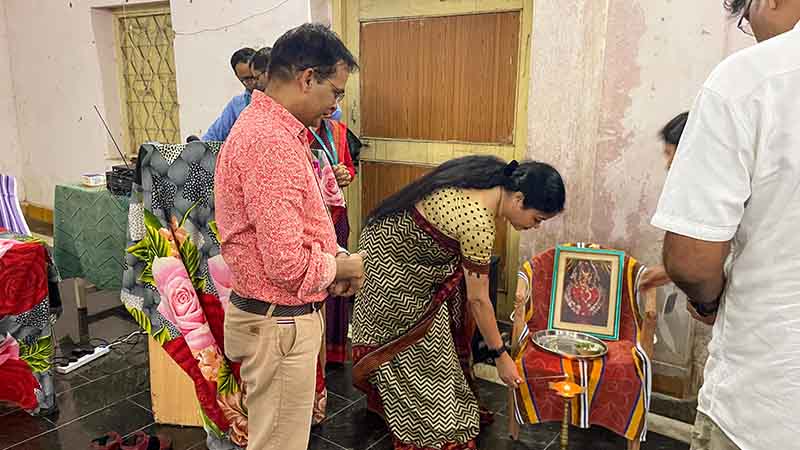
Odisha, India, October 3, 2023 – More people living in northwest Odisha and surrounding areas will have access to comprehensive eye health screening, prescription eyeglasses and specialist referral, thanks to the opening of two new vision centres, established by Operation Eyesight Universal in partnership with Trilochan Netralaya and Mahanadi Netralaya Chiktsalaya – Lepra Society.
The vision centres, located in the Tushura Block of Belangir district and the Bheden Block of Bargarh district, will act as local eye health hubs that will not only bring accessible and affordable eye health care to patients but also connect them with their local health system.

“Although most eye conditions can easily be treated by a simple pair of prescription eyeglasses or a surgery, many people are unable to access the eye care they need due to a variety of factors, including lack of services in their area, lack of information and financial limitations,” says Dr. Troy Cunningham, Country Director – India, Operation Eyesight Universal. “Thanks to the generosity of our donors in Canada and partners in the local community, we are bringing quality eye health care to those who need it most.”
To support the new vision centres, Operation Eyesight is training a team of female community health volunteers who will conduct door-to-door eye health screenings as well as provide public education on topics like personal hygiene, immunization, and maternal and infant health. Patients requiring more advanced treatment will be referred to one of our partner hospitals for care.
“Clear vision and healthy eyes are an important part of overall health and wellness. Access to quality eye health care comes with a host of benefits for people of all ages, allowing them to work, go to school, maintain independence and stay engaged in the community,” Cunningham explains. “Our goal is to declare communities as avoidable blindness-free, where no patient experiences untreated vision loss or blindness, and patients know where to seek care when they need it.”
In the state of Odisha, nearly 18 per cent of people experience visual impairment and 1.77 per cent of individuals over the age of 50 are blind. The leading causes of vision loss and blindness in the state are cataracts and uncorrected refractive error.
“Partnership with local hospitals and with members in the community plays a key role in making diagnosis and treatment services available for those in our project areas in Odisha,” says Abhishek Trivedi, Programme Manager, Operation Eyesight. “Together, we are not only preventing blindness and restoring sight but also strengthening entire health systems.”
Operation Eyesight Universal is an international development organization working to prevent blindness and restore sight in South Asia and sub-Saharan Africa. Since 1963, the organization has partnered with physicians and communities in India to bring accessible and affordable eye care to those who need it most. Operation Eyesight currently works with communities across 84 districts in 18 Indian states. To date, Operation Eyesight has declared more than 1,200 villages as Avoidable Blindness-Free.
Calgary, Canada October 12, 2023 – Today on World Sight Day, Operation Eyesight is reminding everybody, everywhere to love their eyes and prioritize their eye health.
This year, Operation Eyesight teams worldwide are joining the International Agency for the Prevention of Blindness and the global eye health community in focusing on the world’s workforce, reminding everyone of the importance of loving their eyes at work.

“Healthy eyes mean people can work, care for their families, support themselves and contribute to the economy. That’s why eye health at work is more important than ever,” says Kashinath Bhoosnurmath, Operation Eyesight’s President and CEO. “World Sight Day 2023 is extra special for Operation Eyesight, as we are also celebrating 60 years of preventing blindness and restoring sight.”
With the support of donors and partners globally, over the past six decades Operation Eyesight has transformed the lives of millions of children, women and men worldwide, by bringing sustainable eye health care to communities that need it most.

Unaddressed visual impairment continues to have a serious impact on workplace productivity, and a third of workers worldwide have uncorrected vision that could be improved. Additionally, people are working differently, including at home, and are also working longer hours.
Operation Eyesight is challenging everyone to consider the health of their eyes and to book their annual eye exam. Staff and employers can also visit operationeyesight.com/worldsightday for tips and resources on keeping eye health in focus in the workplace.
“Across sub-Saharan Africa and South Asia, our teams are marking World Sight Day with screening events at various workplaces, as well as celebrations with government and hospital partners,” says Dr. Ritu Ghosh, Operation Eyesight’s Global Director, International Programmes.
“We know that almost everyone on the planet will experience an eye health issue in their lifetime, but more than a billion people do not have access to eye care services to correct, treat or prevent vision loss. That’s why World Sight Day is such an important annual event.”
To learn more or make a donation, visit operationeyesight.com/worldsightday.
Operation Eyesight is a Canada-based international development organization working to prevent blindness and restore sight. In 2023, Operation Eyesight celebrates 60 years of collaborating with local hospitals and government partners to invest in sustainable eye health treatment, blindness prevention and community development.
World Sight Day, observed annually on the second Thursday of October, is coordinated by the International Agency for the Prevention of Blindness (IAPB) and supported by almost 200 IAPB member organizations, including Operation Eyesight.
For further information, please contact:
Colin Zak
Communications Specialist
Operation Eyesight Universal
ZakC[at]operationeyesight.com
@OpEyesight

Kajiado County, Kenya, August 30, 2023 – Patients living in Kenya’s Kajiado County and surrounding areas will have access to comprehensive eye health care, thanks to a new eye unit now open in the community.
The Kajiado County Referral Hospital Eye Unit was established in partnership by Operation Eyesight Universal with the County Department of Health and constructed in partnership with CBM Christian Blind Mission. Equipped with state-of-the-art diagnostic and surgical equipment, the new facility can provide a range of eye health services, including comprehensive eye exams and prescription eyeglasses fittings to diagnoses and sight-restoring eye surgery.
“Healthy eyes open up a future full of possibility and opportunity for individuals and entire communities,” says Alice Mwangi, Operation Eyesight’s Country Director for Kenya. “We are bringing quality eye health care to people’s front doors, and this new eye unit will serve as a hub for the entire community, connecting people with not only eye health care but also their local health system.”

The new eye unit was constructed as part of the Vision Impact Project, a four-year project started in October 2021 that aims to bring eye health care to unreached communities in Kajiado County, where blinding trachoma is endemic and other leading causes of vision loss include uncorrected refractive error and cataract. The project will train a local team of 23 local eye care workers and 175 eye screeners to use Peek Vision’s mobile app for screening and referrals. They will screen nearly 720,000 residents through door-to-door outreach. The project will also train 140 healthcare providers in primary eye care.
“Trachoma and other eye diseases such as cataract and untreated refractive error have had a devastating impact on many patients and families in the area, and many have faced barriers to accessing eye health care, including cost and lack of locally-available services,” explains Mwangi. “Today, we are able to better meet demand while also raising awareness about the eye health services that are now available, through education in the surrounding community.”
Since the project launched, Operation Eyesight has trained 33 local community health volunteers to deliver health education, screen community members for eye problems and refer them for treatment if needed. So far, 199,894 people have been screened for eye conditions and over 21,822 people have received treatment, including more than 5,125 people who have received prescription eyeglasses and 183 people who received sight-restoring cataract surgery.
“This is about taking a collaborative approach to care. It starts with outreach in the community and connecting patients and families with comprehensive eye care through this new eye unit,” says Dr. Ritu Ghosh, Operation Eyesight’s Global Director, International Programmes. “Together with the community and local leaders, we are not only transforming eye health care in the region but also strengthening the entire health system.”

To date, Operation Eyesight and partners have declared 35 villages in Kenya as avoidable blindness-free, which means the communities are free of any untreated cases of vision loss.
Operation Eyesight is a Canada-based international development organization working to prevent blindness and restore sight in sub-Saharan Africa and South Asia. In 2023, Operation Eyesight is celebrating 60 years of collaborating with local hospitals and government partners to invest in sustainable eye health treatment, blindness prevention and community development. Operation Eyesight is implementing projects in eight counties in Kenya: Kajiado, Elgeyo Marakwet, Nandi, Kisii, Narok, Transnzoia, Uasin-Gishu and West Pokot.
-30-
For further information please contact:
Colin Zak
Communications Specialist
Operation Eyesight Universal
Zakc [at] operationeyesight.com
@OpEyesight